
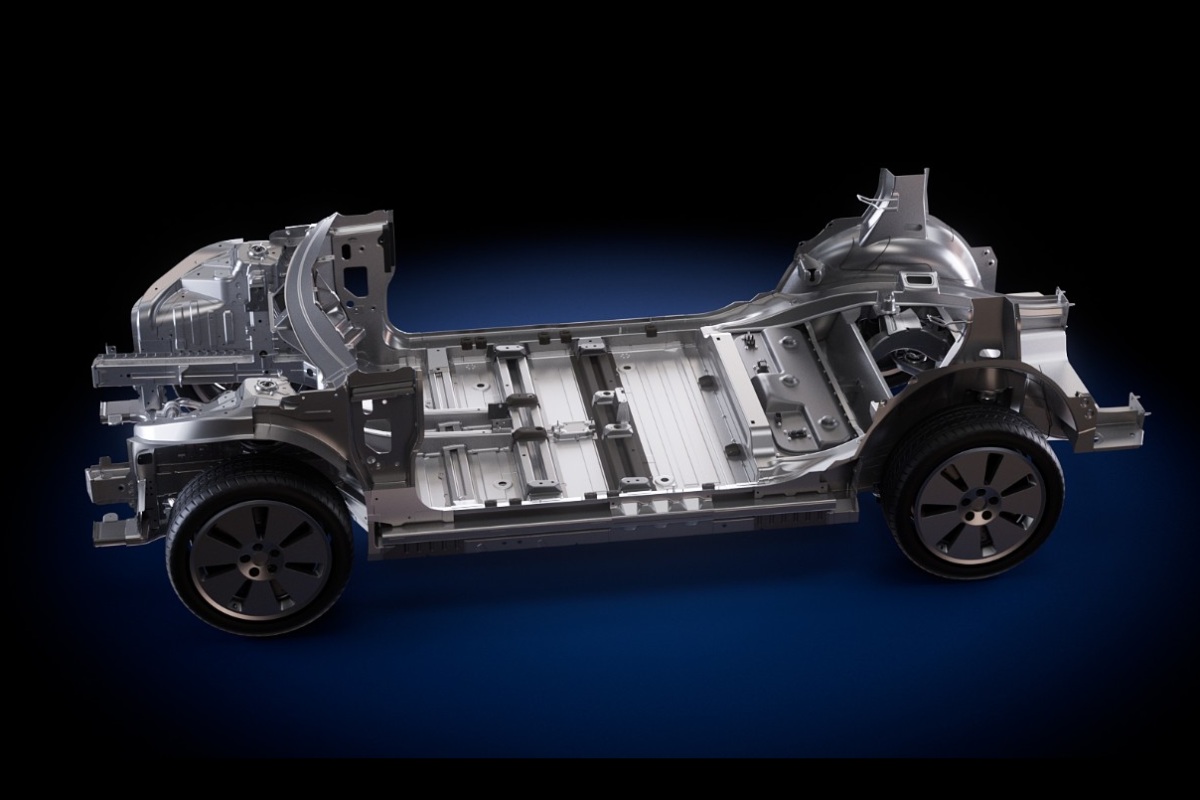
General Motors has unveiled its fourth-generation electric vehicle platform, featuring a lighter vehicle architecture, fewer powertrain components and improved energy efficiency. The company plans to introduce its first production models based on the platform soon, with lithium-manganese-rich (LMR) batteries and a new centralised computing architecture scheduled to follow from 2028.
Speaking at GM’s Forward event in New York, company president Mark Reuss said the platform’s launch was “very imminent”. Initial applications are expected to focus on high-volume vehicles, including crossover SUVs.
GM said its revised development process has reduced the vehicle development cycle from approximately five years to around half that time by bringing design, engineering and manufacturing teams together earlier in the process.
Lighter Platform and Improved Efficiency
According to GM, the new platform reduces vehicle weight by 15%, improves aerodynamics by 25% and cuts the number of powertrain components by 40%.
The architecture also supports flatter battery packs, allowing vehicles to have a lower profile without sacrificing interior space. GM said digital simulations were used to evaluate more than 300,000 battery designs before a physical prototype was built, reducing this stage of development to approximately one month.
The company expects the combined improvements to reduce manufacturing costs and improve vehicle efficiency.
LMR Batteries Planned for 2028
The platform is designed to accommodate new LMR batteries using prismatic cells. GM estimates the technology will improve range efficiency by 20% per kilowatt-hour, potentially allowing automakers to use smaller battery packs for a given driving range.
The company also says LMR cells offer 33% higher energy density than lithium iron phosphate (LFP) batteries while maintaining relatively low production costs through reduced reliance on expensive and critical raw materials.
Production is scheduled to begin in 2028 at the Spring Hill, Tennessee, facility operated by the GM-LG Energy Solution battery joint venture, Ultium Cells.
Centralised Computing Architecture
GM is also redesigning vehicle electronics by replacing numerous smaller control units with a centralised computer system responsible for functions including the powertrain, chassis and safety systems.
The automaker says the architecture will reduce wiring by 30% and increase computing power by a factor of 40. The additional capacity is intended to support features such as AI-based passenger interaction and energy management.
The new computing architecture is scheduled to debut in the Cadillac Escalade IQ for the 2028 model year.
GM’s platform development comes as automakers compete to reduce EV costs and accelerate product launches. Ford is pursuing a similar objective with its Universal Electric Vehicle Platform, which is intended to underpin more affordable electric models, including a planned pickup priced at around US$30,000.