
Battery-electric vehicle registrations in the European Automobile Manufacturers’ Association surged sharply in March, rising 48.9% year-on-year to 234,532 units, as electric mobility gained momentum across the European Union.
For the first quarter of 2026, total battery-electric passenger car registrations reached 546,937 units, up 32.5% compared to the same period last year. BEVs accounted for 19.4% of all new car registrations between January and March—roughly one in five vehicles sold.
The strong March performance played a decisive role in lifting quarterly figures, following more moderate growth earlier in the year. Overall, new car registrations across all powertrains rose 12.5% in March, helping the EU market recover from a 3.9% decline in January and a modest 1.4% increase in February. For the full quarter, total registrations were up 4%.
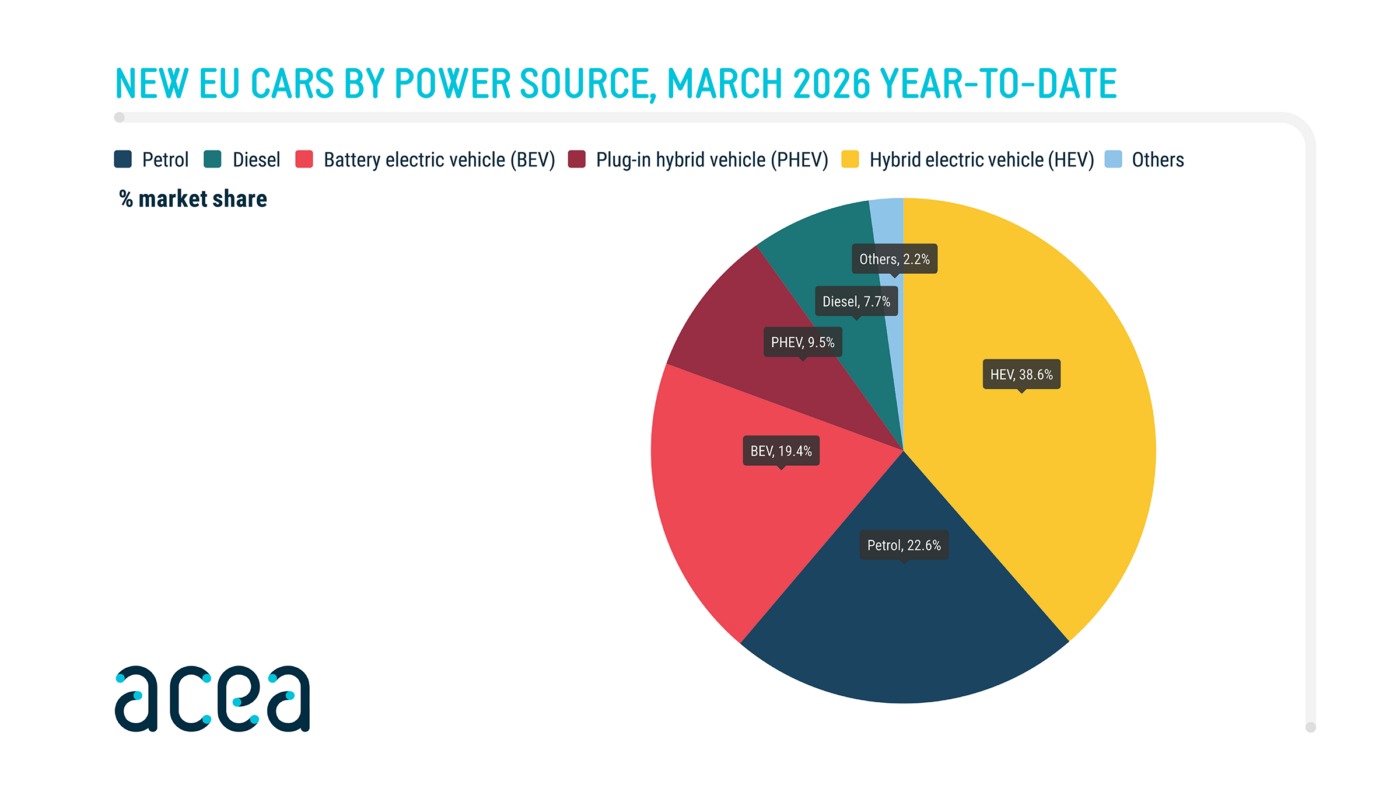
Battery-electric vehicles were the fastest-growing drivetrain segment, outpacing plug-in hybrids, which rose 28.2% to 105,414 units. Meanwhile, registrations of petrol and diesel cars declined by 9.4% and 12.3%, respectively.
Hybrid vehicles remained the most popular drivetrain category, with 444,835 registrations in March, representing a 20.1% increase. However, ACEA’s data groups together full hybrids, mild hybrids and 48-volt systems, meaning many vehicles in this category still rely heavily on combustion engines.
Electric vehicle adoption remained uneven across the bloc. The four largest markets accounted for more than 60% of BEV registrations. Germany led in absolute terms with 159,630 new electric cars in the first quarter, while France (+50.4%) and Italy (+65.7%) also recorded strong growth.
In contrast, some smaller markets saw declines. Belgium registered a 2.3% drop, while Netherlands (-23.3%) and Luxembourg (-9.4%) also reported lower volumes. Elsewhere, growth remained robust, with Croatia posting a 282.4% increase from a low base.
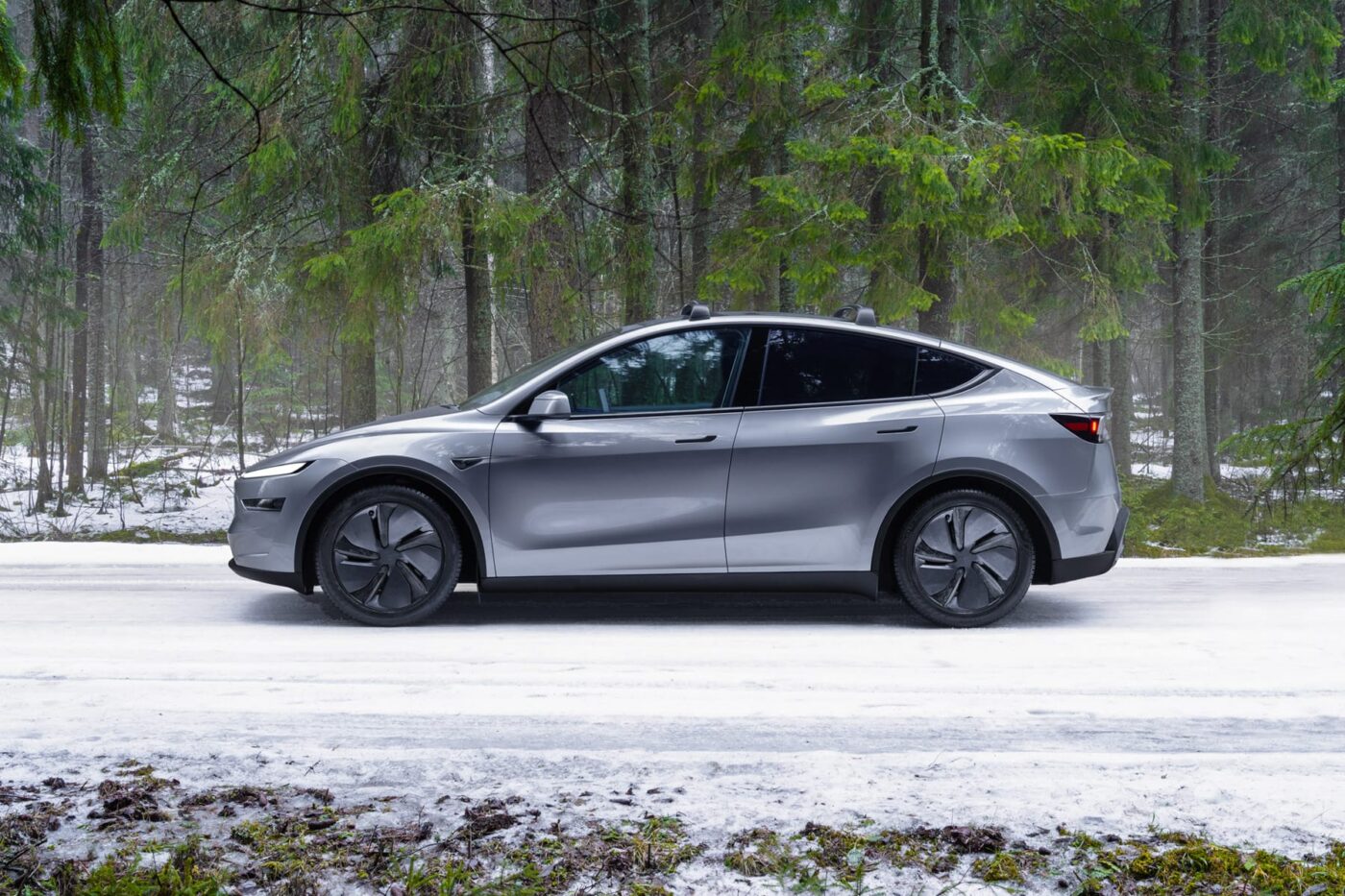
Among manufacturers, Tesla stood out as a pure battery-electric brand. The company more than doubled its March registrations in the EU, rising 101.9% year-on-year to 36,868 units. For the first quarter, Tesla recorded 57,792 registrations, up 59.6%, supported by demand for more affordable versions of the Tesla Model Y.