
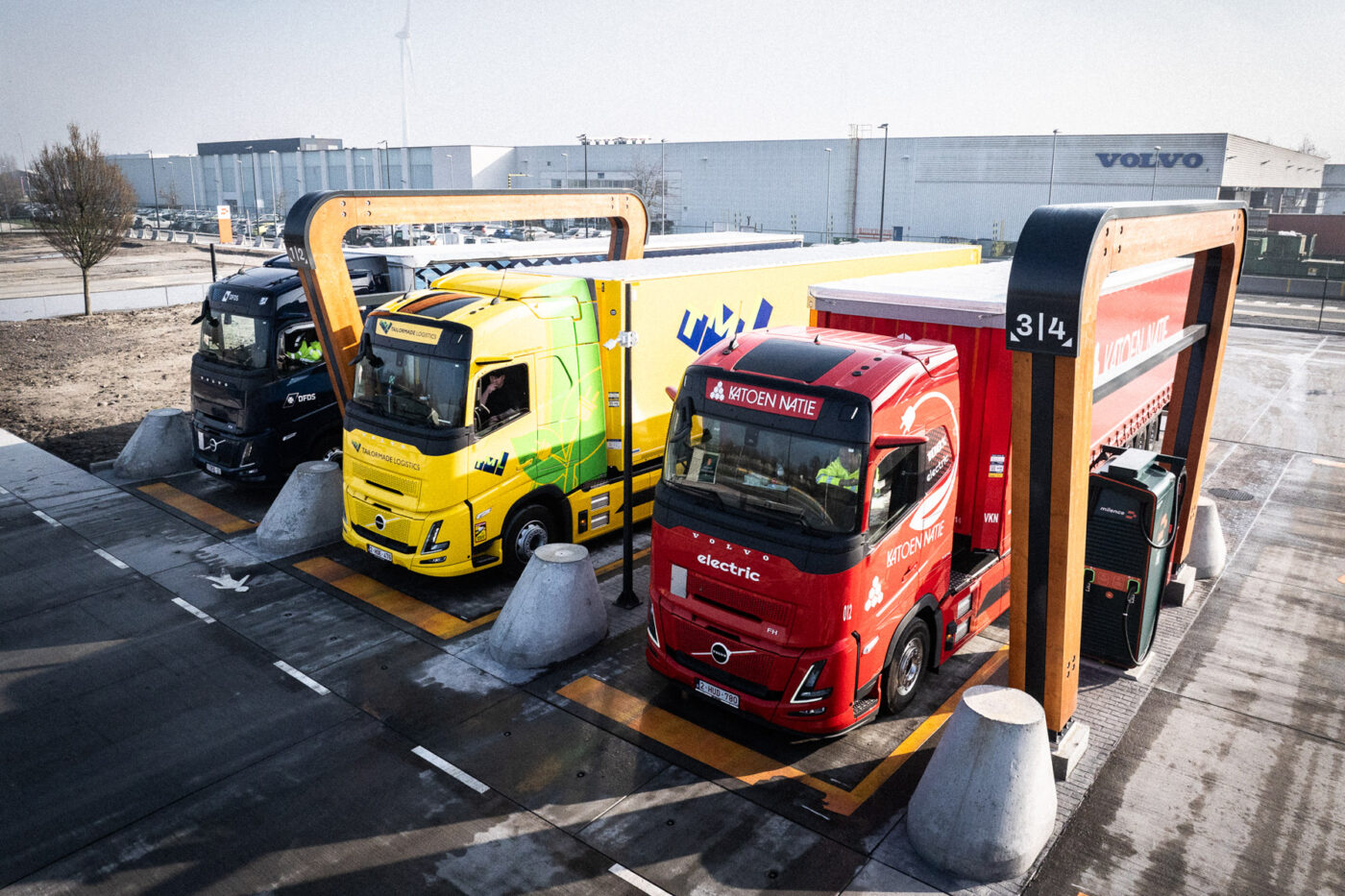
Electric truck charging operator Milence said electric heavy-duty vehicles are approaching or in some cases surpassing diesel trucks on total cost of ownership in several European markets, though inconsistent policy support and infrastructure deployment continue to slow adoption across the region.
In two white papers published this week, the company said countries including the Netherlands, Denmark and Switzerland have moved into early large-scale deployment of electric heavy-duty vehicles, while many other European markets remain in the initial stages of electrification.
Milence said adoption is progressing at different speeds across Europe largely because of diverging policy frameworks. In its report, Bridging the Gap: Market Readiness and Barriers in Europe’s Transition to Electric Heavy-Duty Transport, the company said markets with competitive electricity pricing, long-term subsidies, carbon-differentiated road tolling and reliable truck charging networks are seeing faster uptake.
“Europe does not face a technology gap, but a policy gap,” Milence said in the report, warning that fragmented regulatory approaches risk creating a multi-speed transition across the bloc.
The company’s updated total cost of ownership analysis for Germany, the Netherlands and Sweden found electric trucks are nearing or reaching cost parity with diesel vehicles in several operating scenarios.
Milence said electric trucks in the Netherlands could deliver a cost advantage in multiple use cases from 2026 onward, while Germany’s extension of toll exemptions for zero-emission trucks through 2031 improves the economics for fleet operators. Sweden’s lower electricity prices support electrification, though the absence of similar toll incentives delays parity in some long-haul applications, the company said.
“The question is no longer if eHDVs become cost-competitive, but how quickly fleets can capture the advantage,” Milence said in its second report, Accelerating eHDV Adoption: Updated TCO Analysis Confirms a Strengthened Cost Advantage in 2026.
Milence said volatility in fossil fuel markets following Europe’s recent energy crisis has increased diesel truck operating costs by 9 to 11 euro cents per kilometre, while electricity prices linked to domestic renewable generation have proven more stable.
The company also said efficiency gains in newer electric truck models and growing market competition are improving the business case, with real-world energy consumption now averaging about 1.1 kilowatt-hours per kilometre.
Milence said around 1,800 public truck-suitable charging points are currently available along Europe’s major freight corridors. The company itself operates 33 charging hubs with 221 charging points across eight countries.
Still, Milence said Europe has yet to establish a self-reinforcing market dynamic in which vehicle deployment, charging infrastructure expansion and falling costs accelerate one another across all regions.
“Electric road freight is not only central to decarbonising transport, it is also a strategic pillar of Europe’s broader energy transition and independence,” Anja van Niersen, chief executive of Milence, said in a statement. “The technology is ready, the business case is emerging, and the infrastructure is being built. What is needed next is the pace and consistency of policy to scale this transition across all Member States.”