
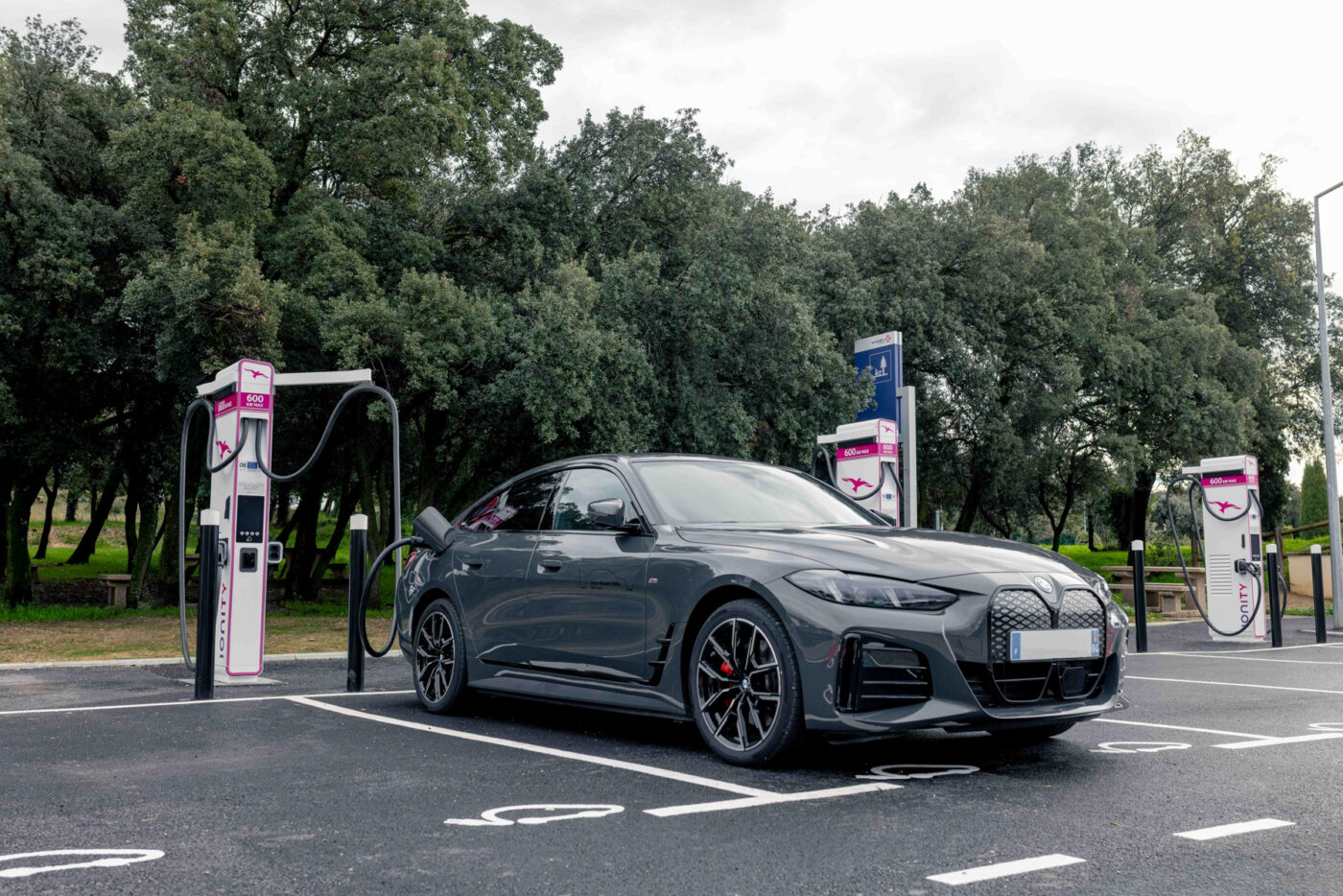
Ionity has begun deploying megawatt-class electric vehicle charging technology across its European network, commissioning its first Alpitronic HYC1000 systems at two locations in France.
The fast-charging joint venture said six charging points have been installed at each site—Maison-Dieu in eastern France and Sorgues along the A7 motorway—bringing a total of 12 new high-power chargers into operation. The rollout follows testing at Ionity’s facility near Munich and comes after delays to the original late-2025 timeline.
The HYC1000 system uses a central power cabinet capable of delivering up to 1,000 kW, which can be dynamically distributed among multiple vehicles or concentrated to provide as much as 600 kW to a single compatible car. Ionity said such power levels could enable high-performance electric vehicles to add up to 300 kilometers of driving range in less than eight minutes under optimal conditions using a CCS connector.
A first installation in Germany is expected in the coming weeks at Werne in North Rhine-Westphalia, where Ionity is building what it describes as the country’s fastest charging park. The site, located near the A1 motorway, will feature eight charging points capable of delivering up to 600 kW each, significantly exceeding the 350 kW capacity typical of current high-power chargers.
Ionity initially relied on third-party equipment but has since adopted a standardized charging column design that can integrate hardware from multiple suppliers, including Alpitronic. The company began deploying Alpitronic’s Hypercharger technology in 2023 and now plans to expand the new megawatt systems along major transport corridors across Europe.
“With the introduction of the new megawatt charging systems, we are further enhancing the performance of our European charging network,” Chief Executive Jeroen van Tilburg said. He added that increasing vehicle charging capabilities will allow drivers to spend less time at charging stations and improve long-distance travel flexibility.
Ionity did not disclose specific targets for the broader rollout but said additional installations are planned along key European routes as next-generation electric vehicles capable of ultra-fast charging enter the market.
Source: Electrive