
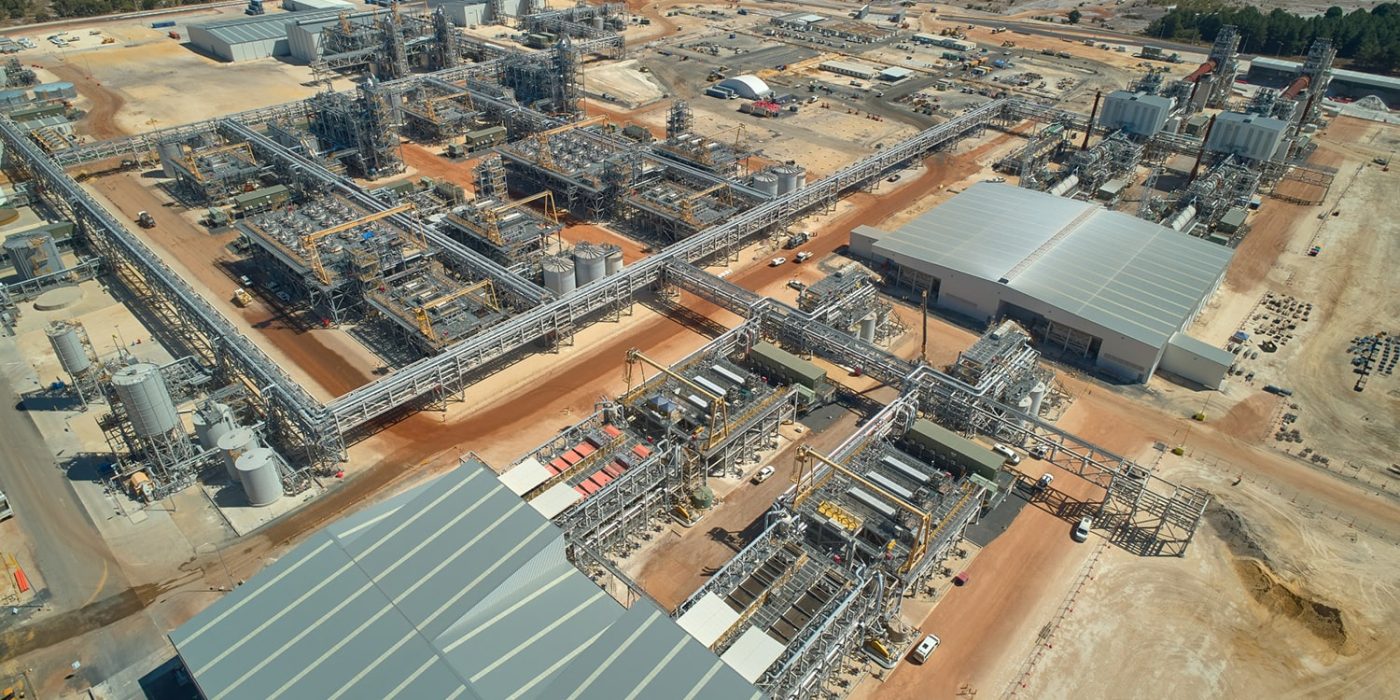
U.S. chemical company Albemarle has shut down the last operating production line at its lithium hydroxide plant in Kemerton, Western Australia, citing unfavorable market conditions for hard-rock lithium conversion.
The company confirmed that Train 1—the facility’s remaining active line—was idled in February, bringing output at the site to zero. Albemarle had previously suspended expansion plans for additional lines and shut down Train 2, reversing earlier ambitions to scale the plant’s capacity to 100,000 tonnes of lithium hydroxide annually from 50,000 tonnes.
“Idling operations at Kemerton was a difficult decision,” Chief Executive Kent Masters said. “It follows significant actions we have taken over the past two and a half years to reduce operating costs during an extended period of price volatility in the market.” He added that recent price improvements “are not enough to offset the challenges facing Western hard-rock lithium conversion operations.”
The Kemerton facility, operating since 2019, processes spodumene concentrate sourced from the Greenbushes mine in Western Australia, one of the world’s largest hard-rock lithium deposits. The mine is located about 250 kilometers south of Perth and supplies material for conversion into battery-grade lithium hydroxide.
Albemarle said the shutdown would not affect its projected lithium hydroxide supply for 2026, as demand will be met through other facilities. The company also expects the move to improve financial flexibility and support earnings, while its mining operations in Australia—including its stake in Greenbushes—remain unchanged.
Lithium hydroxide is primarily used in high-nickel lithium-ion batteries, such as nickel-manganese-cobalt (NMC) and nickel-cobalt-aluminum (NCA) chemistries commonly deployed in electric vehicles. Demand dynamics are shifting, however, as lithium iron phosphate (LFP) batteries—based on lithium carbonate rather than hydroxide—gain market share due to lower costs. The emergence of alternative technologies such as sodium-ion batteries could also influence long-term demand.
Industry analysts say volatility in lithium prices and evolving battery chemistries have made large capital investments in processing facilities more uncertain, particularly for projects reliant on higher-cost hard-rock feedstocks.