
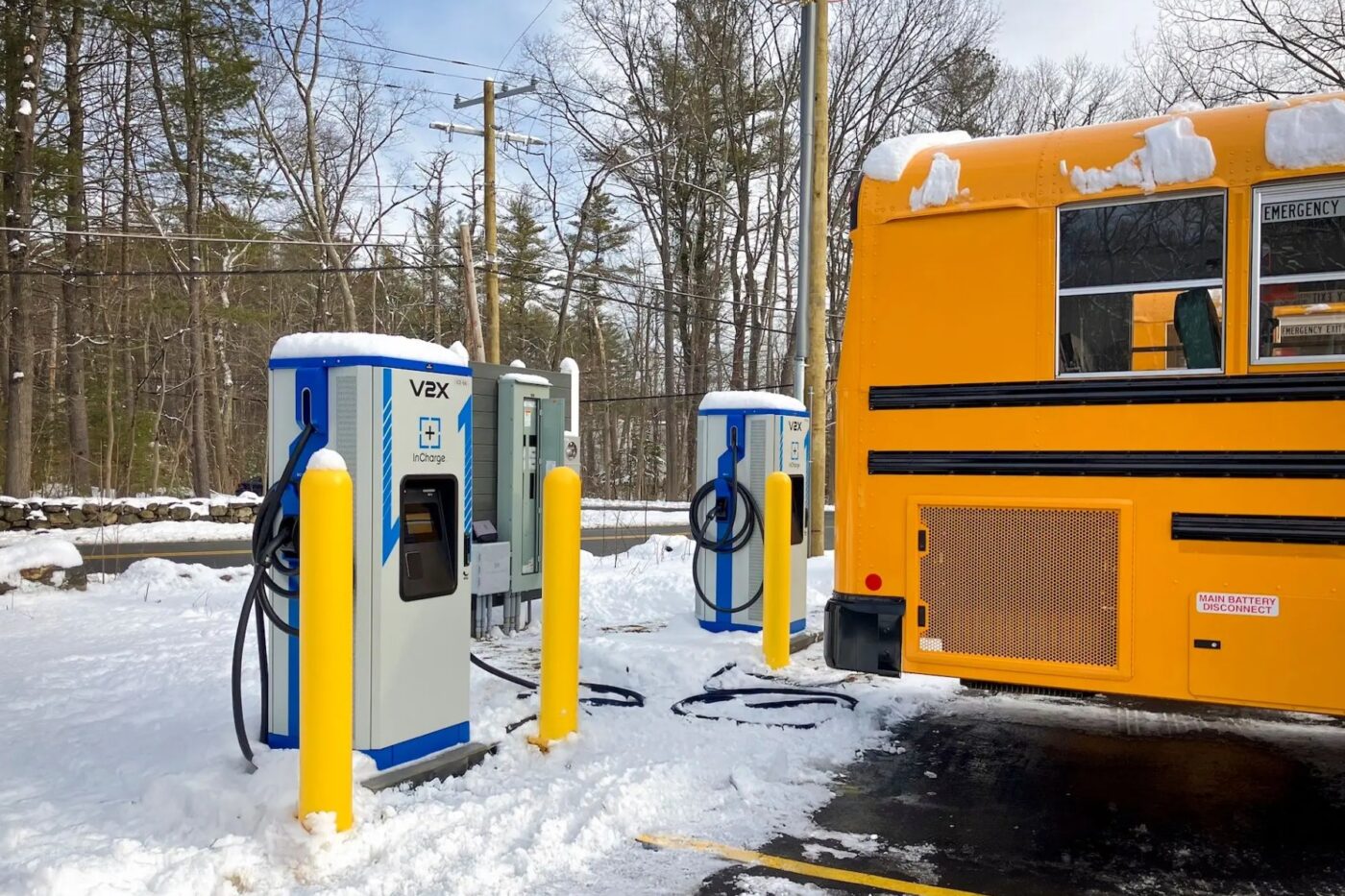
The U.S. state of Massachusetts has announced participants for a statewide Vehicle-to-Everything (V2X) demonstration programme that will deploy free bi-directional electric vehicle chargers to school districts, municipal projects and residential users, as part of efforts to integrate electric vehicles into the power grid.
The initiative, led by the Massachusetts Clean Energy Center (MassCEC), is described by the agency as the first programme of its kind in the United States at a statewide scale. Installations are scheduled for completion by summer 2026, with operational data collected throughout the year to evaluate technical performance, costs and regulatory considerations. The chargers will be installed by energy technology firm The Mobility House.
Participants include five school districts — Acton-Boxborough, Arlington, Boston, Concord and Lincoln — alongside municipal projects in Sterling, Needham, Plymouth and Warwick, and 30 residential households across the state. Funding comes from the Electric Vehicle Infrastructure Coordinating Council, which allocated $50 million from the American Rescue Plan Act toward EV charging initiatives in Massachusetts.
MassCEC said the demonstration will examine how electric vehicles can function as distributed energy resources, feeding electricity back to the grid during peak demand periods. During a demand response event, the programme is expected to deliver more than one megawatt of power — roughly equivalent to the electricity consumption of about 300 average U.S. homes for one hour.
“Virtual Power Plants are the future of our electrical grid, and I couldn’t be more excited to see this program take off,” Energy and Environmental Affairs Secretary Rebecca Tepper said. “We’re putting the power of innovation directly in the hands of Massachusetts residents. Bi-directional charging unlocks new ways to protect communities from outages and lower costs for families and public fleets.”
MassCEC plans to publish a detailed V2X guidebook in late 2026 outlining system design, charging management strategies, economic models and policy considerations to support replication in other regions. Interim CEO Dr. Jennifer Le Blond said the programme highlights the state’s focus on practical deployment of emerging technologies.
“The Vehicle-to-Everything Demonstration program shows how Massachusetts is leading the way in practical, scalable technological innovation that creates economic opportunities,” Le Blond said. “By enabling EVs to serve as energy resources, we’re helping families and schools take control of their energy. This is a real-world step toward a more reliable and affordable clean energy future.”