
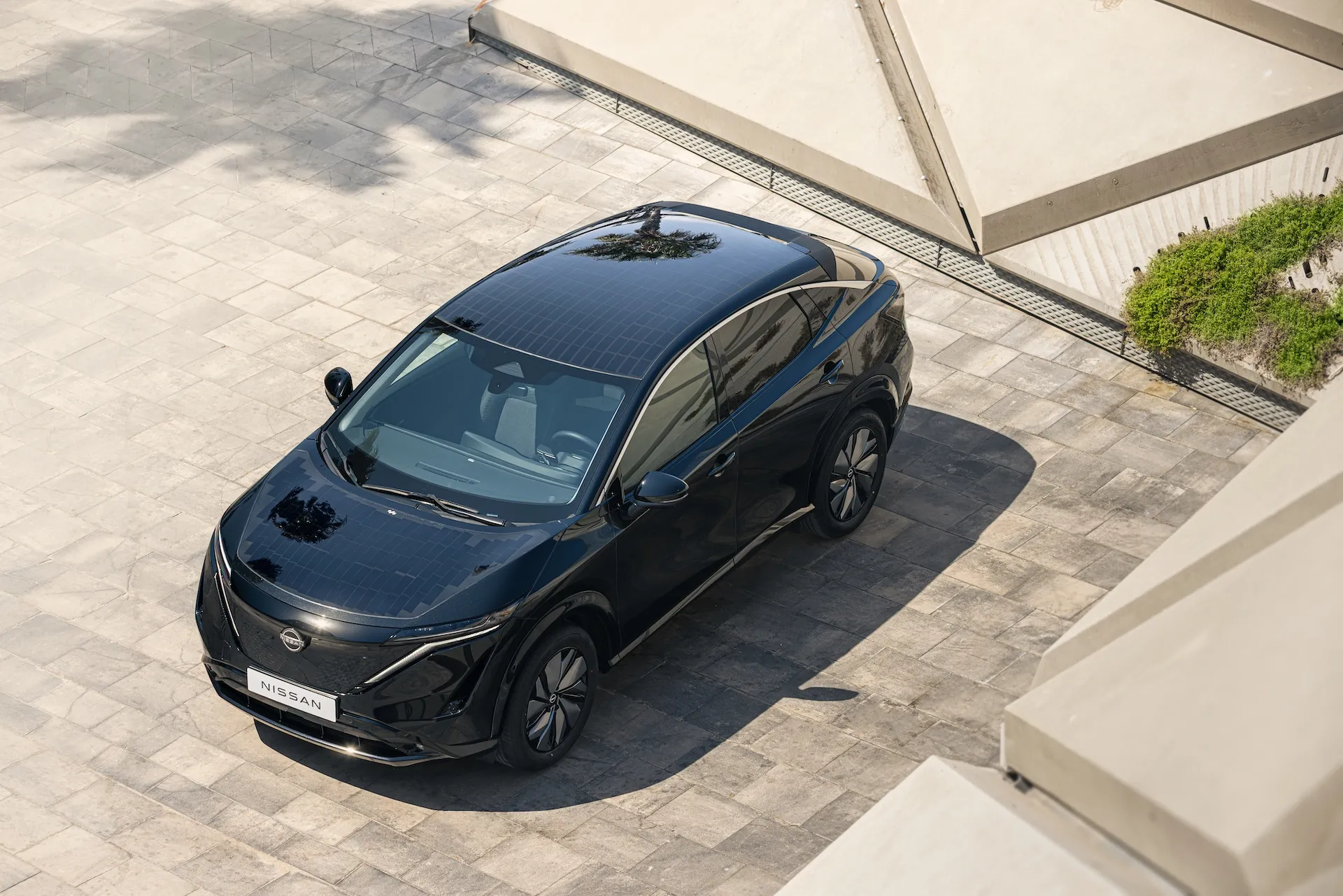
Japan’s Nissan has revealed a solar-powered concept version of its Ariya electric crossover, showcasing how vehicle-integrated photovoltaic technology could supplement battery charging and support the company’s long-term carbon-neutrality ambitions.
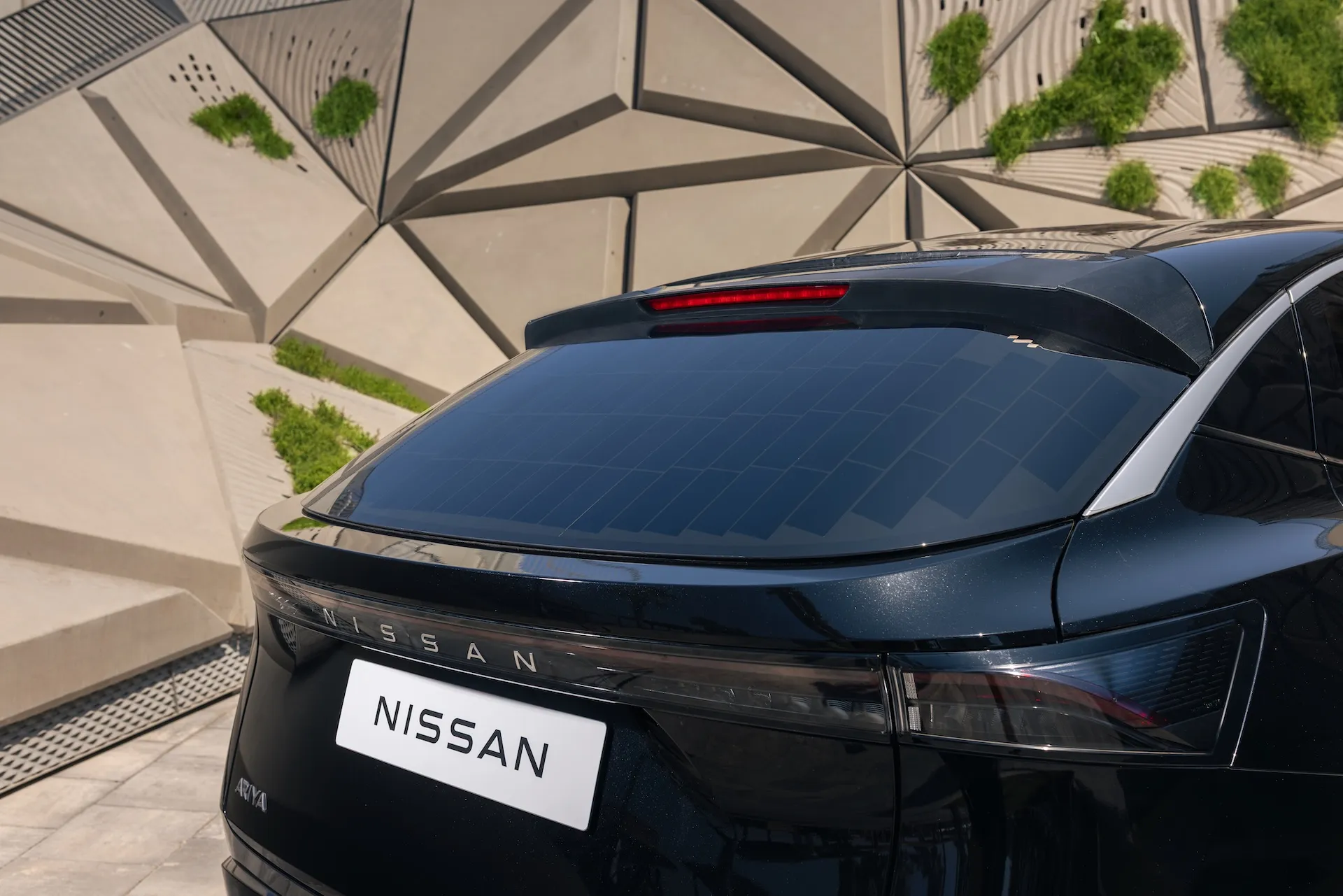
The Ariya concept features 3.8 square metres of high-efficiency solar panels integrated into the hood, roof and tailgate. Developed in partnership with Dutch solar mobility firm Lightyear, the system converts sunlight directly into direct-current power, which is managed by a dedicated controller to optimise energy use and reduce dependence on external charging infrastructure.
See also: 2025 Nissan Ariya Earns Marginal Rating for Rear Passenger Safety in IIHS Crash Test
According to Nissan, real-world testing shows the solar system can deliver up to 14.3 miles (23 kilometres) of additional driving range per day under favourable conditions. Depending on driving patterns and location, the technology could cut charging frequency by as much as 65%, the company said.
Test results varied by region. Trials showed average daily solar-generated range of about 10.9 miles in Barcelona, 11.7 miles in New Delhi, 6.3 miles in London and the equivalent of roughly 13 kilometres per day in Dubai. Nissan also said that during a two-hour, 50-mile drive, the panels generated around 0.5 kWh of energy, adding about 1.8 miles of range.
See also: Nissan Ariya Electric SUV Completes 30,000-Mile Desert Endurance Trial
The project was led by Nissan’s Advanced Product Planning team in Dubai and its Powertrain Planning team in Barcelona, reflecting a focus on markets where solar exposure and charging access can vary significantly.
“The solar-powered Ariya concept embodies Nissan’s belief that innovation and sustainability must move forward hand-in-hand,” said Shunsuke Shigemoto, vice president of ePowertrain and powertrain research at Nissan’s Africa, Middle East, India, Europe and Oceania operations. “By exploring how vehicles can generate their own renewable energy, we are opening the door to new opportunities for customers.”
See also: Nissan Expands Charging Options for Ariya Owners with Tesla Supercharger Access
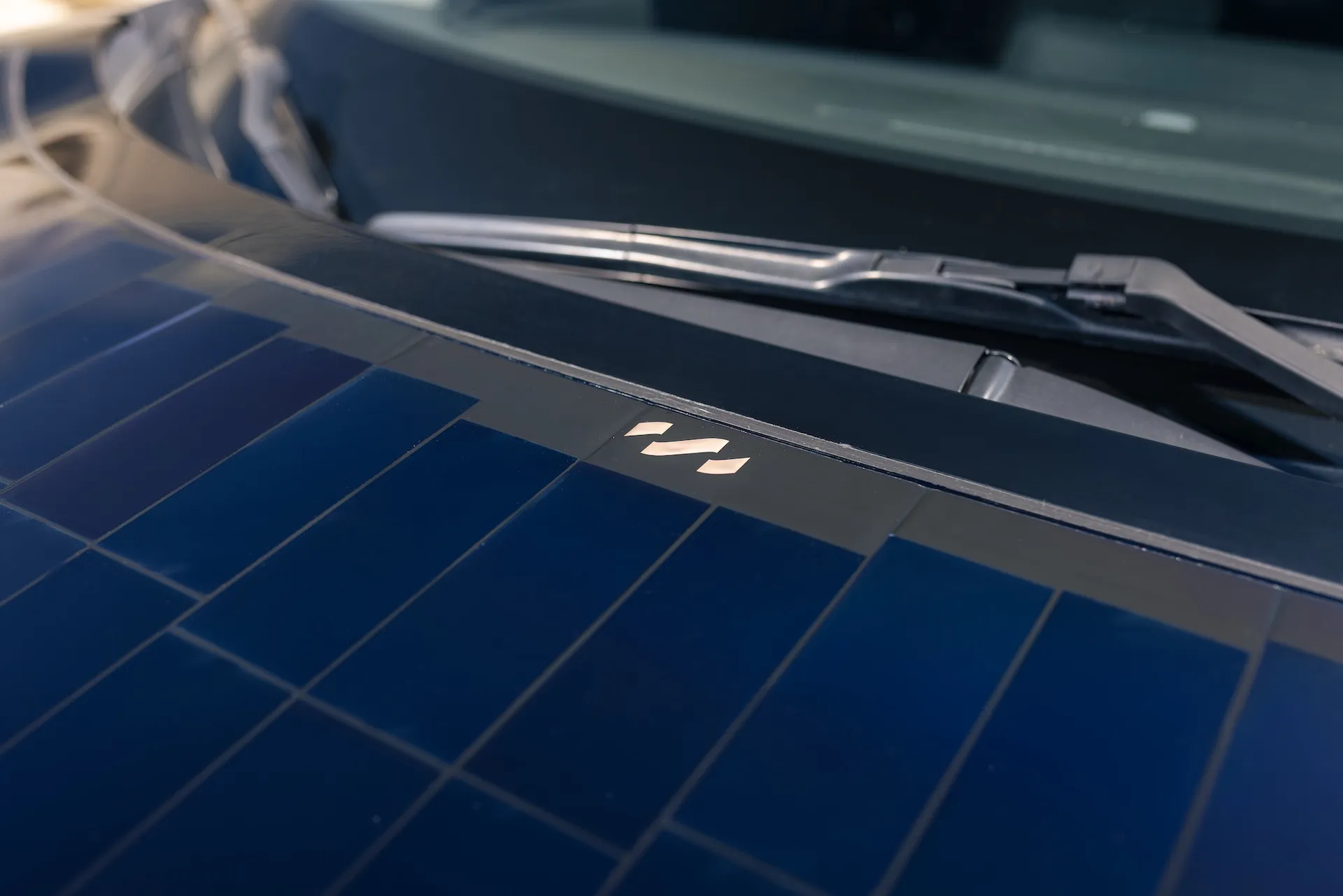
Nissan said the technology could be particularly relevant in regions with limited charging infrastructure, allowing drivers to extend intervals between plug-in charging while lowering running costs through passive energy generation when vehicles are parked or in use.
The concept aligns with Nissan’s target to achieve carbon neutrality across its products and operations by 2050. However, the company has also been reshaping its EV lineup. In late 2025, Nissan confirmed that the Ariya crossover would be discontinued in the United States after the 2025 model year, as the automaker reallocates resources toward its next-generation electric models, including the redesigned Leaf.