
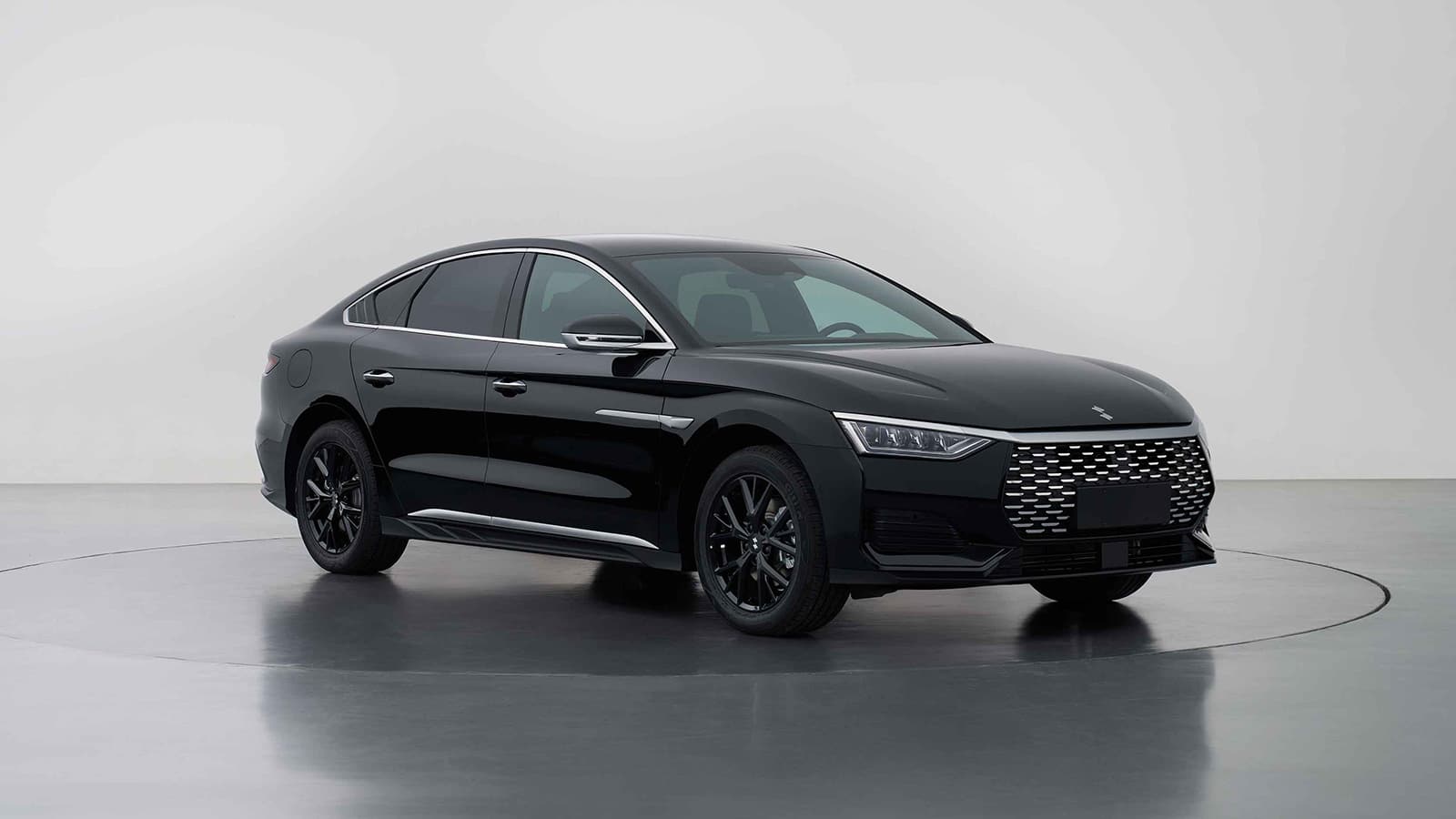
China’s BYD has established a new sub-brand called Linghui aimed at the ride-hailing market, according to regulatory filings that reveal multiple electric models planned under the new name.
In the latest vehicle catalog released by China’s Ministry of Industry and Information Technology (MIIT) on Thursday, BYD registered four Linghui-branded models — the Linghui e5, e7, e9 and M9 — each carrying a new brand logo. Inclusion in the MIIT catalog is a key regulatory step before a vehicle can be approved for sale in China.
See also: BYD Refreshes Qin Hybrid Lineup With Longer Battery Range to Meet Tax Rules
BYD has not formally announced the creation of the Linghui brand. However, Chinese automotive media including Yiche reported that Linghui is a new brand developed specifically by the new energy vehicle (NEV) manufacturer to serve the ride-hailing segment.
BYD’s passenger vehicle lineup currently consists of the Dynasty series, named after ancient Chinese dynasties, and the Ocean series, which draws inspiration from marine life and naval vessels. Separately, BYD’s e-series models are positioned under its commercial vehicle division and have largely targeted ride-hailing and fleet customers.
See also: BYD to Launch Longer-Range PHEV Variants for Qin and Seal Models in China
In May 2025, BYD launched the e7 electric sedan, priced from 103,800 yuan ($14,400), as the latest addition to the e-series. The model has since become one of several affordable BYD vehicles widely adopted by ride-hailing operators due to low operating costs.
The regulatory filings indicate that Linghui models are derived from existing BYD vehicles. The Linghui e9 is based on the BYD Han sedan and measures 4,995 mm in length with a wheelbase of 2,920 mm, offering electric motor options with peak outputs of 135 kW or 150 kW. The Linghui e7 is based on the Sealion 06 EV, while the Linghui e5 draws from the Qin Plus EV platform. The Linghui M9 is derived from the BYD Xia multi-purpose vehicle, measuring 5,200 mm in length with a wheelbase of 3,045 mm.
See also: BYD Becomes Global BEV Sales Leader as Tesla Deliveries Decline
Industry observers note that while BYD’s strong presence in the affordable segment has supported rapid volume growth, it also risks diluting brand perception as the company pushes further into higher-end and luxury markets. Establishing Linghui as a standalone brand could allow BYD to separate its ride-hailing-focused models from its consumer-oriented lineup.
BYD is one of China’s largest NEV manufacturers and has continued to expand its product portfolio across multiple price points and vehicle categories amid intensifying competition in the domestic electric vehicle market.