
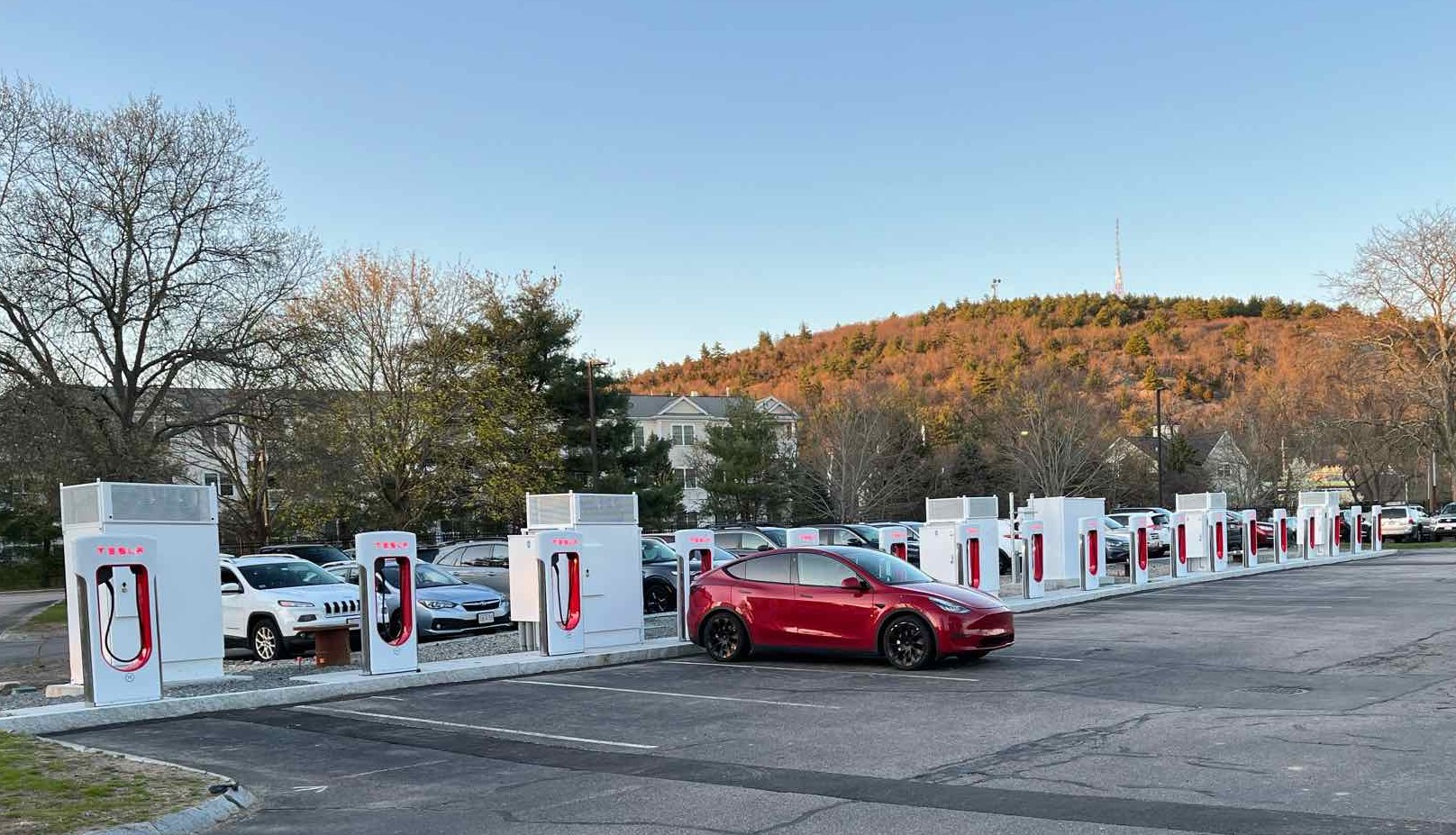
Tesla said it significantly expanded its global charging infrastructure in 2025, reporting record growth in both the size and capability of its Supercharger network as it continued to invest in large-scale charging deployment across key markets.
According to the company’s annual charging update, Tesla delivered 6.7 terawatt-hours of electricity through its Supercharger network during the year, while the total number of charging stalls worldwide surpassed 75,000. The expansion included new installations across North America, Europe, and Asia, alongside upgrades to existing sites.
See also: Tesla Reaches 6 Million Drive Units at Nevada Plant, Marking New Production Milestone
Among the most visible additions was the opening of the Tesla Diner & Supercharger in Los Angeles, a hybrid charging and dining location designed to combine food service with high-speed charging. Tesla also completed the Oasis Supercharger in California’s Central Valley, now the world’s largest charging site, featuring 164 stalls supported by on-site solar generation and battery storage that allows off-grid operation.
The company said it continued to accelerate network growth in regions that had previously faced regulatory or infrastructure constraints. In Portugal, regulatory changes enabled a rapid expansion of charging locations, while new Supercharger sites were also launched in markets including Saudi Arabia, India, Chile, and several countries in Eastern Europe.
See also: Tesla Marks Production of 9 Millionth Vehicle at Shanghai Factory
Tesla also introduced upgrades aimed at improving user experience and network efficiency. These included the rollout of its V4 Supercharger hardware, designed to support higher charging power for future vehicles, and expanded access for non-Tesla drivers through app-based authentication and payment systems. Live availability and pricing information were also integrated into third-party navigation platforms.
The company said the latest developments reflect its broader strategy to support rising electric vehicle adoption globally by expanding reliable charging infrastructure and improving energy efficiency across its network.