
Germany’s Federal Ministry for Economic Affairs and Energy has approved around €170 million in funding to support seven industrial transformation projects in former coal regions, targeting battery cell production, recycling and energy storage technologies as part of the country’s economic transition.
The ministry said the funding is expected to trigger total investments of about €600 million and help create around 600 direct industrial jobs, along with up to 3,000 additional positions across upstream and downstream supply chains. “Both small and large companies are actively driving the industrial transformation of the coal regions through these and four additional projects,” the ministry said, adding that the initiatives would strengthen Germany’s resilience as an industrial location.
See also: Accurec Opens New Lithium Recovery Facility in Germany to Boost EU Battery Recycling
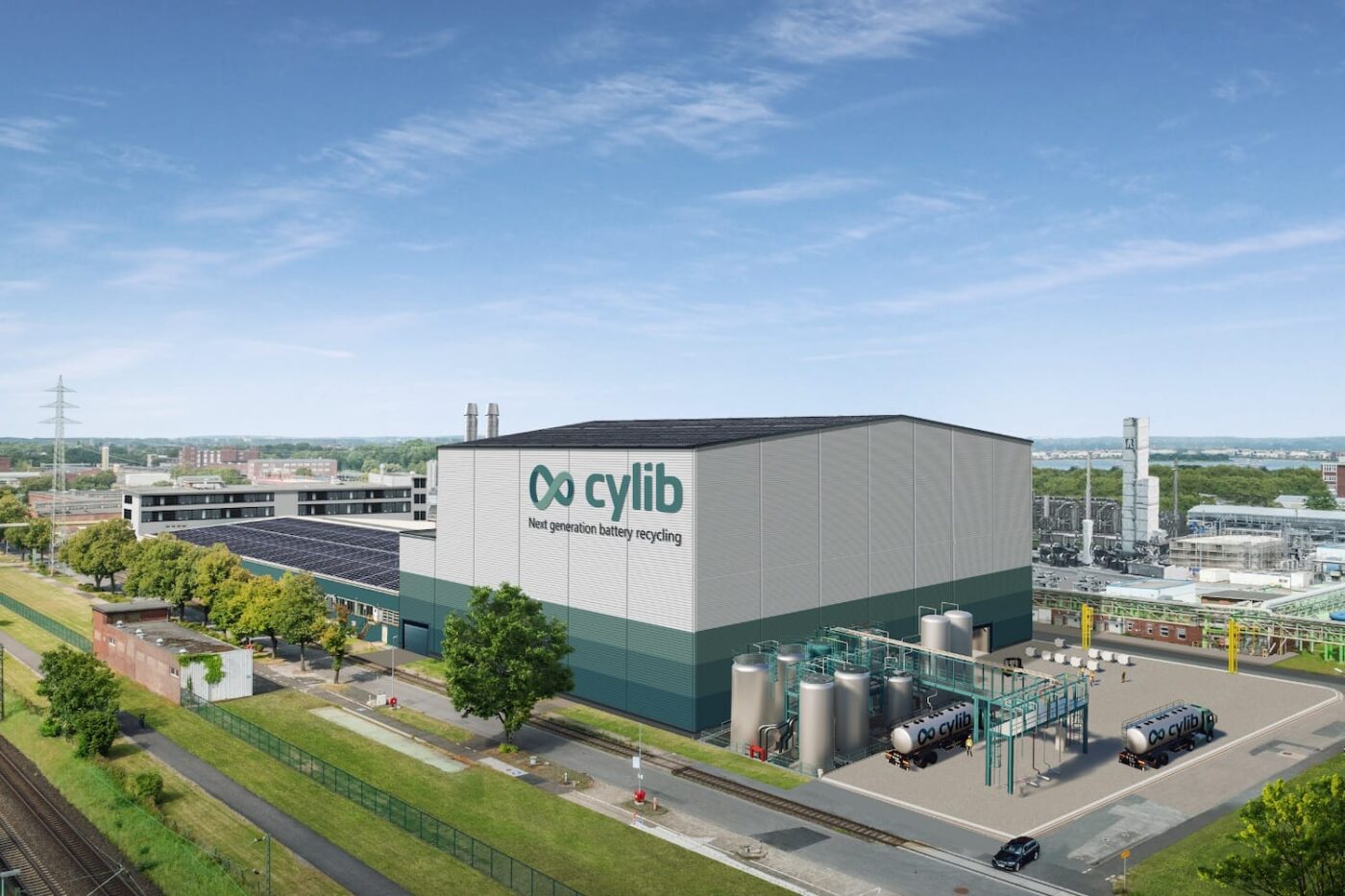
Among the recipients is German battery recycling specialist Cylib, which secured €63.4 million to finance the second expansion phase of its facility in Dormagen, located in the Rhenish coal region. The project aims to establish Europe’s first recycling plant dedicated to lithium iron phosphate batteries, with an annual processing capacity of 30,000 tonnes and a targeted material recovery rate of 90% using a hydrometallurgical process. Total investment for the project stands at €181.13 million, with the government covering roughly one-third of the costs. Cylib expects to create 180 direct jobs and about 1,000 indirect jobs.
Funding has also been allocated to AMG Lithium to expand production of battery-grade lithium salts in Bitterfeld-Wolfen, in Germany’s Central German coal region. The project targets an annual output of 20,000 tonnes of lithium compounds, equivalent to roughly 34 GWh of battery production per year. The ministry is contributing €36 million toward the €180 million investment, with AMG Lithium planning to create 70 new jobs by 2029.
In the Lusatian coal region, Altech Batteries GmbH is building a factory at the Schwarze Pumpe industrial park in Spreetal to manufacture stationary energy storage systems based on sodium chloride solid-state batteries. The project, which runs until the end of 2028, is expected to create 162 jobs initially, with long-term potential for up to 700 positions. Of the €153.69 million total investment, €46.11 million is being provided by the ministry.
“The coal regions are becoming the industrial future regions,” said Katherina Reiche, Germany’s economy minister. “By funding battery cells, recycling and other key technologies, we are creating new value chains, secure jobs and greater technological sovereignty for Germany.”
See also: CATL to Double Battery Testing Capacity in Germany by 2026
The funding is drawn from the federal STARK programme, which supports economic transformation and new industrial activity in coal regions and at former coal power plant sites. The ministry said it plans to publish a new funding call next year to continue backing companies investing in the affected regions.