
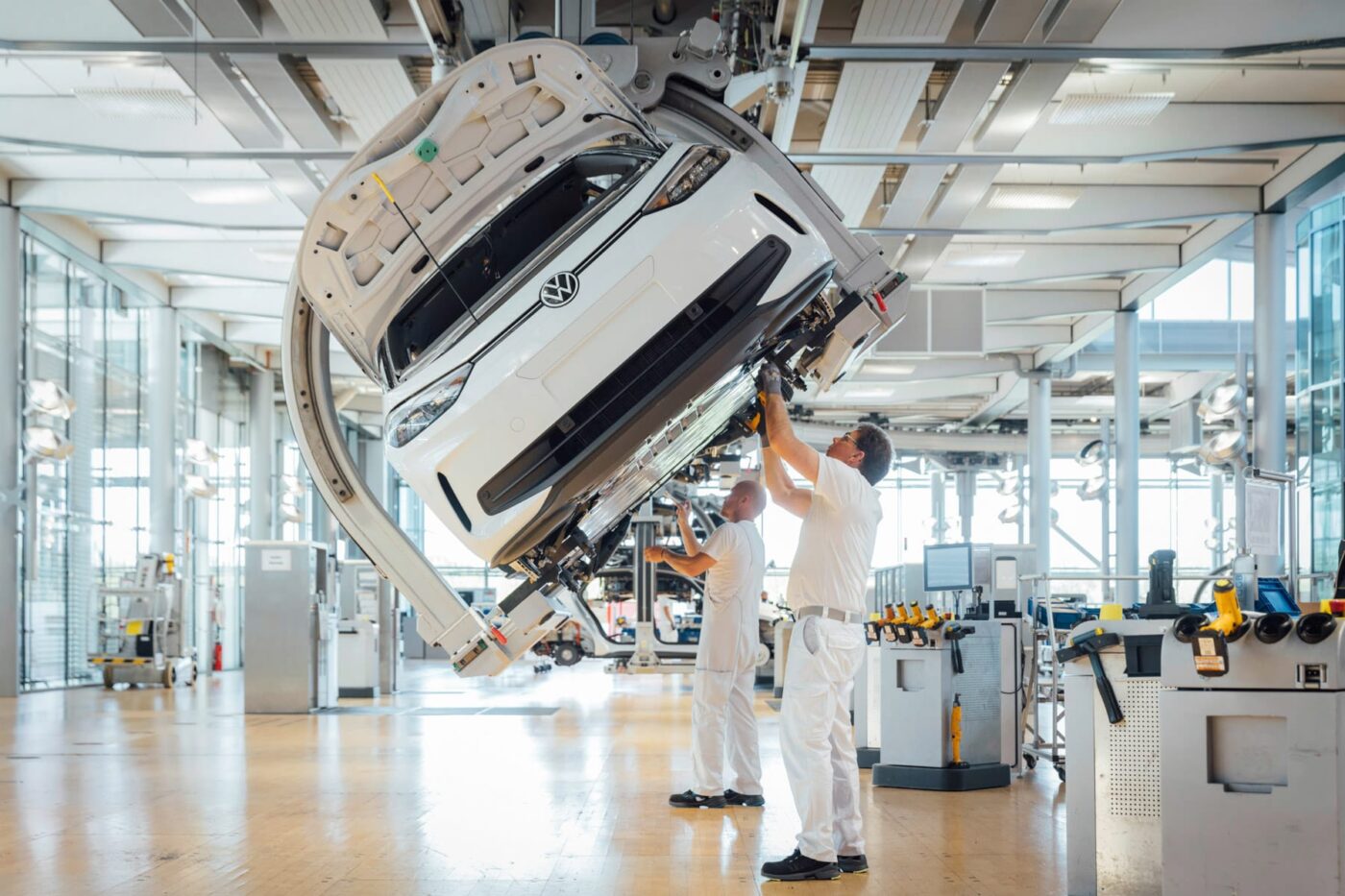
Volkswagen is preparing to convert its Transparent Factory in Dresden into an innovation hub after vehicle production ends later this year, according to a report by German business publication Handelsblatt, as the automaker advances a wider restructuring of its industrial and research footprint.
The move would mark the next phase for Volkswagen’s smallest German plant, where the last ID.3 electric vehicles are expected to roll off the production line shortly before Christmas. Handelsblatt, citing multiple sources familiar with the matter, reported that Volkswagen Sachsen, the state of Saxony and the Technical University of Dresden (TU Dresden) have signed a letter of intent covering the factory’s future use from 2026. A final, legally binding agreement has not yet been concluded.
See also: Volkswagen Brand Group Core Moves to Regional Production Model in Efficiency Push
“The plan is to establish an innovation hub with a seven-year term, designed to combine cutting-edge research and knowledge transfer in forward-looking technology fields. Under this model, VW would become a research partner of TU Dresden and commission projects from the university,” Handelsblatt wrote.
Volkswagen announced in December 2024 that it would end vehicle production at the Transparent Factory as part of a broader labour settlement with IG Metall after months of negotiations and strikes. Under the so-called “Christmas Peace” agreement, the company committed to cutting 35,000 jobs by 2030 and reducing production capacity by 700,000 vehicles without closing any German plants. The deal also provided that production in Dresden would cease by the end of 2025 while exploring a “follow-up use” for the site.
See also: Volkswagen Says China-Built EVs Can Be Developed at Half the Global Cost
A works meeting is scheduled for Dec. 4, when Volkswagen Sachsen management, Volkswagen brand chief executive Thomas Schäfer and group works council chairwoman Daniela Cavallo are expected to brief the workforce on the next steps.
Employment remains a key challenge in the transition. About 205 workers previously assembled around 6,000 ID.3 units a year at the site. In September, VW Sachsen told the Saxony State Chancellery it could offer future roles to only 135 of those employees. According to company sources cited by Handelsblatt, many workers have since accepted severance or early-retirement packages.
See also: Volkswagen Says Rivian-Developed Software Could Extend to Combustion Models as Partnership Advances
Roughly 60 employees could remain without defined roles if the innovation hub proceeds. Under Volkswagen’s employment guarantees, which extend to 2030, staff could theoretically remain on payroll even without assignments. “If no tasks are found, employees may, in the worst case, have to stay at home with continued pay,” the report said.
Financing also remains unresolved. TU Dresden is expected to lease nearly half of the site, but it is unclear who would bear the estimated €50 million ($54 million) cost of converting the automotive plant into an innovation and research centre.
The Dresden plans come amid wider strategic changes at Volkswagen. This month, the group appointed Ludwig Fazel as its new Head of Group Strategy, Group Product Strategy and General Secretariat following the departure of Stefan Weckbach, as the automaker reshapes its leadership and long-term technology planning.
See also: Volkswagen Resumes Chip Deliveries from Chinese-Owned Nexperia After Supply Halt
Volkswagen is also expanding its research footprint outside Germany. On Nov. 25, Volkswagen Group China Technology Company (VCTC) inaugurated a new testing hall at its Hefei research and development centre, completing a major expansion and establishing the site as the group’s first fully integrated development hub outside Germany.
The Transparent Factory was originally built to produce Volkswagen’s flagship Phaeton sedan in an exclusive environment and later assembled Bentley models. From 2017 to 2020, the e-Golf was built in Dresden, followed by the ID.3 from 2021 as the site became part of Volkswagen’s electric vehicle transition.