
Tesla has completed the rollout of what it describes as its largest Supercharger installation to date, bringing the total number of high-speed charging points at a major Interstate 5 site in California to 164 after activating an additional 80 units this month.
The charging park, located roughly halfway between San Francisco and Los Angeles, was first announced last year by Max de Zegher, Tesla’s Director of Charging for North America, Europe, the Middle East, Africa and Asia Pacific. Tesla initially outlined plans for up to 168 charging points at the location. The first 84 Superchargers entered service in July, following about eight months of construction.
See also: Edenred Adds Tesla Superchargers to European Fleet Charging Network
With the latest activation, the site — dubbed “Tesla Oasis” by the company — now stands as the largest Supercharger hub globally, despite falling slightly short of the original target. Each charger is reported to offer peak power of up to 325 kW.
De Zegher said the project was accelerated to address forecasted charging shortfalls. “Our forecasts showed a severe charging infrastructure deficit along the San Francisco – Los Angeles corridor for the 2025 holidays and beyond, creating extreme urgency to bring more Superchargers online,” he wrote on social media platform X. He added that Tesla bypassed conventional grid delays by relying on its own energy systems: “With our own solar generation and Megapacks, we have control of our timeline, delivering the needed capacity in under 8 months from construction start.”
See also: Tesla Supercharger Leads U.S. DC Fast-Charging Expansion in Q3 as Network Surpasses 64,000 Ports
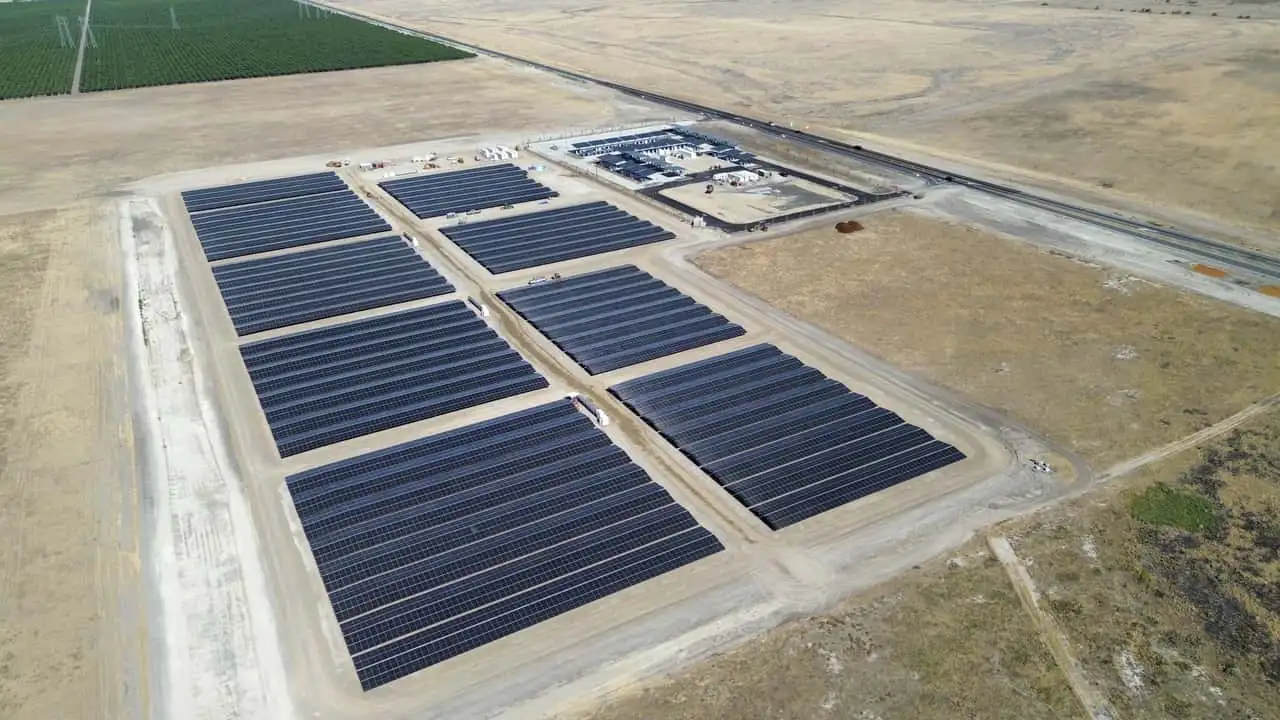
The site is powered primarily by an 11-megawatt solar installation, with most photovoltaic panels located on adjacent open land rather than on the charging canopies. Excess solar energy is stored in 10 Tesla Megapacks with a combined storage capacity of 39 megawatt-hours, which supply power to the charging equipment as needed.
De Zegher said the facility operates largely independently of the local grid. “We have a small utility connection but it will mainly be used for future expansions. For almost every day of the year, it’s 100% sunshine powering cars,” he said. Earlier reports indicated the grid link may be limited to about 1.5 MW, enough to support only a handful of chargers at full output.