
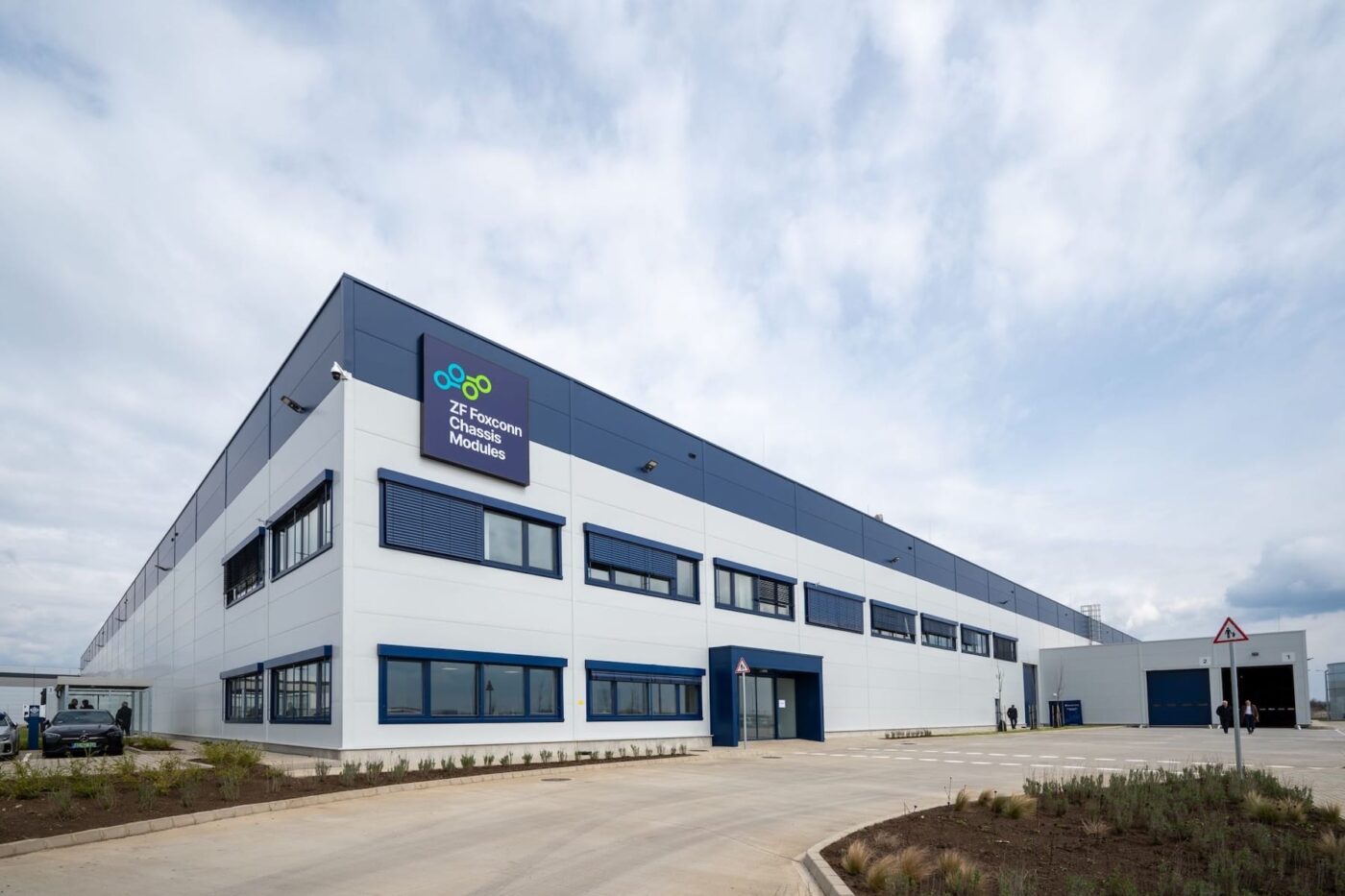
The joint venture between ZF Friedrichshafen and Foxconn has opened a new factory in Debrecen, Hungary, positioning the operation close to BMW’s upcoming vehicle plant to support electric vehicle production, the partners said.
The facility will manufacture electric front and rear axles for BMW’s Neue Klasse electric models, including the next-generation iX3, using just-in-sequence production. The location near BMW’s site was a deliberate choice, reflecting the growing trend among automakers to cluster suppliers near EV assembly plants to reduce logistics complexity and costs.
See also: ZF and Qualcomm Team Up on Turnkey ADAS Platform for Level 3 Automation
The joint venture, formally known as ZF Foxconn Chassis Modules, or ZFFCN, was created in spring 2024 when Foxconn acquired a 50% stake in ZF Chassis Modules, a ZF subsidiary. Foxconn is reported to have invested around 500 million euros in the transaction, giving the Taiwanese group a significant foothold in the automotive supply chain.
When the partnership was announced in 2023, former ZF chief executive Holger Klein said the alliance would help both companies expand into new markets. “With Foxconn, we have gained a strong strategic partner with whom we can open up new perspectives and opportunities for the ZF Chassis Modules GmbH,” Klein said at the time, adding that the deal was intended to grow selected ZF businesses beyond their existing limits.
See also: ZF Group Agrees To Sell ADAS Business to Harman In €1.5 Billion Deal
Foxconn, best known globally as a major manufacturer of Apple’s iPhone, has been pushing to establish a broader presence in the automotive sector. The company has presented several vehicle prototypes and secured partnerships, including with Mitsubishi, as it seeks to apply its high-volume electronics manufacturing model to vehicles. Supplier roles such as the ZF joint venture are seen as a key part of that strategy.
The Debrecen plant was built in 13 months at a cost of 26.7 million euros and covers more than 15,000 square metres, most of which is dedicated to production and storage. Each electric axle undergoes between 22 and 24 assembly steps on a highly automated line, supported by automated guided vehicles for internal logistics. The factory operates entirely on renewable electricity, the company said.
The investment is also expected to boost employment in Hungary’s growing e-mobility cluster. ZFFCN said around 550 new jobs will be created by 2027 at the Debrecen site and at another planned facility in Kecskemét, adding to ZF Chassis Modules’ global workforce of roughly 4,000 employees across 27 locations.