
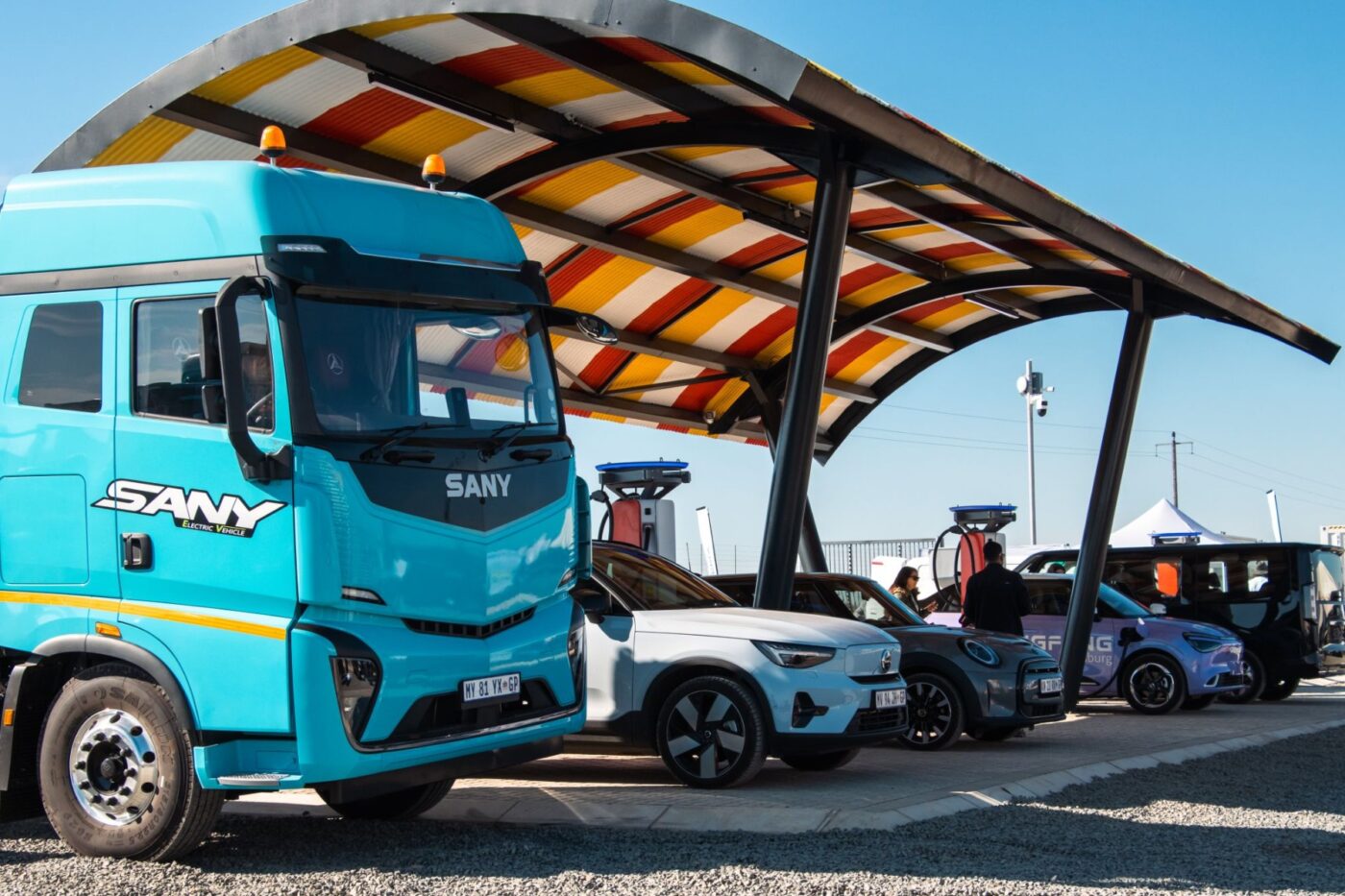
South African charging infrastructure company Zero Carbon Charge has commissioned two off-grid, solar-powered high-power charging stations along the Johannesburg-Durban N3 transport corridor as part of efforts to expand electric vehicle infrastructure in the country.
The company, also operating under the CHARGE brand, said the charging stations are powered entirely by solar energy combined with battery storage systems and ultra-fast charging technology.
According to CHARGE, the two sites entered operation last week and are designed to support both passenger electric vehicles and commercial electric trucks.
“This will now allow any EV or electric truck driver to travel long-distance, showing that electric mobility in South Africa is no longer theoretical – it is operational,” the company said in a LinkedIn statement.
CHARGE said more than 25 electric vehicles and electric trucks used the charging stations during the two-day launch phase. The facilities delivered more than 1 megawatt-hour of solar-powered electricity during that period, exceeding the company’s initial expectations.
“This demonstrates that renewable-powered infrastructure can support both passenger EVs and commercial electric freight at scale,” the company added.
The N3 corridor is one of South Africa’s main passenger and freight transport routes.
CHARGE said it plans to expand its charging network beyond the N3 and is preparing future deployment along the N1 corridor. The company aims to establish 60 charging stations nationwide by the end of 2027.
The expansion comes as South Africa works to improve electric vehicle charging infrastructure amid broader concerns over electricity grid reliability and energy security.
By operating independently from the national electricity grid, the charging stations allow EV users to recharge vehicles using locally generated renewable energy.
Joubert Roux, co-founder and chair of Zero Carbon Charge, said corridor-based charging infrastructure could contribute to greater long-term transport cost stability.
“By building off-grid EV charging infrastructure along key transport corridors like the N3, we are reducing dependence on volatile fuel prices while creating greater energy and transport cost stability over the long term,” Roux told Reuters.