
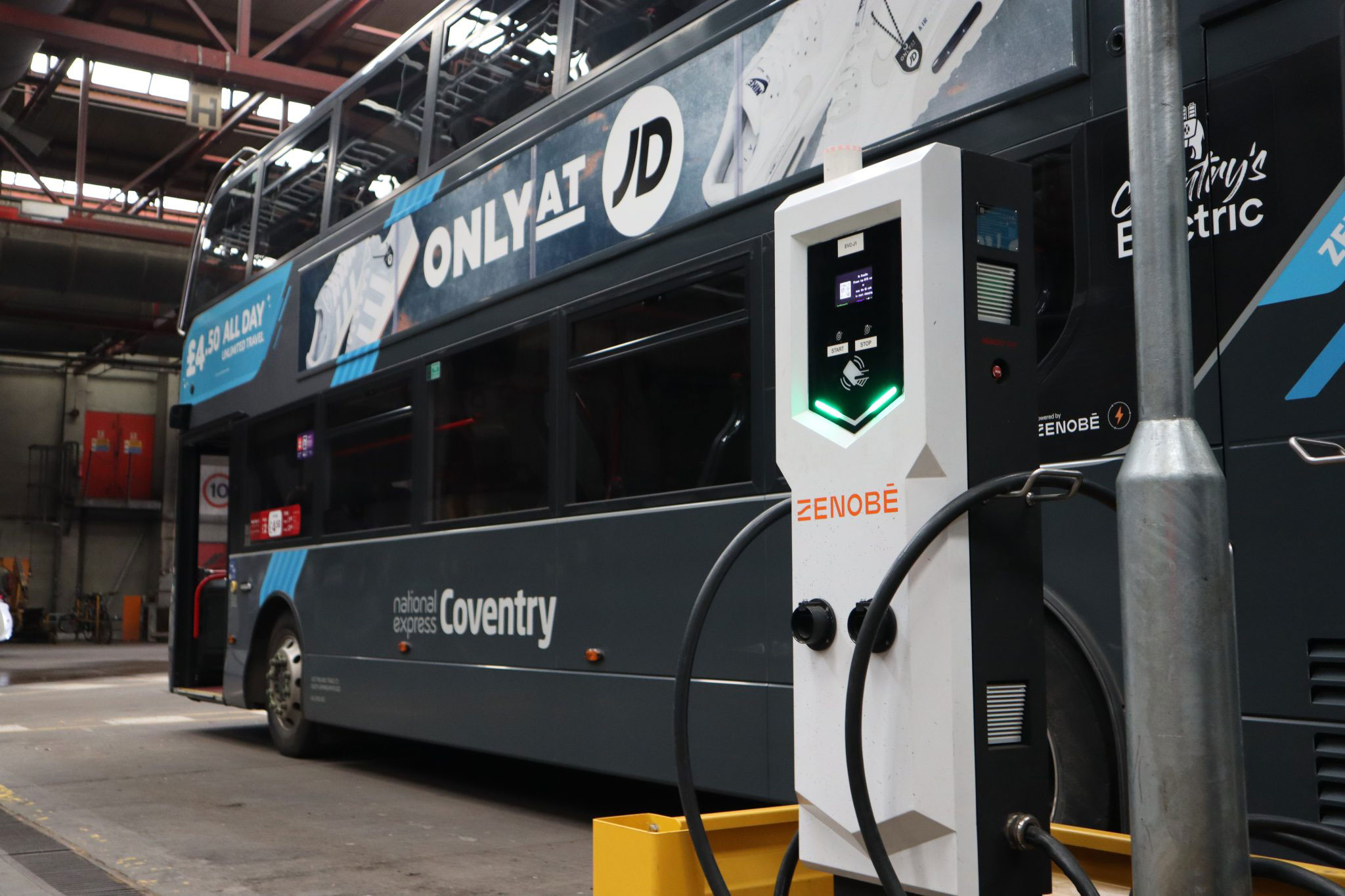
Zenobē is extending its partnership with the West Midlands Combined Authority (WMCA) as the region moves toward publicly controlled bus services, continuing to provide and maintain infrastructure supporting 459 electric buses across West Midlands depots.
The electric bus contracts and associated charging equipment will transfer to West Midlands Bus Company, which WMCA intends to acquire in the second half of 2026. Zenobē will remain responsible for supplying and maintaining the infrastructure during the transition, working with WMCA and future franchise operators.
Electric Bus Infrastructure Remains Under Zenobē
The transition is expected to take place in stages through the remainder of 2026, ahead of the full implementation of bus franchising across the West Midlands in subsequent years.
Under the extended arrangement, Zenobē will continue supporting the charging and infrastructure requirements associated with the region’s electric bus fleet. The company will work alongside WMCA and operators appointed through the future franchising structure.
The arrangement allows the authority to maintain continuity for its existing electric fleet while bus services move toward public control.
Bus Franchising Creates New Infrastructure Model
The West Midlands agreement reflects a broader development in the UK’s bus market as combined authorities introduce franchising and seek to expand control over local public transport.
Authorities taking responsibility for bus networks are also facing the need to maintain and expand electric fleets, charging systems and related infrastructure. Specialist companies such as Zenobē can provide infrastructure and fleet support without requiring public authorities to take on all aspects of electric vehicle asset management directly.
Zenobē Secures £980 Million to Expand Electric Bus Fleets Across UK and Ireland
Zenobē works with combined authorities in other parts of the UK to support the transition to zero-emission public transport.
Zenobē Sees Long-Term Role in Public Transport
Zenobē co-founder Steven Meersman said the company’s relationship with WMCA was structured around supporting the authority’s transport and net-zero objectives while providing certainty for its electric fleet.
He said the model could also be applied by other combined authorities bringing bus services back under public control.
The West Midlands arrangement highlights the growing role of specialist infrastructure providers as UK local transport authorities expand electric bus fleets and introduce new operating models for publicly managed bus services.