
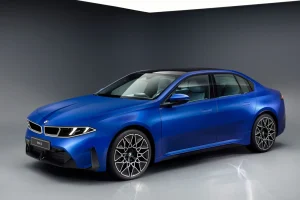





Xpeng plans to launch three robotaxi models and begin trial operations in 2026, marking a significant step in its autonomous mobility ambitions. Chairman and CEO He Xiaopeng announced the plan at the company’s 2025 AI Day event in Guangzhou, unveiling details of its next-generation self-driving technology.
The upcoming robotaxi fleet will be powered by four of Xpeng’s in-house Turing AI chips, delivering a combined computing power of 3,000 TOPS (trillion operations per second) — four times higher than the company’s current top-tier models.
See also: Xpeng’s Aridge Completes First Flying Car Body, Marks Step Toward Mass Production
The vehicles will utilize Xpeng’s second-generation Vision-Language-Action (VLA) model, designed to handle complex driving environments and adapt to global traffic systems. Unlike traditional robotaxis, these models will require no hardware modifications or high-definition maps, enabling low-cost, mass-scale production.
According to Xpeng, the new robotaxis will feature cross-city and cross-border operational capabilities, expanding their usability beyond geo-fenced test zones. They will also include external communication displays that visually inform pedestrians of the vehicle’s actions — such as turning, stopping, or searching for parking — directly through the windshield.
See also: Xpeng to Unveil Extended-Range X9 MPV with 1,602-Kilometre Combined Range
To accelerate ecosystem growth, Xpeng will open its robotaxi Software Development Kit (SDK) to partners worldwide. The company’s first global partner is Gaode Map (Amap), one of China’s leading navigation apps, which will integrate its mapping and traffic data with Xpeng’s robotaxi system.
Beyond the new robotaxi models, Xpeng announced plans to introduce Robo trims for its existing lineup in 2026, complementing its Max and Ultra variants. These Robo versions will offer Level 4 autonomous driving capabilities, powered by four Turing AI chips with 3,000 TOPS of computing power. For comparison, current Max trims feature up to 750 TOPS using either one Turing AI chip or two Nvidia Orin X chips, while Ultra trims use three Turing AI chips delivering 2,250 TOPS.


