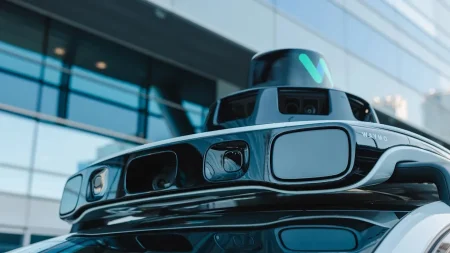


Xpeng has obtained permits to conduct Level 3 (L3) conditional autonomous driving road tests in its headquarters city of Guangzhou and has begun regular testing on public roads, local media outlet Yicai reported on Tuesday.
According to the report, the permits allow Xpeng to carry out L3 autonomous driving tests on designated routes within Guangzhou. Xpeng vice president Yu Tao later confirmed the development, adding that the company expects “surprises” in the first quarter of next year.
The move comes as China advances its regulatory framework for higher-level autonomous driving. On Monday, the Ministry of Industry and Information Technology (MIIT) announced approvals for two L3 autonomous driving models, one from Changan Automobile and another from Arcfox, the electric vehicle unit of Beijing Automotive Group. The approvals marked China’s first issuance of L3 permits for conventional passenger vehicles, authorizing the Changan Deepal SL03 and Arcfox Alpha S sedan to conduct public road testing on specified routes.
Earlier on Tuesday, Cailian reported that Huawei’s Harmony Intelligent Mobility Alliance (HIMA) business had also begun internal L3 conditional autonomous driving tests in Shenzhen in cooperation with local transportation authorities.
Xpeng is widely regarded as one of China’s more advanced electric vehicle makers in smart driving technology. At its 2025 AI Day event last month, the company unveiled its VLA 2.0 system, which it said incorporates Level 4 capabilities and is planned for deployment starting in the first quarter of 2026.
Earlier this month, Xpeng chairman and chief executive He Xiaopeng visited Silicon Valley to experience Tesla’s latest Full Self-Driving (FSD) software, marking his second such visit since June last year. He said the system had progressed from a smooth Level 2 advanced driver assistance experience to what he described as a reassuring near-Level 4 capability.
Xpeng plans to launch VLA 2.0 next quarter, though He said the initial version will not yet fully match the performance of Tesla’s current FSD V14.2 due to development timelines. He added that if Xpeng’s VLA software achieves comparable performance in China by August 30, 2026, he would approve the establishment of a Chinese-style cafeteria for the company’s Silicon Valley team.