


Chinese electric vehicle maker Xpeng said a joint research paper with Peking University has been accepted by the Association for the Advancement of Artificial Intelligence (AAAI) 2026 conference, highlighting the company’s ongoing work in autonomous driving technologies.
The paper, titled FastDriveVLA: Efficient End-to-End Driving via Plug-and-Play Reconstruction-based Token Pruning, was selected from 23,680 submissions, with 4,167 accepted for presentation, representing an acceptance rate of about 17.6%.
See also: Xpeng Teases Updated P7+ With Dual-Power Options and Broader Global Rollout
The research focuses on improving the efficiency of Vision-Language-Action (VLA) models, which are increasingly used in end-to-end autonomous driving systems to interpret complex driving environments and generate control decisions. Such models rely on processing large volumes of visual tokens, a factor that can significantly increase computational demand and affect real-time performance.
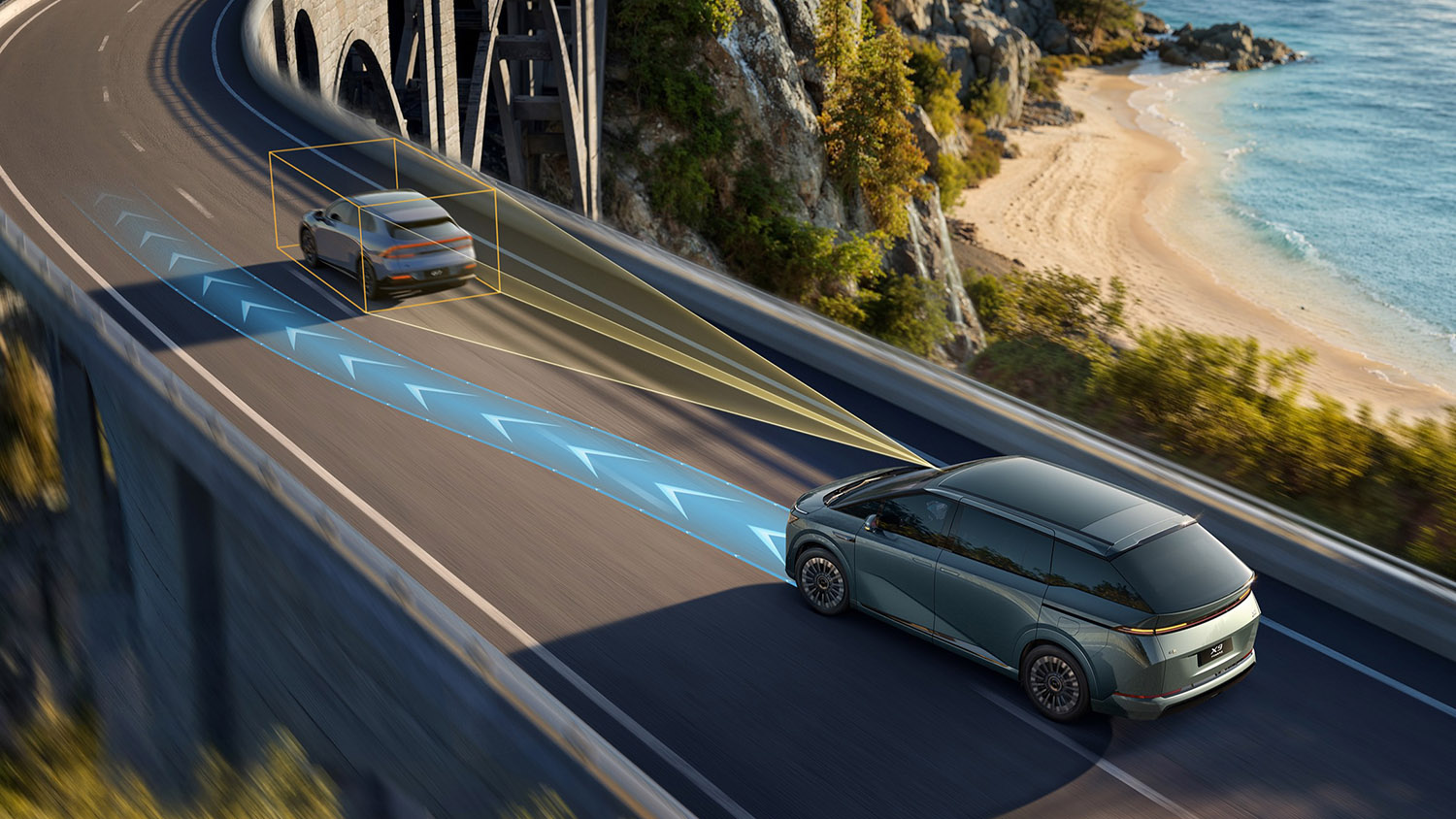
According to Xpeng, the proposed FastDriveVLA framework introduces a reconstruction-based approach to visual token pruning, allowing models to focus on critical driving elements while filtering out less relevant background information. The method is designed to emulate how human drivers prioritize key visual cues, enabling artificial intelligence systems to “drive like a human” by concentrating on essential elements such as lanes, vehicles and pedestrians.
See also: Xpeng Secures L3 Autonomous Driving Test Permits in Guangzhou
The company said the framework uses an adversarial foreground-background reconstruction strategy to improve the selection of informative visual tokens. In tests on the nuScenes autonomous driving benchmark, FastDriveVLA maintained high planning accuracy even as the number of visual tokens was reduced from 3,249 to 812, cutting computational load by nearly 7.5 times.
The acceptance of the paper marks the second time this year that Xpeng’s research has been recognized by a major international artificial intelligence conference. In June, the company participated in the CVPR Workshop on Autonomous Driving, where it presented work related to foundation models for autonomous systems.
See also: Xpeng CEO Compares Tesla FSD With VLA System, Eyes 2026 Catch-Up
Xpeng said the latest research reflects its broader efforts to build end-to-end autonomous driving capabilities, including its recently unveiled VLA 2.0 architecture, which removes the intermediate “language translation” step in favor of direct visual-to-action processing.
The company said it plans to continue investing in large-scale AI models and autonomous driving technologies as it works toward higher levels of vehicle automation, including Level 4 autonomy.