
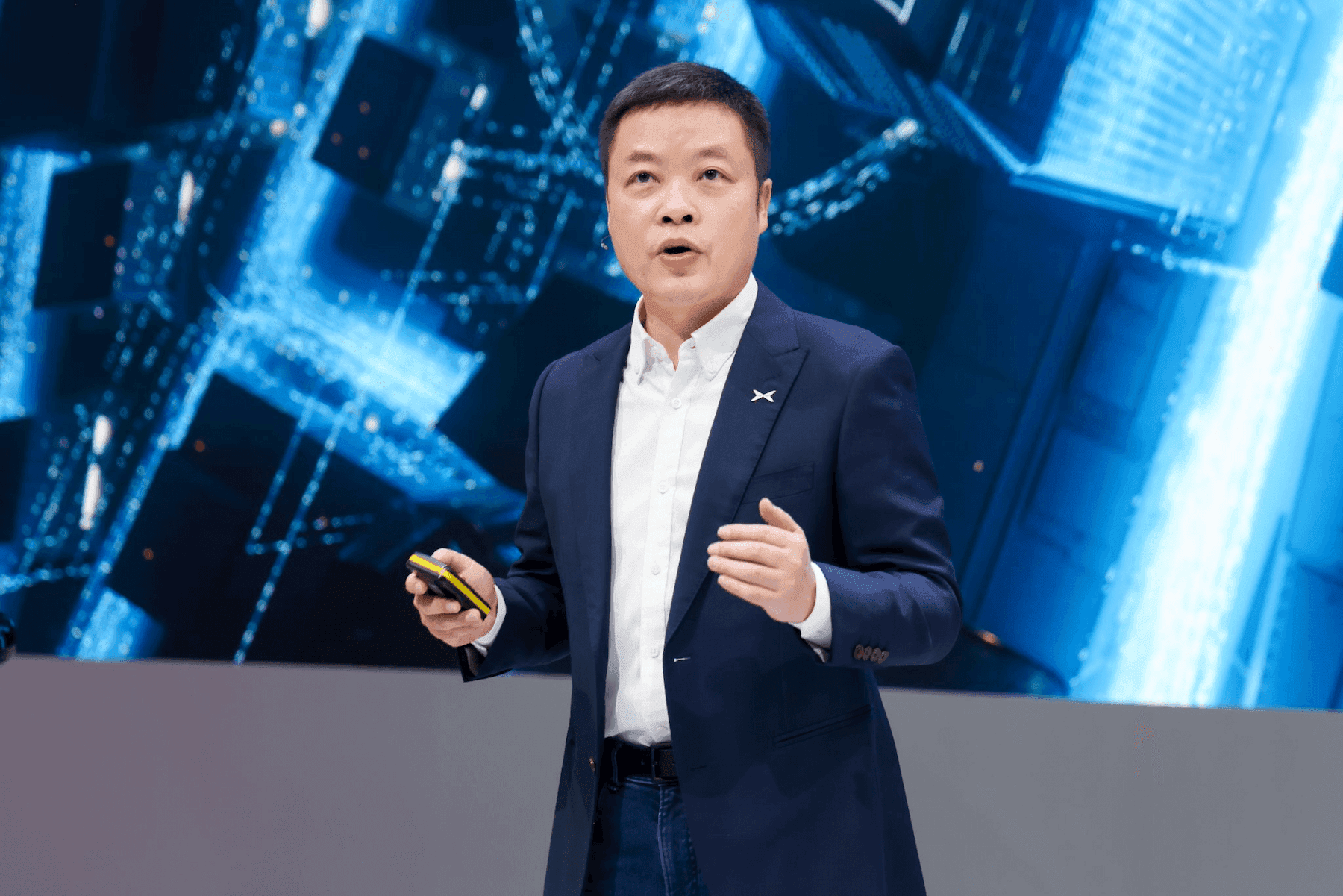
Xpeng Chairman and Chief Executive Officer He Xiaopeng has assumed direct leadership of the company’s robotics division, underscoring the strategic importance of humanoid robots to the Chinese automaker’s long-term growth plans.
According to a report by CnEVPost, He announced in an internal letter to employees that he would immediately take on the role of “CEO” of Xpeng’s robotics business, a move aimed at accelerating the unit’s transition from research and development to large-scale commercialization.
The decision comes as Xpeng seeks to expand beyond electric vehicles and establish itself as a broader artificial intelligence and robotics company.
Robotics Business Nearing Commercialization
According to the internal memo obtained by CnEVPost, He described the robotics division as being at a pivotal stage in its development, comparing the current moment to the period before Xpeng launched its first production vehicle, the G3 SUV, nearly a decade ago.
He said the business now stands on the threshold of mass production and commercial deployment.
The executive characterized the leadership change as an important step in Xpeng’s evolution from a smart vehicle manufacturer into what he called a “physical AI company.”
Three Strategic Growth Engines
He outlined automobiles, robotics and globalization as the three core pillars of Xpeng’s long-term strategy over the next decade.
To support that vision, he said the company intends to transfer expertise developed through its automotive operations—including supply chain management, manufacturing systems and international expansion capabilities—into the robotics business.
The company believes leveraging existing automotive resources could help accelerate the development and scaling of humanoid robot production.
Mass Production Planned for 2026
Xpeng’s latest roadmap calls for the mass production and initial delivery of humanoid robots in the fourth quarter of 2026.
The company plans to deploy robots in Xpeng retail stores across China during the first quarter of 2027, where they are expected to assist with customer-facing tasks.
International expansion is targeted for the second quarter of 2027, while broader household adoption is envisioned beginning in 2028.
He said he has already been deeply involved in the robotics business, spending at least one full day each week over the past year focused on discussions, planning and decision-making related to the project.
Leadership Changes and Manufacturing Expansion
The announcement follows a recent personnel change within the robotics unit. Earlier this month, Shi Xiaoxin, a key product leader and founding member of Xpeng’s humanoid robot program, departed from the company.
Despite the change, Xpeng continues to expand its robotics manufacturing capabilities.
The company began construction of a humanoid robot production facility covering approximately 110,000 square metres during the first quarter of this year. It also completed delivery of its first ET1 robot prototype developed using automotive-grade engineering standards in January.
Iron Robot Showcases AI Ambitions
Xpeng attracted industry attention during its Tech Day event in November 2025 when it unveiled the latest version of its Iron humanoid robot.
The robot demonstrated highly realistic movement and walking capabilities, prompting some observers to question whether the presentation involved human assistance. He later publicly displayed the robot’s internal structure to address the speculation.
The latest Iron model features an all-solid-state battery, three internally developed Turing AI chips and computing power of 2,250 TOPS. The robot is also equipped with Xpeng’s second-generation Vision-Language-Action (VLA) model, designed to improve perception, reasoning and physical interaction capabilities.
Competition Intensifies in Humanoid Robotics
Xpeng’s increased focus on robotics reflects growing competition among Chinese technology and automotive companies seeking opportunities in embodied artificial intelligence.
As advances in AI models, semiconductors and manufacturing technologies accelerate, several companies are racing to commercialize humanoid robots for industrial, commercial and consumer applications.
By placing its founder directly in charge of the business, Xpeng is signaling that robotics could become a central component of the company’s future alongside electric vehicles and other mobility technologies, according to CnEVPost.