



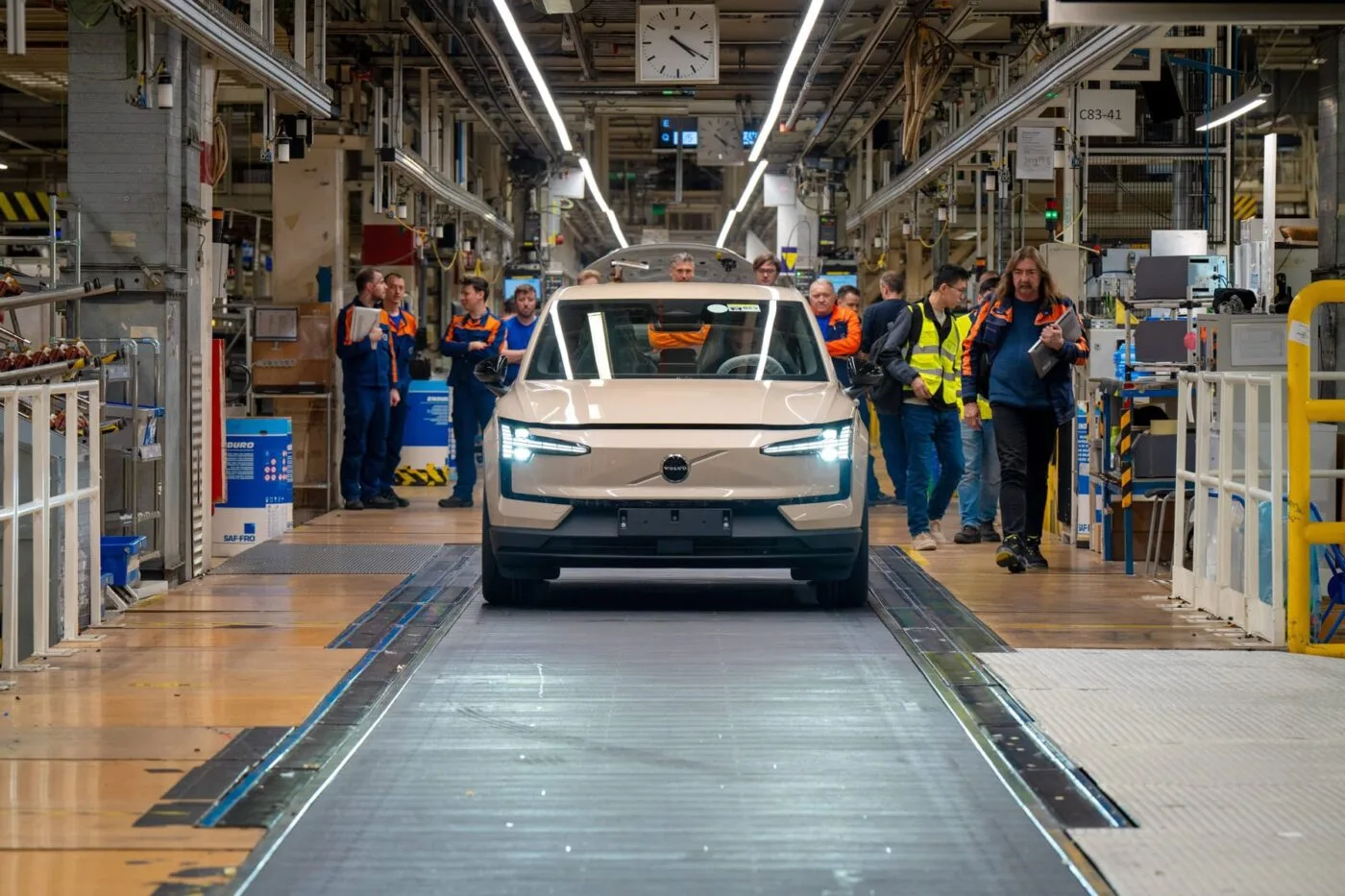
Volvo has shifted production of its EX30 electric crossover for Europe to its Ghent factory in Belgium, a move aimed at avoiding higher European Union tariffs on Chinese-made electric vehicles and reducing long delivery times.
The Swedish-Chinese carmaker began producing the European-spec EX30 in Ghent in April, avoiding the 28.8% tariff on Chinese EV imports, up from the previous 10%. The decision also responds to lengthy waits, which in 2024 reached up to eight months in markets such as Sweden and Germany. Volvo now targets a delivery window of 90 days once production is fully ramped up, a goal it expects to achieve before year-end, according to European chief Arek Nowinski.
“The car is now being built in Europe, which means faster delivery times,” Volvo CEO Hakan Samuelsson told Automotive News Europe. He added that shorter waits should help the EX30 recover market share lost since tariffs were introduced. In the first half of 2025, the model dropped to 12th place in European EV sales from third a year earlier, according to Dataforce.
The Ghent plant will also produce EX30 models for the United States, where 147% punitive tariffs have made the Chinese-built version “virtually unsellable.” Vehicles made in Belgium face a 15% US import duty. The relocation is expected to support Volvo’s broader EV strategy, with the company planning to add production of the larger EX40 at Ghent in 2026.
Volvo has been working to build inventory for the EX30 to improve availability, with some pre-built units delivered in as little as a week. “The cheaper the car, the more vehicles you need to have in stock,” Nowinski said.
The EX30, starting at €38,490, quickly became one of Volvo’s most important models, ranking fourth in the company’s global sales last year. Delivery delays have contributed to a 9% drop in global sales in the first half of 2025 and an operating loss of about $1 billion in the second quarter. Samuelsson said he expects sales and market share to return to pre-tariff levels once European production is stabilised.


