



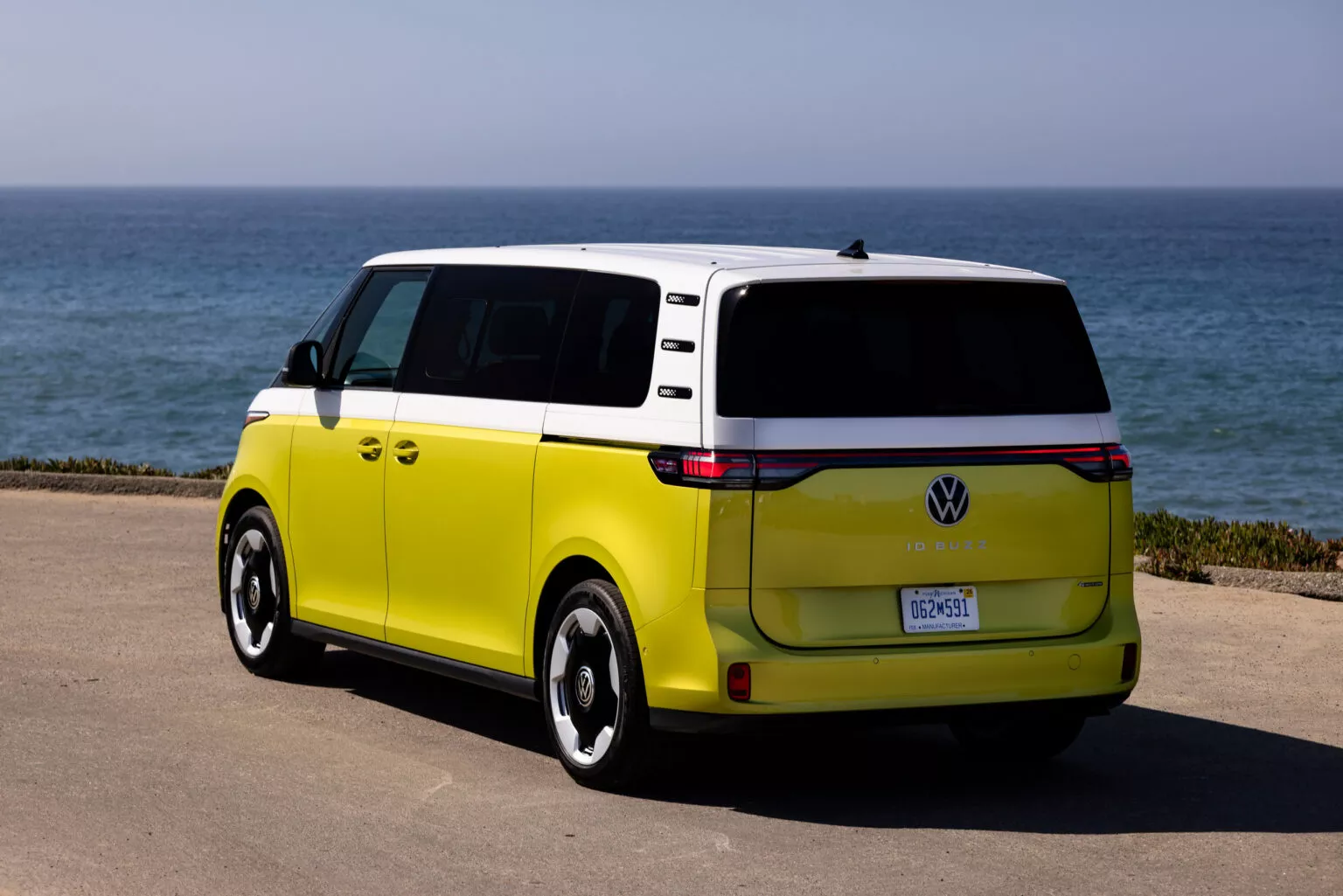
Volkswagen’s electric minivan, the ID. Buzz, is drawing attention not just for its retro-futuristic design, but also for the complexity of its routine maintenance.
The placement of essential components such as the cabin air filter and brake fluid reservoir has sparked criticism for requiring multiple body panel removals – a process that typically involves far less effort in other vehicles.

Unlike conventional setups where a cabin filter is easily accessible behind the glove box, the ID. Buzz requires owners to unbolt upper body panels flanking the hood, disconnect electrical wiring and washer fluid lines, and remove the hood itself to reach the filter.
While the procedure doesn’t demand specialist tools, the labor-intensive process adds unexpected hurdles to what is usually a quick and simple task.
@chromelizard Volkswagen ID. Buzz 2024 Pollen Filter Replacement #volkswagen #idbuzz #2024 #vw #van #pollenfilter #mechanic #buzz #mechanicsoftiktok #cartok #automaintenance #germancars
Compounding the concern, the same hidden compartment also houses the brake fluid reservoir – a critical maintenance component that generally needs regular inspection. The extra work involved in checking fluid levels could result in increased reliance on dealer servicing.
The design decision underscores how the freedom offered by electric vehicle architecture can sometimes lead to trade-offs in practicality. While the ID. Buzz continues to appeal to enthusiasts with its styling and electric drivetrain, the maintenance layout diverges sharply from the simplicity of its iconic predecessor.


