

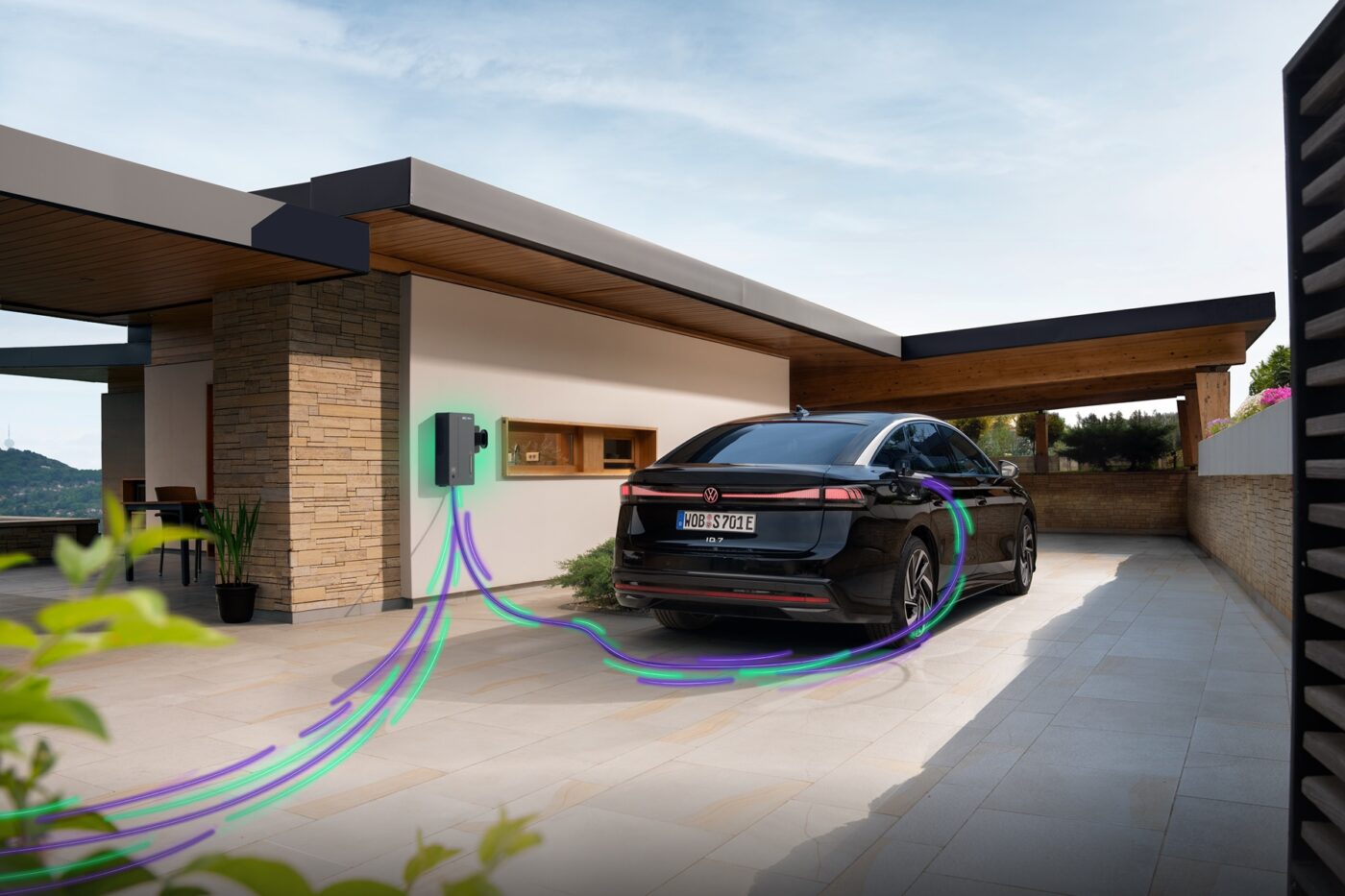
Volkswagen has revealed new details of its upcoming Vehicle-to-Grid (V2G) offering in Germany, including eligible brands, customer incentives, and charging hardware, as the automaker prepares for a commercial launch in the fourth quarter of 2026.
The initiative, developed through Volkswagen’s energy subsidiary Elli, will initially be available to customers of Volkswagen, Volkswagen Commercial Vehicles, and Cupra. The company has opened non-binding registration for the service during the Power2Drive Europe trade fair in Munich.
Integrated V2G Package
Volkswagen’s V2G package combines compatible electric vehicles, a bidirectional DC wallbox, the Volkswagen Naturstrom V2G Flow electricity tariff, a dedicated mobile app, and backend energy management services.
The offering is designed to allow participating EVs to feed electricity back into the public grid when parked, creating additional value from vehicle batteries while supporting grid stability.
Volkswagen said additional brands and markets, including France and the United Kingdom, could follow once regulatory, technical, and product requirements are met.
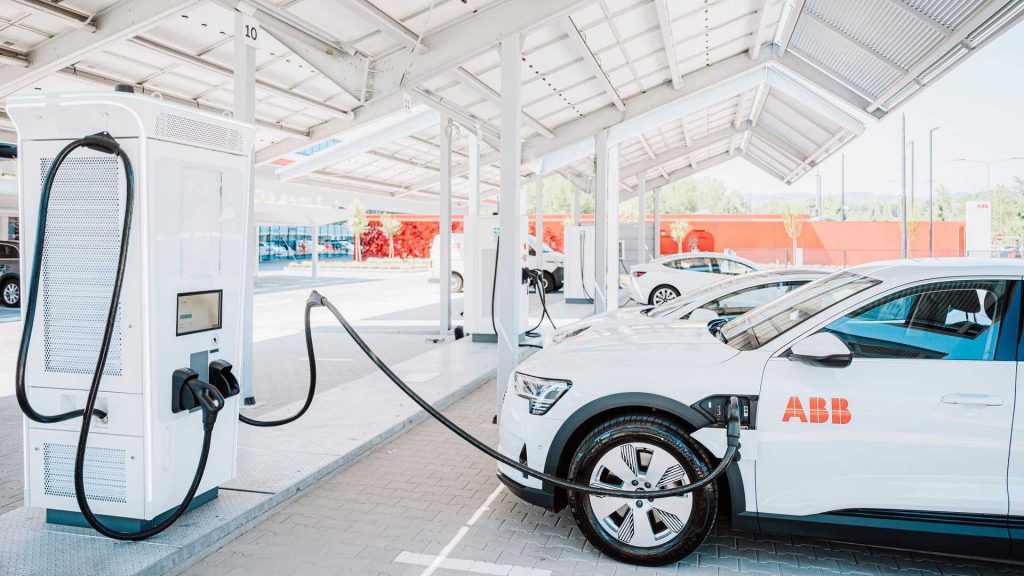
New Bidirectional Wallbox
The charging hardware included in the package is based on the ChargeLine BiDi wallbox developed by The Mobility House, EcoG, and Chinese charging equipment manufacturer EV-Tech.
The 800-volt DC charger delivers up to 11kW of bidirectional charging power and has been designed specifically for large-scale deployment.
Volkswagen did not disclose pricing for the wallbox but described it as being competitively positioned for consumers.
Customer Incentives
Elli said customers participating in the programme could receive a connection bonus of up to €720 during the first year.
The incentive is linked to the amount of time a vehicle remains connected to the charger and available for grid services.
According to current plans, customers can earn up to €60 per month if their vehicle is connected for 250 hours per month, with each charging session lasting at least three hours to qualify.
Participation requires an active Volkswagen Naturstrom V2G tariff and registration through the Elli app.
The company noted that the programme will initially be limited to a specific number of customers and that households with rooftop solar systems are currently excluded due to regulatory restrictions.
Eligible Vehicles
Volkswagen said bidirectional charging is supported on vehicles equipped with ID. Software 3.5 and batteries of at least 77kWh, as well as all ID. models running ID. Software 6.
According to the company, approximately 360,000 of the roughly one million MEB-based Volkswagen Group electric vehicles currently operating in Europe are already technically prepared for bidirectional charging.
Building a Virtual Power Plant
Elli will manage the energy-side operation of the service, including electricity trading, tariff management, optimization, and flexibility aggregation.
The company is working with The Mobility House Energy, which will provide its FlexEngine platform to aggregate battery capacity from participating vehicles.
Volkswagen sees the initiative as a step toward creating a large-scale virtual power plant capable of integrating EV batteries and stationary energy storage systems into electricity markets.
Thomas Schmall, Member of the Board of Management for Technology at Volkswagen AG, said:
“The difference between combustion-engine vehicles and electric cars will in future be evident not only in the drivetrain.”
“The electric car will become part of a digital energy and mobility system: it can store electricity, charge in a controlled manner, feed energy back and thus also create economic added value while parked.”
“With Vehicle-to-Grid, we are making this advantage usable for customers.”
Silke Bagschik, Head of After Sales & Customer Interaction at Volkswagen AG, added:
“Our ambition is to translate a complex technology in such a way that it becomes understandable and usable in everyday life.”
“Customers should not have to piece together individual components, but should receive an integrated offering: vehicle, charger, electricity tariff and app from a single provider.”
The commercial launch remains scheduled for the fourth quarter of 2026, with customers who register their interest expected to receive additional information once ordering becomes available.