
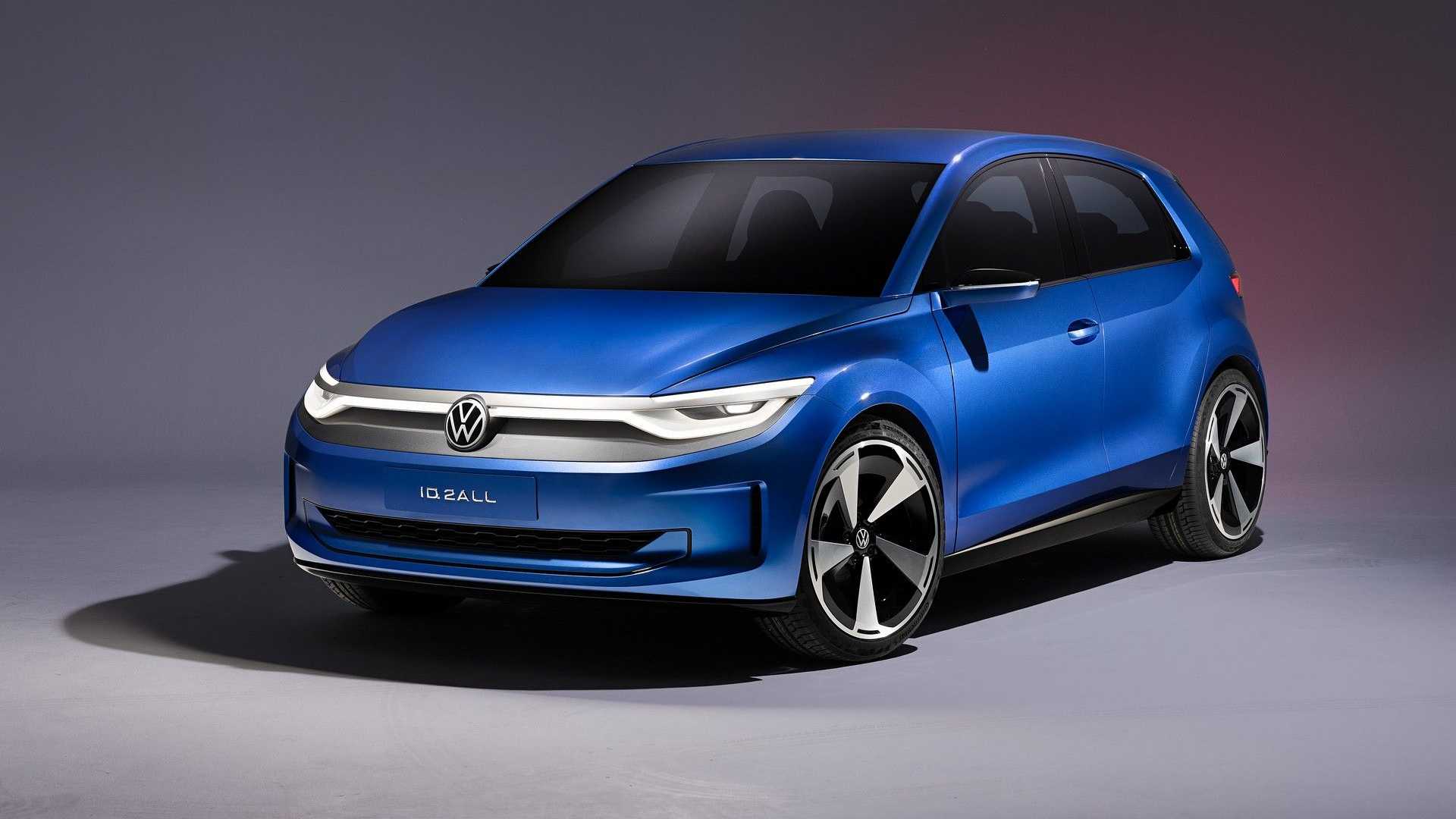
Volkswagen will begin rolling out its updated MEB+ electric vehicle platform in 2026, starting with the launch of the ID.2, CEO Thomas Schäfer confirmed. The move marks a significant refresh to the company’s current MEB architecture and introduces lithium iron phosphate (LFP) batteries as a cost-effective alternative for its next generation of volume EVs.
“The upgrade to MEB Plus comes next year, and we will roll out the cell-to-pack battery systems with LFP,” Schäfer told Autocar. “That will be a major step forward in terms of cost for us. It’s very important, and also in performance.”
See also: Volkswagen’s Entry-Level ID.2 EV Still on Track for Late 2025 Launch
The MEB+ platform will underpin future versions of Volkswagen’s existing ID models, including the ID.3, ID.4 and ID.7, alongside a broader design overhaul of the lineup. It is intended to bridge the gap until the long-delayed SSP architecture is ready—now expected around 2028. Previously, internal reports suggested Volkswagen was debating skipping MEB+ entirely, with CFO Arno Antlitz reportedly favouring a direct transition to SSP. However, the decision to proceed with MEB+ appears to have been driven by the need to rein in vehicle costs and sustain product competitiveness.
Volkswagen’s shift to LFP technology, produced at its Salzgitter battery facility, follows an industry-wide trend led by Tesla. LFP batteries, which offer lower costs and improved cycle life, are increasingly being adopted for mass-market models as technology improvements have narrowed the performance gap with nickel manganese cobalt (NMC) batteries. “You can see this move towards LFP across the board, really, except for performance applications on the upper end,” Schäfer said. “In the volume game, LFP is the technology.”
The MEB+ update is seen as a key step in maintaining momentum in Volkswagen’s electric vehicle transition amid cost pressures and shifting market dynamics.