


Mobility services provider UTA Edenred has partnered with Ionity to offer discounted charging rates for fleet customers across Europe, further expanding its charging network portfolio following earlier collaborations with Tesla and EnBW.
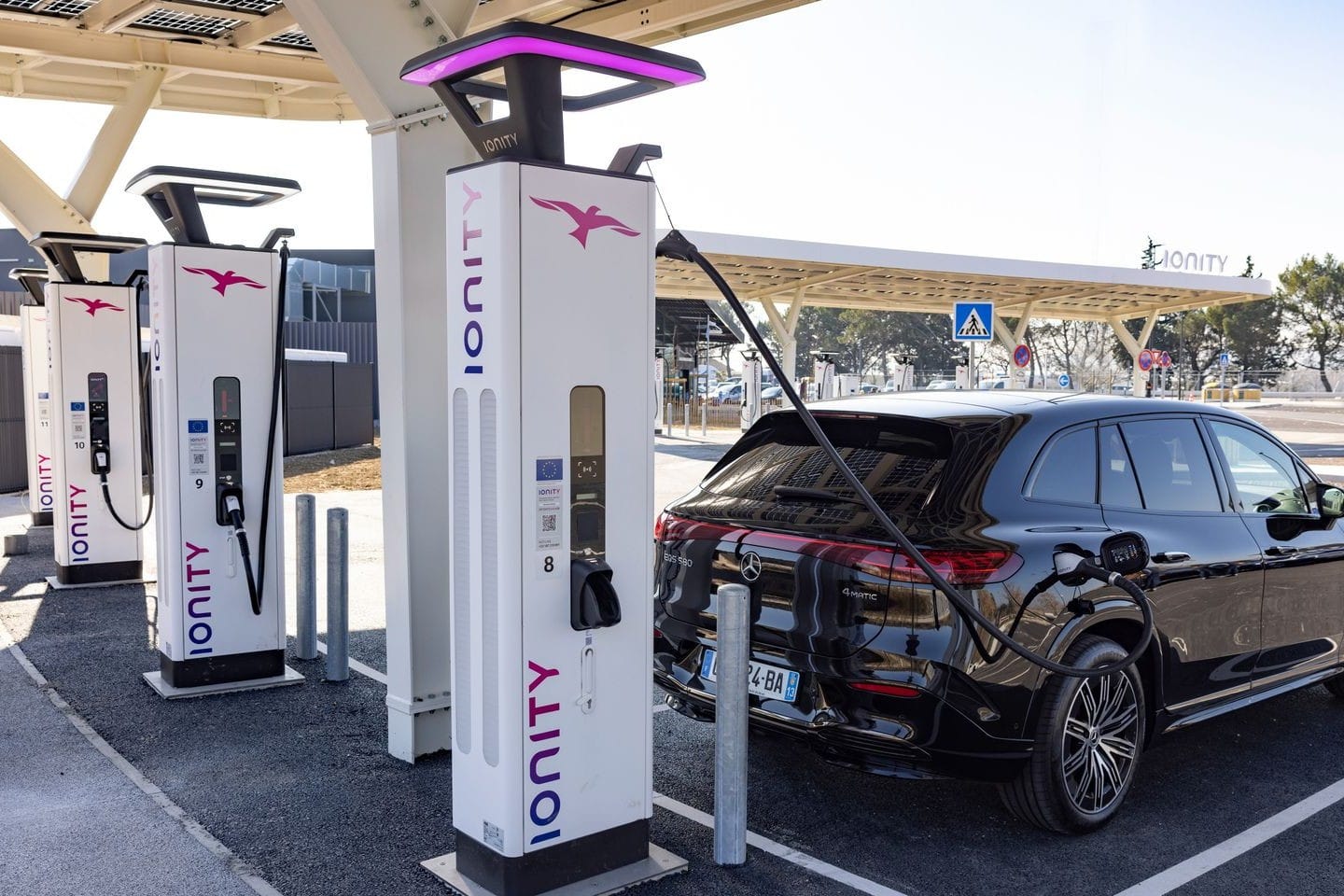
The agreement gives UTA Edenred customers access to Ionity’s network of approximately 6,500 high-power charging points across 24 European countries, including around 1,400 locations in Germany.
The partnership makes Ionity the third major charging network operator to establish a strategic charging collaboration with UTA Edenred, following previous agreements involving Tesla’s Supercharger network and German energy company EnBW.
Under the new arrangement, UTA Edenred has introduced two subscription options for users of its UTA eCard charging service: UTA Edenred Ionity Standard and UTA Edenred Ionity Premium.
The Standard plan reduces charging prices at Ionity stations in Germany to €0.46 per kWh at off-highway locations and €0.49 per kWh at motorway sites, compared with standard rates of €0.59 and €0.62 per kWh respectively. The subscription carries a monthly fee of €6.
Customers opting for the Premium package pay €11 per month and receive further discounts, lowering charging costs to €0.36 per kWh at off-highway sites and €0.39 per kWh at motorway charging stations.
UTA Edenred noted that the tariffs exclude value-added tax, card fees, service fees and any additional charging or parking-related charges. The advertised rates currently apply only in Germany, while pricing in other European markets varies according to local tariff schedules.
The company said one of the key benefits of the partnership is the ability for customers to use a single charging card across multiple charging networks while receiving consolidated billing and standardized pricing structures.
“A key advantage of this offering is that customers only need a single charging card for various charging providers—combined with standardised tariffs and subscription-based discounts. Additionally, a consolidated invoice for all charging sessions ensures maximum transparency,” said Lukas Schneider, Commercial Director EMEA at UTA Edenred.
UTA Edenred said the agreement further strengthens its charging ecosystem for fleet operators transitioning to electric mobility.
“Collaborating with Ionity, one of Europe’s leading charging network operators, marks an important milestone in expanding our charging portfolio,” said Pierre Jalady, General Manager Mobility EMEA at Edenred and Chief Executive Officer of UTA Edenred.
Ionity said the partnership is intended to simplify access to high-power charging infrastructure for commercial fleet operators across Europe.
“For many companies, easy access to reliable charging infrastructure is a decisive factor in electrifying their fleets. Together with UTA Edenred, we are integrating ultra-fast charging across 24 European countries even more seamlessly into daily operations,” said Simon Oetter, Head of Product Management & Sales at Ionity.
The partnership expands a growing network of charging providers available through the UTA eCharge ecosystem.
Tesla began accepting the UTA eCharge card at Supercharger locations across Europe last year, while EnBW customers can already access a range of vehicle-related services through the UTA Edenred platform.
Within the UTA charging network, EnBW, Shell and Ionity are classified as premium partners. Existing UTA cardholders currently pay €0.69 per kWh for AC charging and €0.63 per kWh for DC charging at EnBW locations, while Shell charging stations charge €0.53 per kWh for AC charging and €0.66 per kWh for DC charging.
The latest agreement reflects increasing cooperation between charging network operators and fleet service providers as electric vehicle adoption continues to grow across European commercial transport markets.