



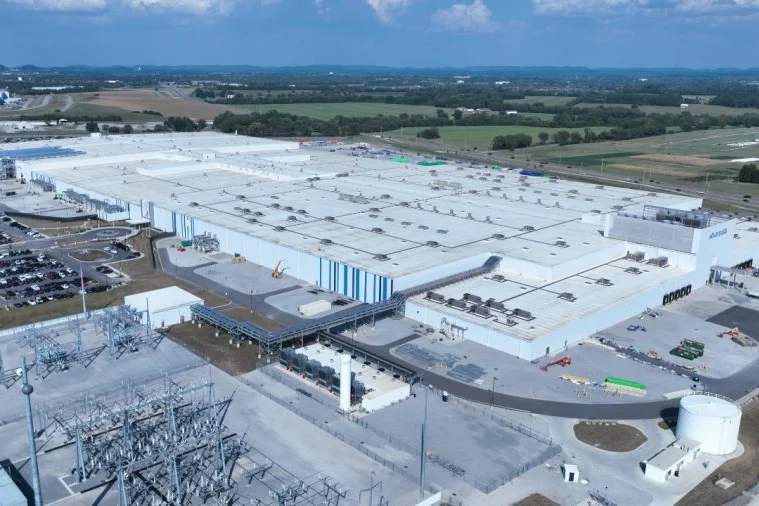
Ultium Cells plans to convert its battery cell plant in Spring Hill, Tennessee, to produce prismatic lithium-manganese-rich (LMR) cells, with the new chemistry expected to be used in future General Motors electric vehicles from 2028. The GM and LG Energy Solution joint venture says the cells could deliver approximately 33% higher energy density than LFP batteries at similar costs.
Retrofitting work at the Spring Hill facility is scheduled to begin later this year and is expected to be completed by 2028. According to Ultium Cells, the site could become the world’s first facility to mass-produce prismatic LMR cells.
LMR Targets Middle Ground Between LFP and High-Nickel Cells
LMR refers to lithium-manganese-rich battery chemistry, which uses a high proportion of manganese in the cathode. GM and LG Energy Solution are positioning the technology between lower-cost lithium iron phosphate (LFP) cells and higher-energy-density high-nickel chemistries.
Ultium Cells says LMR can provide around 33% greater energy density than LFP at comparable costs. The company has not disclosed specific energy density figures for the new cells.
The technology is intended for future GM electric vehicles, particularly models requiring a combination of cost efficiency and higher energy density.
GM and LG Energy Solution announced in 2025 that they were working to bring prismatic LMR cells to market maturity by 2028. At the time, the companies identified electric pickups and large SUVs as key applications.
Spring Hill Shifts Toward LMR
The conversion of Spring Hill forms part of a broader change in GM’s battery strategy. In June, GM battery chief Kurt Kelty said LMR could become an important part of the company’s future battery portfolio, while LFP could eventually have a more limited role in electric vehicles.
Spring Hill began producing LFP cells in June 2026. Those cells are intended for stationary energy storage systems operated by LG Energy Solution Vertech rather than GM electric vehicles.
For its vehicle portfolio, GM is placing greater emphasis on LMR while continuing to use high-nickel cells for models requiring particularly long driving ranges.
LMR Technology Still Faces Technical Challenges
LMR battery technology is still being developed, with durability, capacity degradation and fast-charging performance among the challenges that remain.
GM and LG Energy Solution have been researching manganese-rich battery chemistries for several years as they work to improve their performance and commercial viability.
The companies’ planned investment also reflects the broader role expected for Spring Hill in GM’s battery manufacturing strategy.
Spring Hill to Produce Multiple Battery Chemistries
Following the planned conversion, the Spring Hill facility is expected to manufacture several battery chemistries and formats under one roof.
In addition to LMR and LFP cells, the plant will produce high-nickel cells. Ultium Cells also plans to manufacture both pouch and prismatic formats at the facility.
Total investment in the programmes and other site measures is expected to reach approximately $1 billion by 2030. The expansion is also expected to create around 500 new jobs.
The Spring Hill facility currently employs approximately 1,200 people.


