
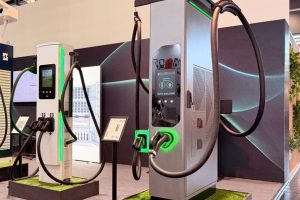





UK finance minister Rachel Reeves is preparing measures to reduce the cost of public electric vehicle charging, amid concerns that a planned mileage-based tax could slow the adoption of electric cars, the Telegraph reported.
Under current proposals, electric vehicle drivers would be charged around 3 pence per mile when using public charging stations once the new road pricing system is introduced in 2028. The policy is intended to help replace declining fuel duty revenues as petrol and diesel use falls.
See also: UK Registers Nearly Half a Million Electric Cars in 2025 as BEV Share Climbs to 23.4%
The government is now examining ways to offset the impact by cutting costs associated with public charging, including so-called network charges that have risen in recent years, the newspaper said. Officials are also considering lowering the 20% value-added tax applied to charging at public locations such as petrol stations and supermarkets. By contrast, home charging is subject to a lower VAT rate and additional fees equivalent to about 5 pence per mile.
If implemented as currently outlined, the mileage-based charge is expected to cost the average electric vehicle driver an additional £255 per year, according to calculations cited by the Telegraph. Hybrid vehicles would face a lower levy, estimated at about 1.5 pence per mile from 2028.
See also: UK Boosts Electric Lorry Incentives With £18 Million Funding Increase
A Whitehall source told the newspaper that affordability remains central to the government’s strategy. “The way we convince people to switch to EVs is by showing people it is easy and it is cheap. There are savings to be had here for many people,” the source said.
Public charging costs have become a focal point because of the growing gap between home and on-the-road charging. Data from Zapmap show that charging at home typically costs around 8 pence per kilowatt-hour, while slow public chargers average about 54 pence per kilowatt-hour, making public charging significantly more expensive for drivers without off-street parking.
See also: UK to Bring Forward Review of EV Sales Mandate After Carmaker Pressure
The debate comes as broader uncertainty around electric vehicle policy persists in Europe, including scrutiny of the EU’s planned 2035 phase-out of new internal combustion engine cars. Industry groups have warned that inconsistent signals on regulation and taxation risk undermining consumer confidence and investment.
A government spokesperson said the UK remains committed to supporting the transition to electric vehicles. “The Government is boosting the EV transition by saving drivers up to £3,750 off a new car, with almost 50,000 people benefitting already, and investing over £7.5bn into the UK electric vehicle sector,” the spokesperson said. “We’re also reviewing the cost of public EV charging, which will look at the impact of energy prices, wider cost contributors and options for lowering these costs for consumers.”


