


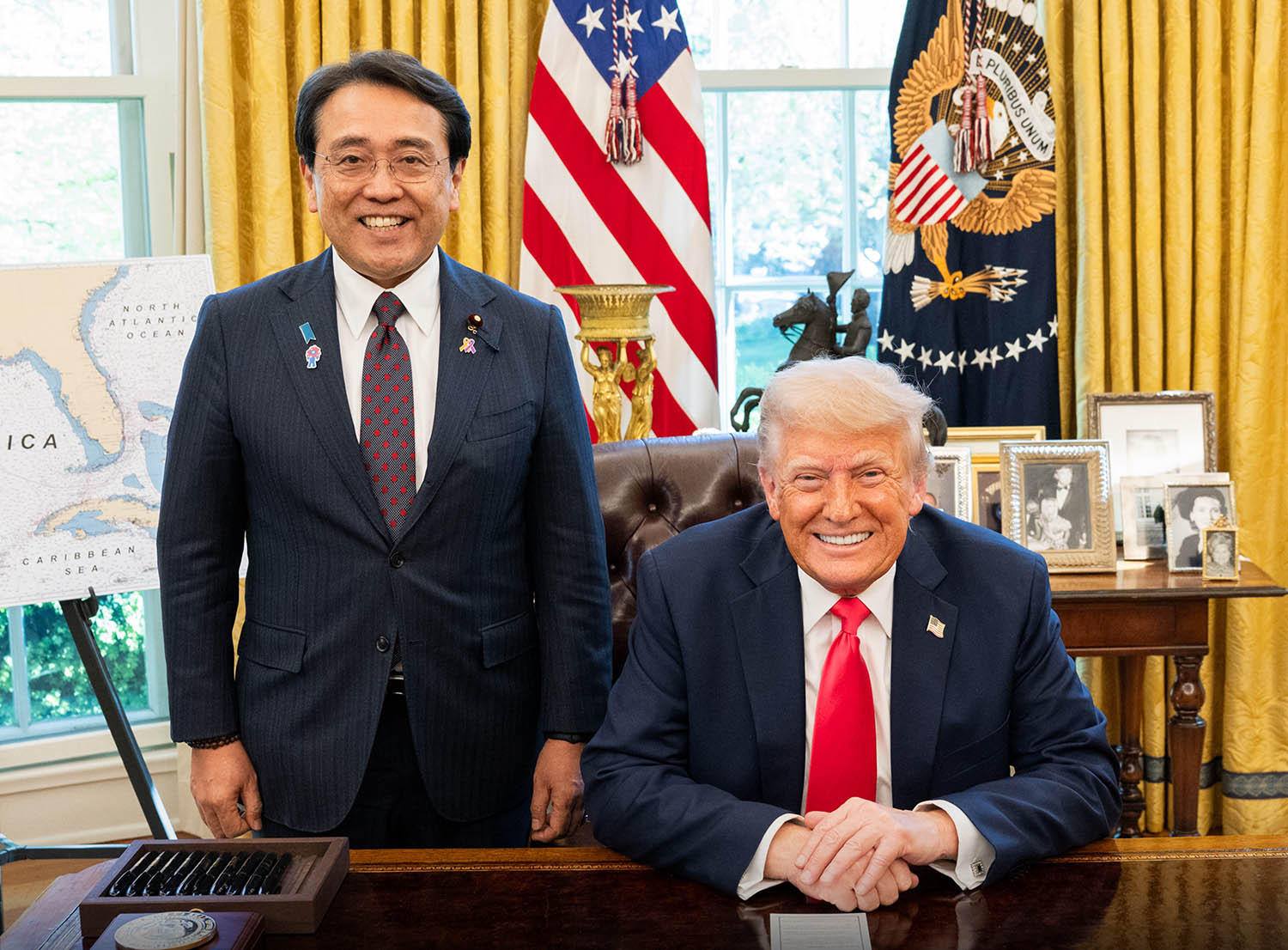
U.S. President Donald Trump signed an executive order on Thursday to implement lower tariffs on Japanese automobile imports and other products, formalizing a trade agreement first announced in July and confirming a large Japanese investment commitment in the United States.
The order reduces tariffs on Japanese cars from the current 27.5% to 15%, with the measure set to take effect seven days after publication. Some tariff relief will also be retroactive to August 7, according to details released by the administration.
The agreement follows months of negotiations between Washington and Tokyo, easing trade tensions and providing clarity for Japanese automakers that have been hit by Trump’s levies. Toyota (7203.T) said last month that U.S. tariffs on imported cars were expected to result in a nearly $10 billion financial impact.
“Finally,” Ryosei Akazawa, Japan’s top trade negotiator, wrote on X, signaling relief after repeated talks that included ten trips to the United States for discussions. Toyota also welcomed the move, saying: “While nearly 80% of the vehicles Toyota sells in the U.S. are made in North America, this framework provides much needed clarity.”
Under the deal, Japan has agreed to increase imports of U.S. agricultural goods, including corn, soybeans, fertilizer and bioethanol, totaling $8 billion annually. The order also cited a 75% increase in U.S. rice procurements and a commitment by Japan to buy 100 Boeing (BA.N) aircraft. Japan is set to raise its defense-related purchases from U.S. firms to $17 billion annually, up from $14 billion.
Trump’s order reiterated Japan’s pledge to invest $550 billion in U.S. projects, which will be selected by the U.S. government. The investment will include equity, loans and guarantees from Japan’s government-owned banks.
Two-way trade between the countries reached nearly $230 billion in 2024, with Japan running a trade surplus of almost $70 billion. Japan is the fifth-largest U.S. trading partner.
The framework also ensures that Japan will receive the lowest tariff rates on critical sectors such as semiconductors and pharmaceuticals, while exempting commercial airplanes and parts from tariffs. An adjustment mechanism will set imports previously below 15% tariffs at that level, while preventing higher tariffs from stacking on top of the new 15% auto levy, a Japanese government source said.
The European Union secured a similar 15% baseline tariff in a separate framework deal with Washington in July, avoiding new duties on its own exports of chips and pharmaceuticals. Talks between the EU and the United States are ongoing over reciprocal tariff cuts on industrial goods and cars, with European carmakers still facing 27.5% levies as of Thursday.