




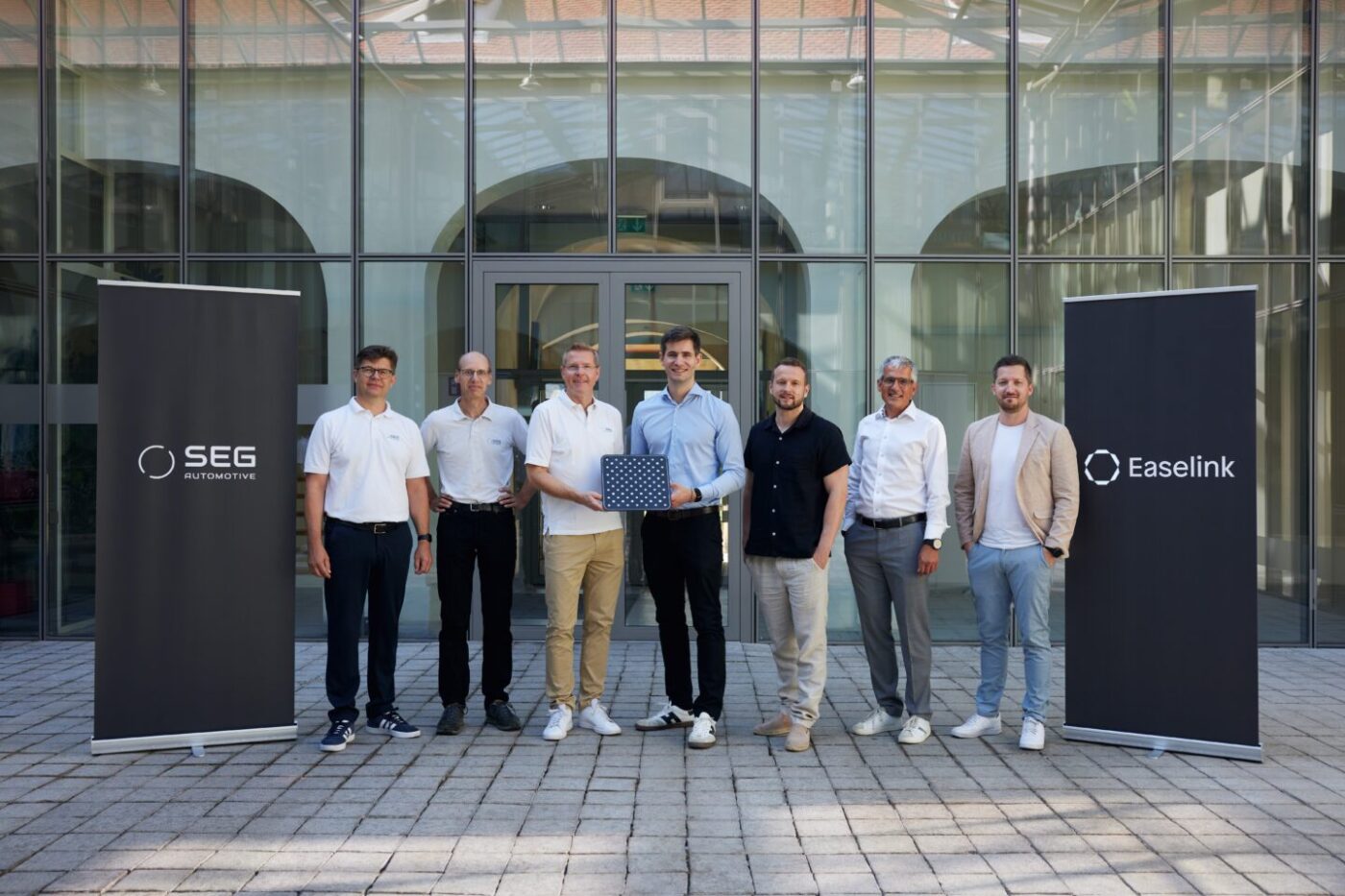
Easelink and SEG Automotive have partnered to bring the Matrix Charging automated electric vehicle charging system into series production, marking a step toward wider commercial deployment of hands-free charging technology.
The collaboration will focus on supporting initial original equipment manufacturer (OEM) programmes while enabling SEG Automotive to integrate the technology into its own electrification portfolio under a licensing agreement.
Focus on OEM Deployment
Under the partnership, the companies will work together on early series production projects for automotive manufacturers.
SEG Automotive also plans to offer OEM customers tailored automated charging solutions based on Easelink’s Matrix Charging technology through a technology licensing arrangement.
Matrix Charging enables conductive charging without requiring drivers to manually connect a charging cable, allowing the charging process to begin automatically when a compatible vehicle is positioned over the charging pad.
Supporting Industry Standardisation
As part of the agreement, SEG Automotive will join the Matrix Charging Interest Group (MCIG), an industry alliance established to promote standardisation of automated conductive charging technology.
The group brings together companies from across the charging ecosystem to support interoperability and broader market adoption.
Expanding Electrification Portfolio
SEG Automotive was established in 2018 following the separation of Bosch’s starter and generator business and is now part of China’s ZMJ Group.
Headquartered in Stuttgart, Germany, the company develops drive and electrification components for the automotive industry.
Easelink, based in Graz, Austria, developed the Matrix Charging system as an automated conductive charging solution designed to simplify EV charging and support future automated mobility applications.


