

Tesla has been granted a U.S. patent (US12420879B1) for an innovative vehicle assembly system designed to enhance production speed, accuracy, and efficiency, particularly for its upcoming robotaxi, the Cybercab.
The method, called True Unboxed Process 2.0, replaces traditional piece-by-piece assembly with a “global datum,” serving as a master reference point to ensure every component aligns precisely.
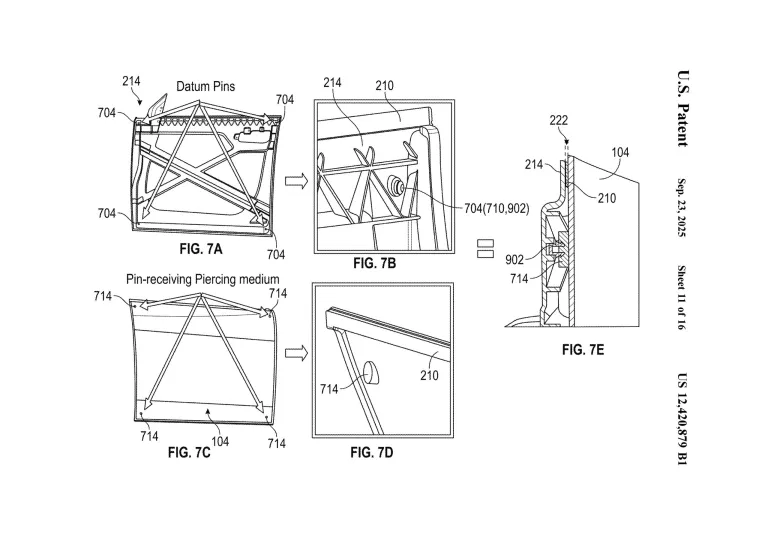
This approach prevents small misalignments from accumulating during assembly, which can otherwise cause uneven panel gaps and require costly rework.
Instead of relying on numerous clips, bolts, and brackets, the system uses industrial-strength adhesive applied by robots to secure panels. The adhesive compensates for material expansion and contraction and fills minor gaps, resulting in smoother fits and stronger bonds.
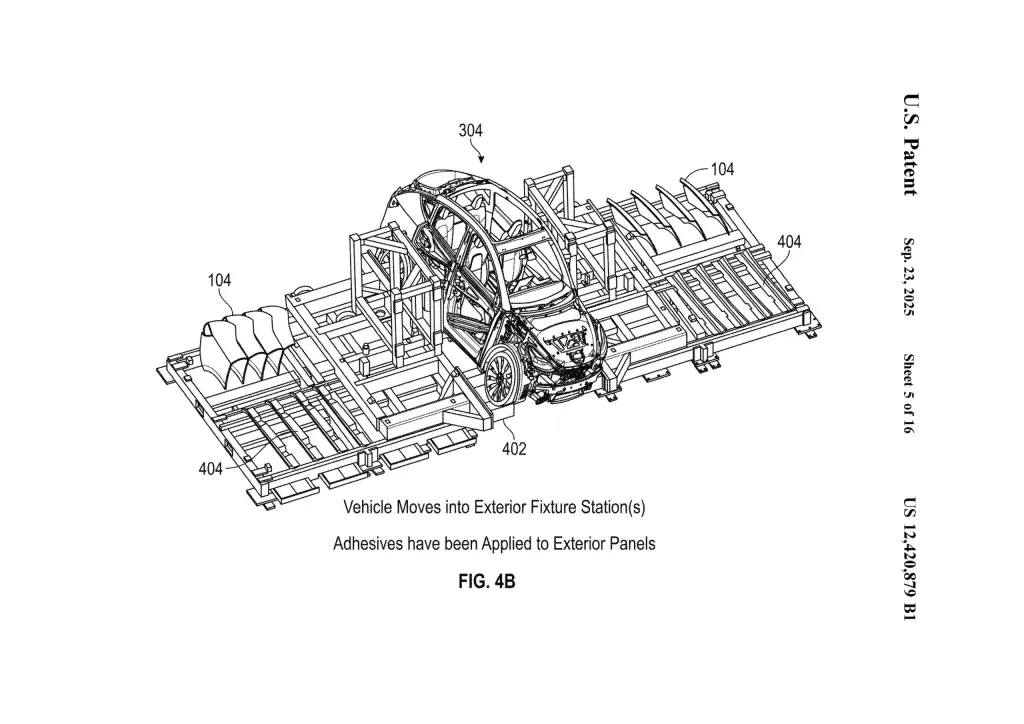
Tesla’s patent also outlines a temporary “tacking” process that holds panels in place while the adhesive cures, maintaining continuous production and reducing line downtime.
The patent claims the new system could cut fastening parts by 65%, simplify assembly operations, and lower costs, with adhesive usage per vehicle estimated at about US$25. Automation and reduced hardware reliance are expected to limit errors and reduce dependency on manual labor.
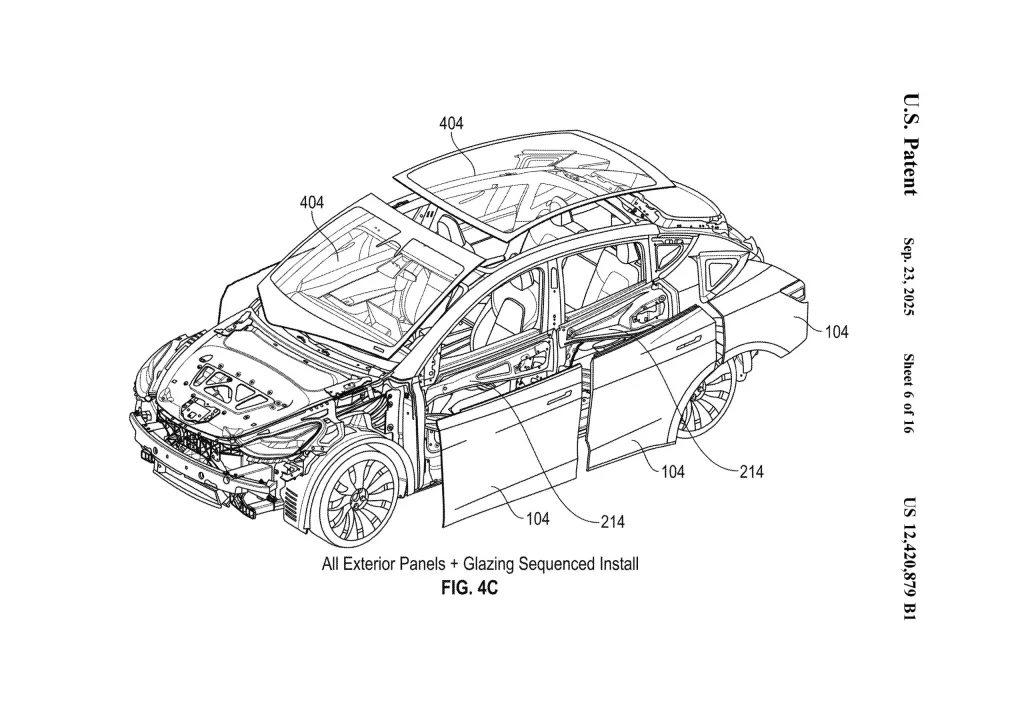
According to Giga Texas drone pilot Joe Tegtmeyer, a production line using this technology is nearly ready at Tesla’s Austin facility, with public demonstrations potentially beginning in early 2026.