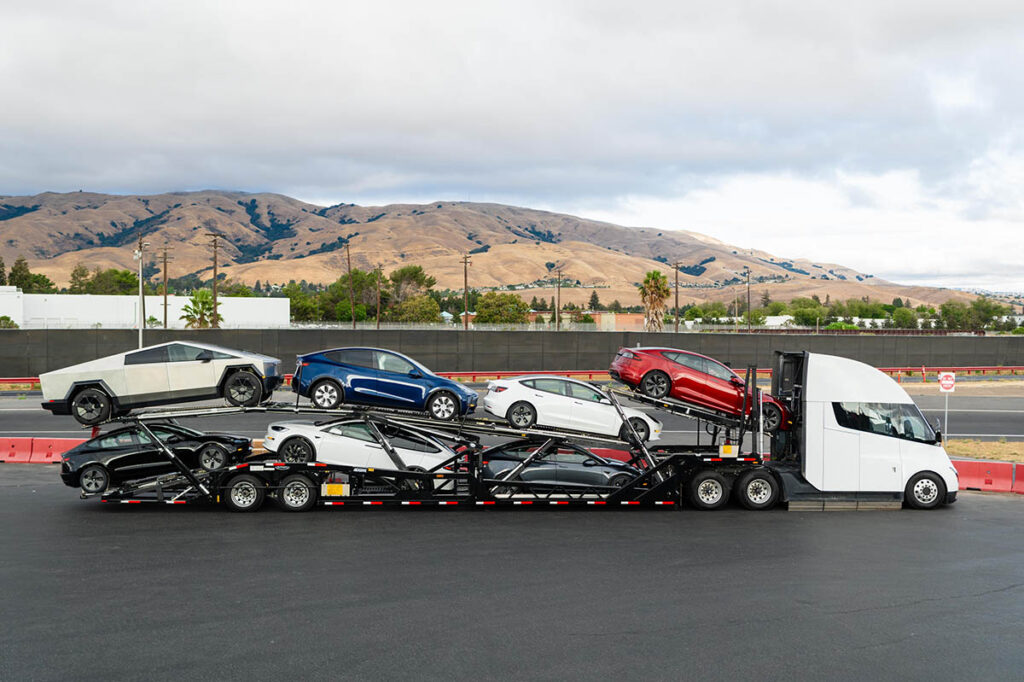


Tesla reclaimed its position as the world’s largest seller of battery-electric vehicles (BEVs) in the first quarter of 2026, delivering 358,023 units and surpassing BYD, which reported 310,389 pure BEV sales during the same period.
Tesla produced 408,386 vehicles in the quarter, resulting in an inventory buildup of more than 50,000 units, driven largely by its high-volume models, including the Tesla Model 3 and Tesla Model Y. The company’s deliveries rose 6.3% year-on-year but declined 14.4% compared with the fourth quarter of 2025.
Analysts said the gap between production and deliveries could indicate moderating demand for Tesla’s core lineup, even as the company maintains its global lead in BEV sales.
BYD, meanwhile, reported total new energy vehicle (NEV) sales of 700,463 units in the quarter, supported largely by plug-in hybrid models. The Chinese automaker has increasingly leaned on exports to offset domestic pricing pressure and policy adjustments.
In the United States, Rivian outperformed Ford Motor in electric vehicle deliveries for the first time, reporting 10,365 units, a 20% increase from a year earlier. Ford’s EV sales fell sharply by 70% to 6,860 units, highlighting growing challenges for legacy manufacturers in scaling their electric offerings.
Regional trends underscored diverging market conditions. In China, competition intensified as new entrants gained traction. Xiaomi’s YU7 sport utility vehicle outsold the Model Y in January, with 37,869 deliveries. The model is priced between 253,500 and 329,900 yuan ($35,000–$45,600), placing it in direct competition with Tesla’s core offerings.
In Europe, electric vehicle registrations declined following the rollback of government incentives. Norway reported a 71% year-on-year drop, while the Netherlands saw a 28% decline after tightening value-added tax rules and purchase subsidies at the start of 2026.
China also revised its EV subsidy framework, shifting to a percentage-based system. New energy vehicles are now eligible for subsidies of up to 12% of the purchase price, capped at 20,000 yuan, contributing to a more competitive pricing environment.
The first-quarter results highlight a widening gap between dedicated EV manufacturers and traditional automakers, as well as increasing sensitivity to policy changes across major global markets.