
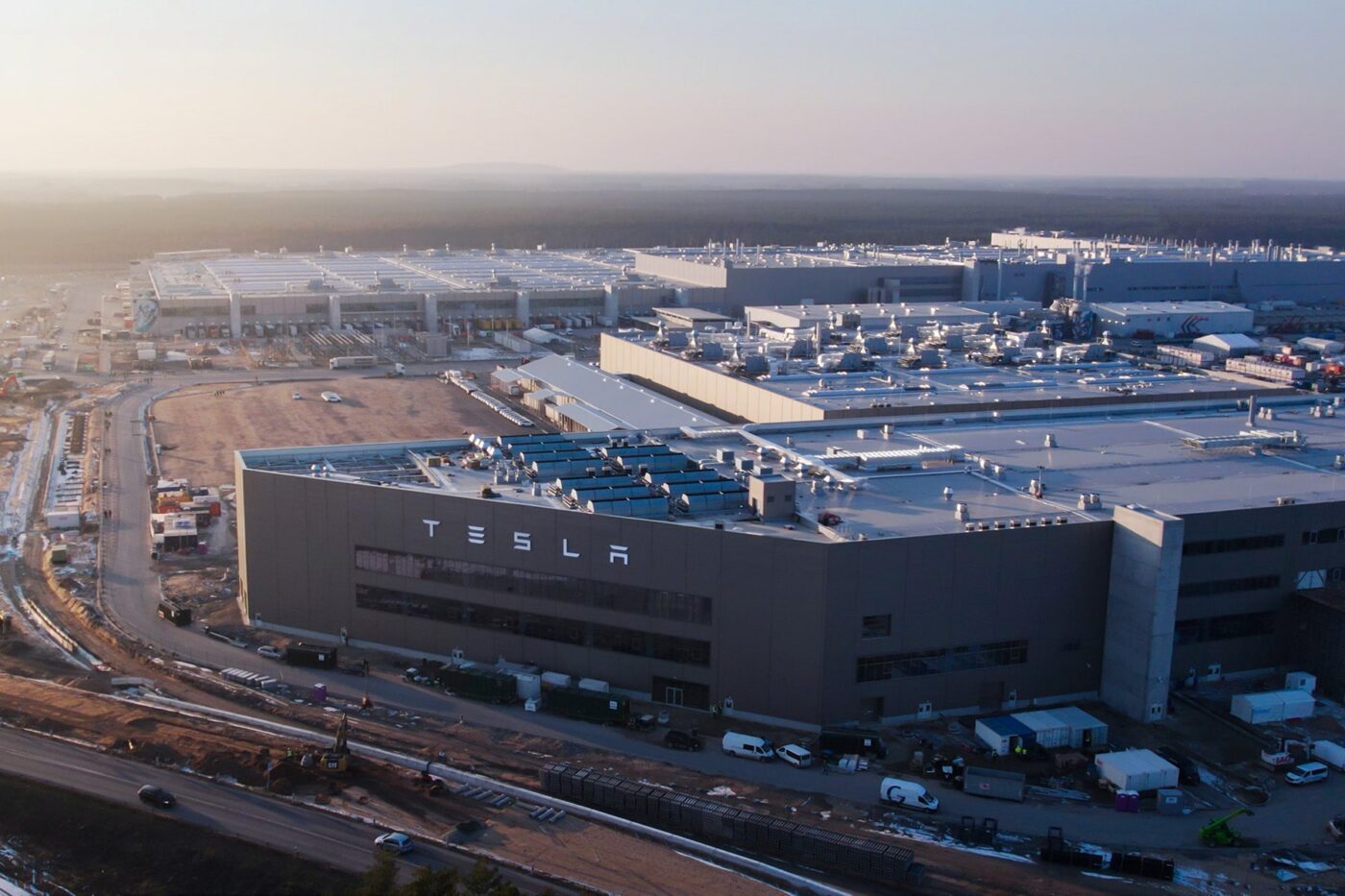
Tesla plans to expand its battery cell manufacturing ambitions at its Grünheide facility in Germany, targeting annual production capacity of 18 GWh of 4680-format cells and creating more than 1,500 additional jobs, according to plant manager André Thierig.
Thierig announced on LinkedIn that Tesla would invest $250 million in the battery cell factory at Gigafactory Berlin-Brandenburg, describing the move as “good news during challenging times for the German industry.”
“Today, we announced a $250m investment for our Giga Berlin Cell factory,” Thierig wrote. “This will enable 18GWh of annual 4680 cell production and create more than 1500 new jobs.”
The new target significantly increases Tesla’s earlier plans for the site. In late 2025, the company had projected annual production capacity of 8 GWh, with operations expected to begin in the first half of 2027.
Several media reports suggested the latest investment would add to Tesla’s previously announced spending of nearly $1 billion on local battery cell production in Grünheide. Industry publication Electrek estimated that total investment in the project could now approach €1 billion.
Tesla has been working to deepen vertical integration at the German factory by producing battery cells alongside vehicles. Currently, the company sources lithium iron phosphate (LFP) batteries from CATL and nickel manganese cobalt (NCM) cells from LG Energy Solution for different versions of the Model Y manufactured at the site.
The automaker said the future setup would allow battery cells and electric vehicles to be produced at a single European location beginning around 2027, helping reduce supply chain dependency.
The 1,500 new positions linked to battery cell production are expected to be added over the medium term, while the $250 million investment will likely be spread across several years, according to local media reports.
The increase from 8 GWh to 18 GWh of planned annual output could allow Tesla to supply a larger share of its vehicle production internally. By comparison, PowerCo, the battery subsidiary of Volkswagen, is targeting an initial annual capacity of 20 GWh at its Salzgitter battery facility.
Tesla’s existing battery assembly operations in Grünheide already work with 4680 battery cells produced at the company’s Austin, Texas, plant, integrating them into locally assembled battery packs.
The idea of producing battery cells in Grünheide dates back to 2020, when Elon Musk announced plans for what he described as “the world’s largest battery cell production facility,” initially targeting up to 100 GWh annually with possible expansion to 250 GWh.
Those plans were later scaled back after Tesla shifted focus toward the United States to benefit from government subsidies, leading the company to prioritise integrated battery production at its Texas Gigafactory.
Tesla also said the Grünheide factory recently produced its 750,000th Model Y since operations began in 2022. The site has a theoretical annual production capacity of 375,000 vehicles, while output in 2025 reportedly exceeded 200,000 units.
Following weaker demand last year, Tesla said orders for the Model Y have recently recovered. The company announced in April plans to hire around 1,000 additional workers for the Grünheide site by the end of June, excluding future battery cell factory positions.
According to Tesla, the hiring increase is linked to rising demand for more affordable Model Y variants introduced in Germany last autumn. The company also recorded stronger sales performance in Germany and across the European Union in recent months, according to figures released by the European Automobile Manufacturers’ Association.