




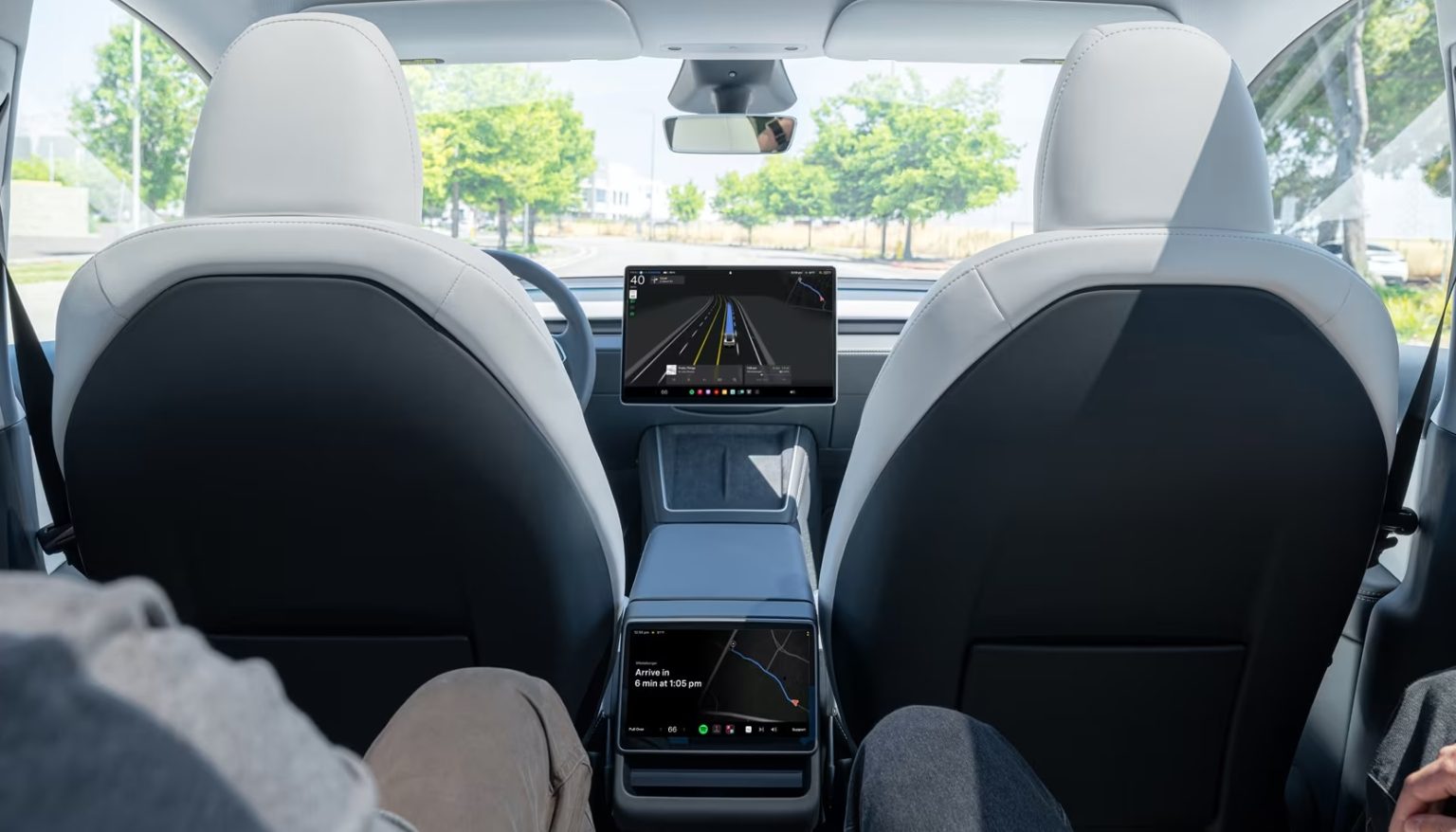
Tesla has clarified why safety monitors are positioned in the driver’s seat of its autonomous Robotaxi units, following questions raised by users and observers about the company’s approach to passenger safety.
The automaker’s autonomous ride-hailing service is currently active in Austin, Texas, and the San Francisco Bay Area, with plans to expand to more U.S. cities later this year. Initially, Tesla operated Robotaxis without a human in the driver’s seat, relying instead on monitors seated in the passenger side to observe and report vehicle behavior.
In recent weeks, however, passengers in Austin reported that safety monitors were being placed in the driver’s seat. Tesla’s Robotaxi account later confirmed that this was intentional. “Safety monitors are only in the driver’s seat for trips that involve highway driving, as a self-imposed cautious first step toward expanding to highways,” the company said in a social media post.
The clarification comes amid speculation that regulatory requirements in California and Texas could be influencing Tesla’s operational strategy. Observers had suggested the shift may be tied to updated rules governing autonomous vehicles in Texas.
Tesla has rolled out the Robotaxi service using its so-called “Unsupervised FSD” system, and the company has emphasized a cautious approach to testing, particularly as it navigates regulatory scrutiny and heightened media attention on autonomous driving safety.


