




Boston-based startup Teradar made its first public showing at Consumer Electronics Show 2026 this week, presenting a flagship terahertz-based automotive sensor as it seeks to enter a market undergoing rapid technological and commercial change.
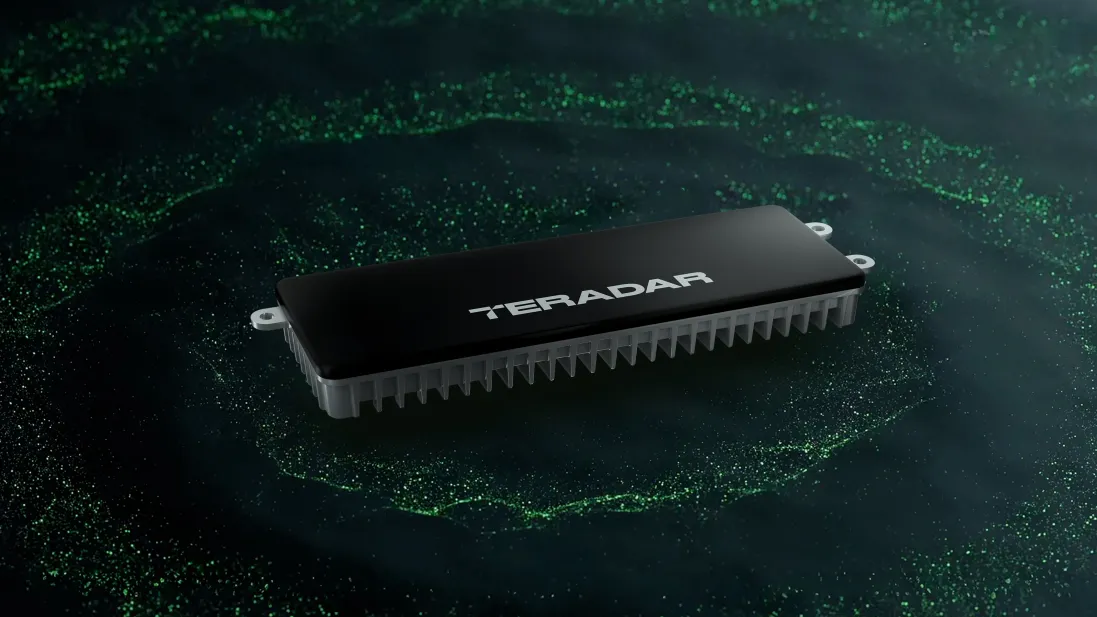
The company, which emerged from stealth two months ago following a $150 million fundraising round, introduced its Summit sensor, describing it as a long-range, high-resolution system designed to operate in all weather conditions. Teradar is positioning the technology as a potential alternative to conventional radar and lidar sensors, which automakers have increasingly scrutinized over cost, performance and reliability concerns.
See also: Kodiak AI Partners With Bosch to Scale Manufacturing of Autonomous Truck Platform
Summit is based on terahertz frequencies that sit between microwaves and infrared on the electromagnetic spectrum, an area that has seen limited commercial use in automotive sensing. The solid-state design, which contains no moving parts, is intended to combine the strengths of radar and lidar while avoiding some of their limitations. Teradar said the sensor could support partial or full autonomous driving features if adopted by vehicle manufacturers, though initial shipments are not expected before 2028 and remain contingent on securing production contracts.

The company said it is currently working with five leading automakers in the United States and Europe, as well as three Tier 1 suppliers, to validate the technology. Teradar is also exploring applications beyond passenger vehicles, a strategy reflected in its latest funding round, which included investment from Lockheed Martin’s venture arm and defense-focused VXI Capital.
See also: Mobileye Secures Major U.S. Automaker Deal for Next-Generation ADAS Chip
Teradar’s market entry comes as established sensor suppliers face mounting pressure. U.S.-based lidar maker Luminar filed for bankruptcy protection in December after automotive programs with Volvo and Mercedes-Benz were discontinued, amid rising competition and shifting strategies. In contrast, lidar adoption has remained strong in China, where Hesai said it produced more than one million lidar units in 2025.
Other U.S. sensor companies have moved to diversify. Ouster, which merged with Velodyne following industry consolidation, has expanded into robotics and smart infrastructure markets. At the same time, automakers have not fully abandoned lidar. Rivian said in December it plans to integrate a roof-mounted lidar sensor into its upcoming R2 sport utility vehicle.
See also: LiDAR Maker Seyond Secures Swedish Traffic Systems Deal in European Expansion
Teradar Chief Executive Matt Carey has said the company’s priority is widespread automotive adoption, positioning its terahertz approach as a way to deliver advanced sensing capabilities at a time when carmakers are reassessing the cost and complexity of autonomy-focused hardware.


