




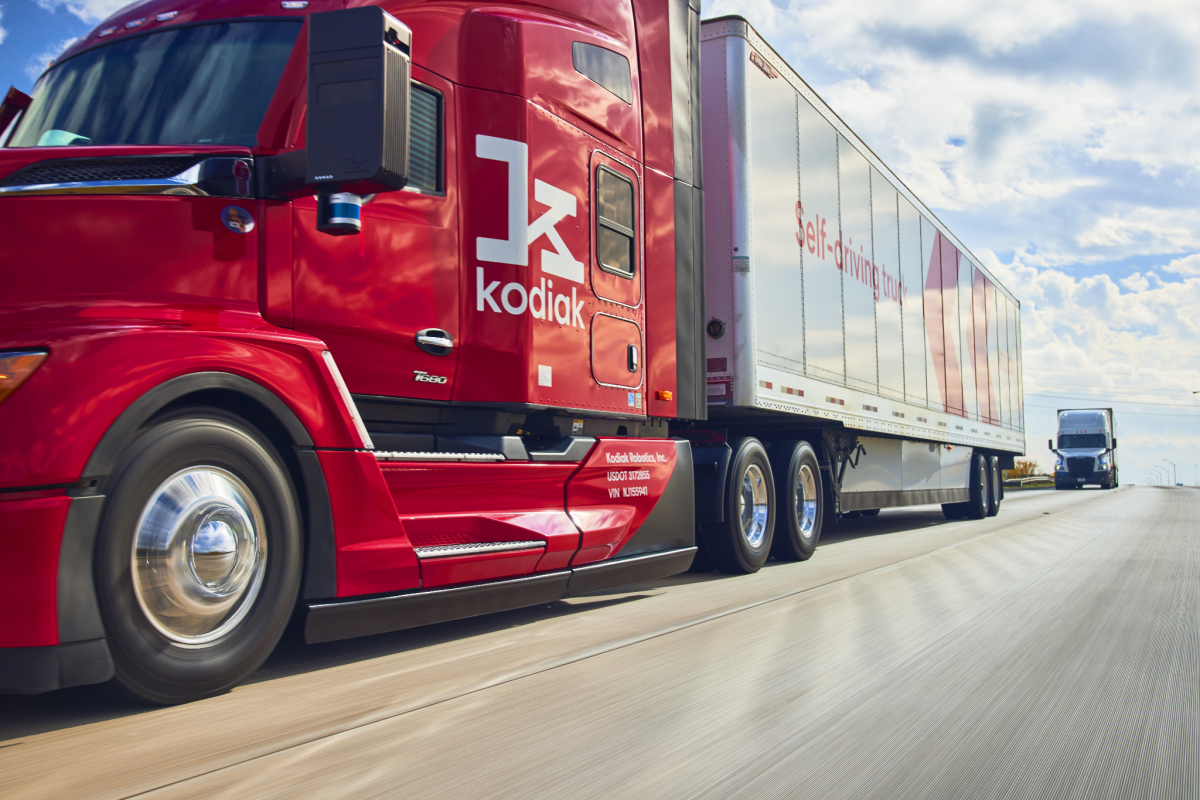
Kodiak AI said on Monday it has reached an agreement with Bosch to scale the manufacturing of its production-ready autonomous driving platform, a move aimed at accelerating commercial deployment of driverless trucks.
Under the agreement, Bosch will work with Kodiak to develop a platform combining specialized automotive-grade hardware, firmware and software interfaces. The collaboration is intended to allow Kodiak’s autonomous system, known as the Kodiak Driver, to be installed either directly on vehicle assembly lines or through aftermarket upfitting.
“Advancing the deployment of driverless trucks and physical AI not only requires robust autonomous technology, but also manufacturing experience and a robust supply chain in order to achieve true scale,” said Don Burnette, founder and chief executive of Kodiak.
Bosch, the world’s largest automotive supplier, brings experience in large-scale production and a portfolio that includes sensors and other automotive-grade components, according to Automotive News. The partnership reflects a broader trend among autonomous trucking developers to secure industrial partners capable of supporting system integration and volume manufacturing.
Kodiak said the collaboration is designed to ensure modularity, serviceability and system-level integration for its autonomous hardware, enabling deployment across different truck platforms and installation methods. Such capabilities are seen as critical for commercial adoption in both factory-installed and retrofit configurations.
See also: Kodiak Robotics Integrates NXP Processors to Enhance Autonomous Truck Safety
The announcement follows Kodiak’s public listing in September, when the company went public through a merger with Ares Acquisition Corp. II. The transaction valued the combined company, now known as Kodiak AI Inc., at about $2.5 billion.
Kodiak currently operates autonomous trucks equipped with its virtual driver system in the Permian Basin under a commercial agreement with Atlas Energy Solutions. The company said it is continuing to expand its on-highway autonomous capabilities, with plans to target driverless highway operations in the second half of 2026.


