



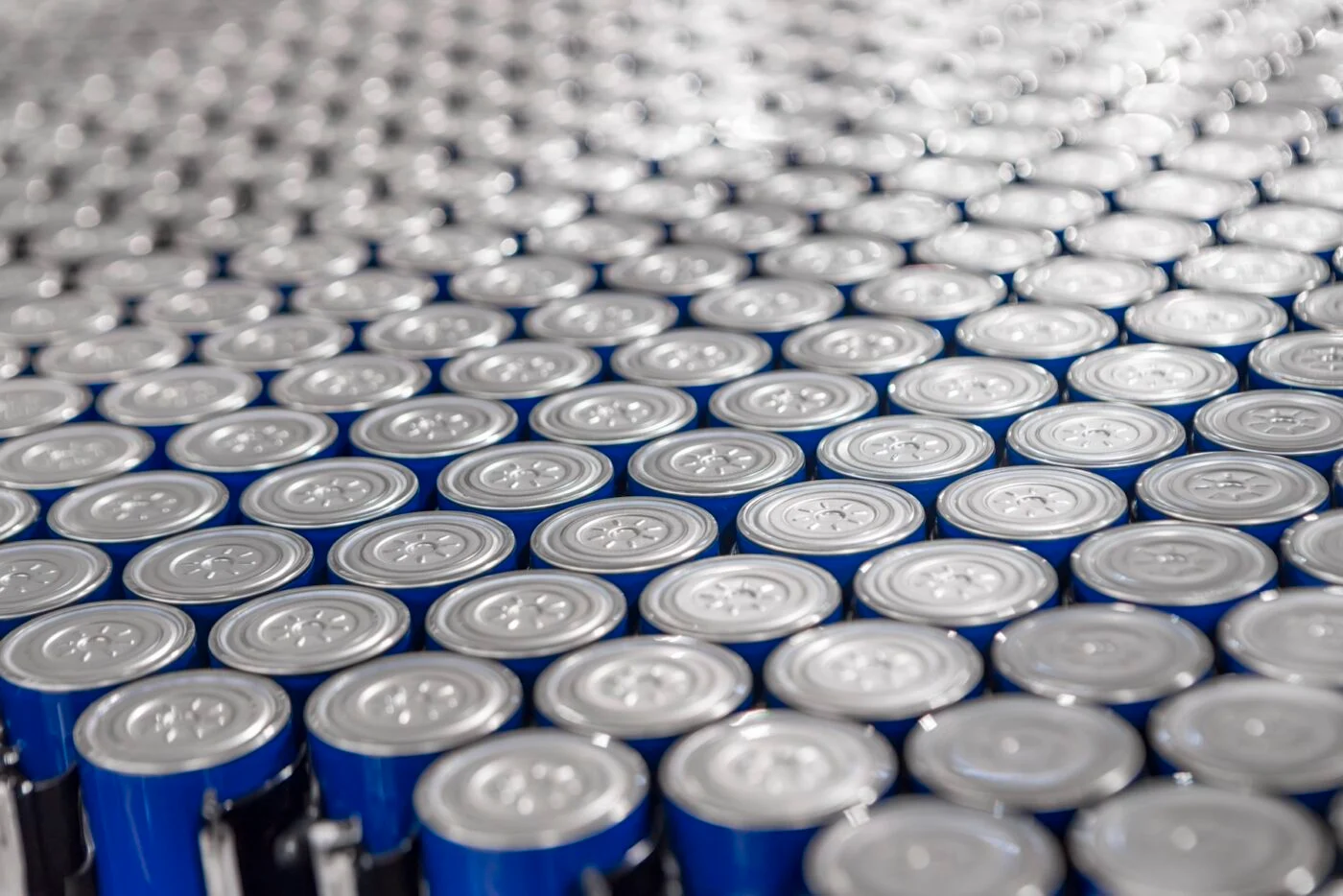
Transport & Environment (T&E) has concluded that European battery cell production could be sufficient to meet demand under the European Union’s proposed local content requirements by 2030. The assessment contrasts with concerns raised by the European Automobile Manufacturers’ Association (ACEA), which has warned that the European battery supply chain may not expand quickly enough to meet the planned rules.
The analysis comes as EU institutions and member states continue discussions over the proposed Industrial Accelerator Act (IAA), introduced by the European Commission in March. The legislation is intended to strengthen industrial production and competitiveness within the European Union, including through local content provisions that would favor products manufactured within the bloc in certain public procurement and funding programs.
Electric Trucks Already Cheaper Than Diesel in Six Major EU Markets, T&E Says
T&E Projects Sufficient European Cell Production
According to T&E, European battery cell capacity could already be sufficient by 2027 to cover demand from funded company cars and a substantial share of funded private vehicles.
By 2030, the organization estimates that European production could supply both segments if battery projects with a medium probability of implementation are completed.
T&E noted, however, that the European battery manufacturing pipeline has experienced significant setbacks. Around one-quarter of battery cell capacity announced since 2022 has either been cancelled or placed on hold, according to the organization.
EU Public EV Charging Network Outpaces Battery-Electric Vehicle Growth, T&E Says
Germany has been particularly affected, with T&E saying its projected battery cell capacity pipeline for 2035 has been reduced by half. The organization cited the planned ACC battery plant in Kaiserslautern and Porsche’s decision to close its Cellforce project among the developments affecting the outlook.
At the same time, Volkswagen subsidiary PowerCo opened its first battery cell factory in Salzgitter in December 2025. Once production is fully ramped up, the facility is expected to contribute additional European cell capacity.
Asian Companies Account for Most Active Capacity
T&E also highlighted the ownership structure of battery production in Europe. According to its analysis, more than 85% of active European battery cell capacity is owned by companies headquartered outside Europe, with South Korean manufacturers accounting for 72% of production.
South Korean battery companies including LG Energy Solution, Samsung SDI and SK On operate manufacturing facilities in European countries such as Poland and Hungary.
China’s CATL is another major producer in the European market, operating a battery plant in Arnstadt, Germany, while its second European facility in Debrecen, Hungary, has entered test production.
T&E Says EU Tariffs Shifted EV Imports but Chinese Brands Continue to Expand
For the proposed Made in EU requirements, T&E points out that the location of production is the relevant factor rather than the nationality of the company operating the factory. As a result, battery cells manufactured by Asian companies at European facilities can contribute to meeting local production requirements.
T&E Calls for Battery Industry Support
T&E said the development of battery manufacturing capacity demonstrates that Europe can establish a significant local supply chain, despite setbacks affecting some projects.
“Since the collapse of Northvolt, there has been considerable scepticism in Germany about whether it is possible to build a domestic battery industry. Yet our data shows that Germany is already a relevant location in the European battery ecosystem and has great potential,” said Susanne Goetz, Senior Advisor for E-Mobility at T&E Germany.
Goetz also called for greater attention to battery manufacturing as part of Germany’s industrial strategy, arguing that support for the Industrial Accelerator Act could contribute to the development of emerging industries.
Xavier Sol, Director of Sustainable Investments and Batteries at T&E, said demand-side measures could be important for establishing a European battery supply chain.
“Recent years have shown that, unfortunately, a strong European battery value chain won’t build itself – the competition from Asia is simply too large,” Sol said.
He added that T&E believes locally produced battery components could contribute to supply security, employment and economic resilience.
Cathode Materials Remain a Larger Supply Gap
While T&E expects European cell production to be sufficient under its 2030 assessment, the organization identifies larger uncertainties further upstream in the battery supply chain.
For cathode active material (CAM), 529,000 tonnes of annual European production capacity have been announced for 2030. After weighting projects according to their likelihood of being completed, T&E estimates that only around 177,000 tonnes may remain available.
The outlook for precursor cathode active material (pCAM) is more uncertain. T&E estimates that announced projects representing 552.6 GWh of cell-equivalent capacity could translate into only 217.9 GWh of production by 2030 after accounting for implementation probabilities.
T&E Proposes Additional Material Requirements
Based on its assessment, T&E supports maintaining the proposed IAA requirements for battery cells and CAM while adding minimum requirements for pCAM and anode active material from 2032.
The contrasting assessments from T&E and ACEA highlight different views of how quickly Europe’s battery supply chain can develop and whether planned local content rules can be implemented without creating supply constraints.
EU 2035 CO2 Proposal Could Leave Room For Combustion Cars, T&E Warns
While T&E’s analysis indicates that European cell production could meet relevant demand by 2030 under its assumptions, the organization also acknowledges that several announced projects remain uncertain. The availability of upstream materials such as CAM and pCAM represents a separate challenge for establishing a more complete European battery supply chain.