


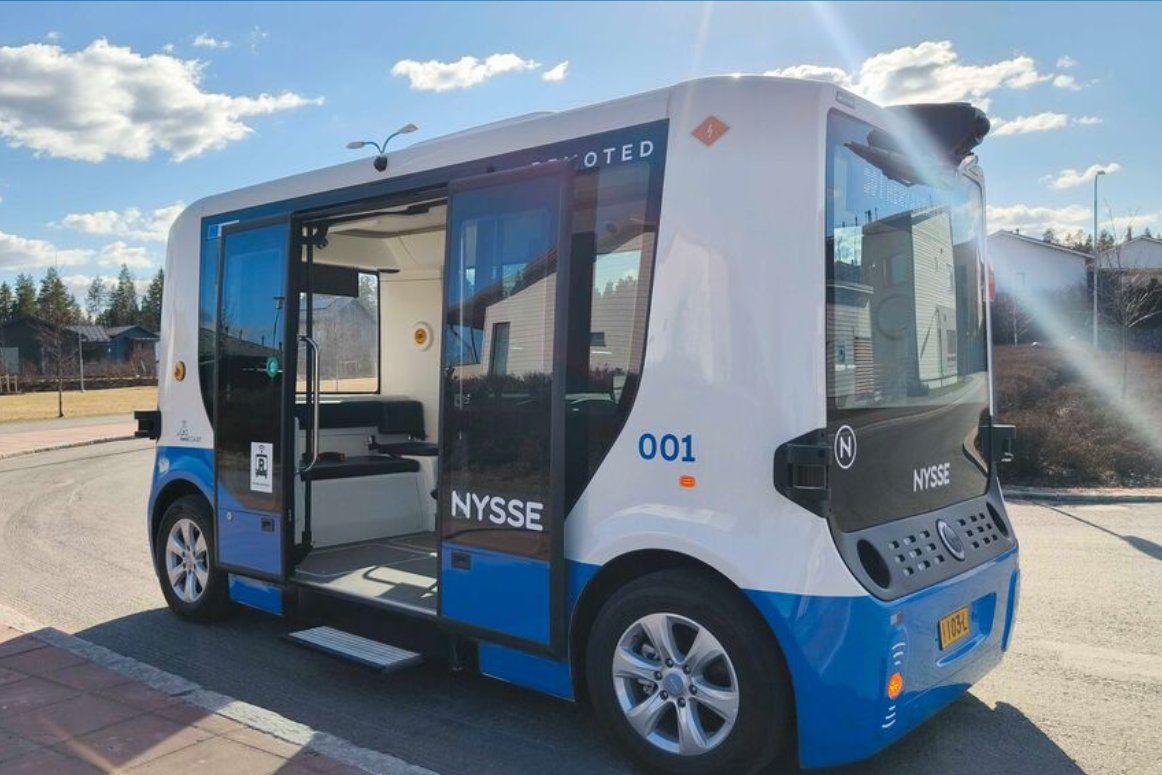
The Finnish city of Tampere has introduced a fully autonomous electric shuttle into regular public transport service, marking a new milestone in the deployment of driverless mobility solutions in Europe.
Beginning June 24, the autonomous vehicle will operate on route 301 between Hervantajärvi and Lintuhytti as part of the city’s public transport network.
Driverless Service Enters Regular Operation
The electric shuttle has been operating in mixed traffic since November 2025 with a safety driver on board. Following the completion of testing and validation activities, the vehicle has now transitioned to fully autonomous operation without a driver inside the vehicle.
The shuttle follows a fixed route at low speed and uses multiple sensors to continuously monitor its surroundings.
If obstacles or unusual conditions are detected, the vehicle can automatically stop to maintain safety.
Remote Monitoring Supports Operations
Although no driver is present inside the vehicle, operations are continuously supervised from a remote control centre.
Specialists monitor the shuttle in real time and can intervene if necessary.
The vehicle can carry up to 12 passengers. Users are required to remain seated throughout the journey and wear seatbelts while onboard.
The project aims to demonstrate how autonomous public transport services can operate safely within existing urban transport networks.
Part of EU Mobility Research Programme
The deployment is being carried out through the Metaccaze project, which is funded by the European Union’s Horizon Europe research programme.
The City of Tampere and public transport operator Nysse are responsible for integrating the shuttle into the local transport network, including ticketing systems and supporting infrastructure.
Technology company Remoted manages remote operations and system oversight, while researchers from Tampere University are evaluating factors such as operational performance and passenger acceptance.
Future Focus on Centralised Fleet Supervision
One of the project’s long-term objectives is to move vehicle supervision from onboard operators to centralised control centres.
Project partners envision a future in which a single remote operator can monitor multiple autonomous vehicles simultaneously.
The programme is also expected to expand, with plans to introduce three additional autonomous vehicles as part of the initiative.
Nordic Region Continues Mobility Innovation
The launch comes as Nordic countries continue to serve as important testing grounds for electric and automated transport technologies.
High electric vehicle adoption rates and supportive regulatory environments have helped position the region as a leading market for emerging mobility solutions.
The Metaccaze programme is testing connected, electric and automated transport technologies across several European cities.
In addition to Tampere, demonstration projects are being conducted in Amsterdam, Munich and Limassol, with the aim of sharing operational lessons and best practices across Europe.
The introduction of the autonomous shuttle into regular public service provides another example of how cities are exploring new technologies to improve urban mobility while reducing reliance on conventional transport models.


