
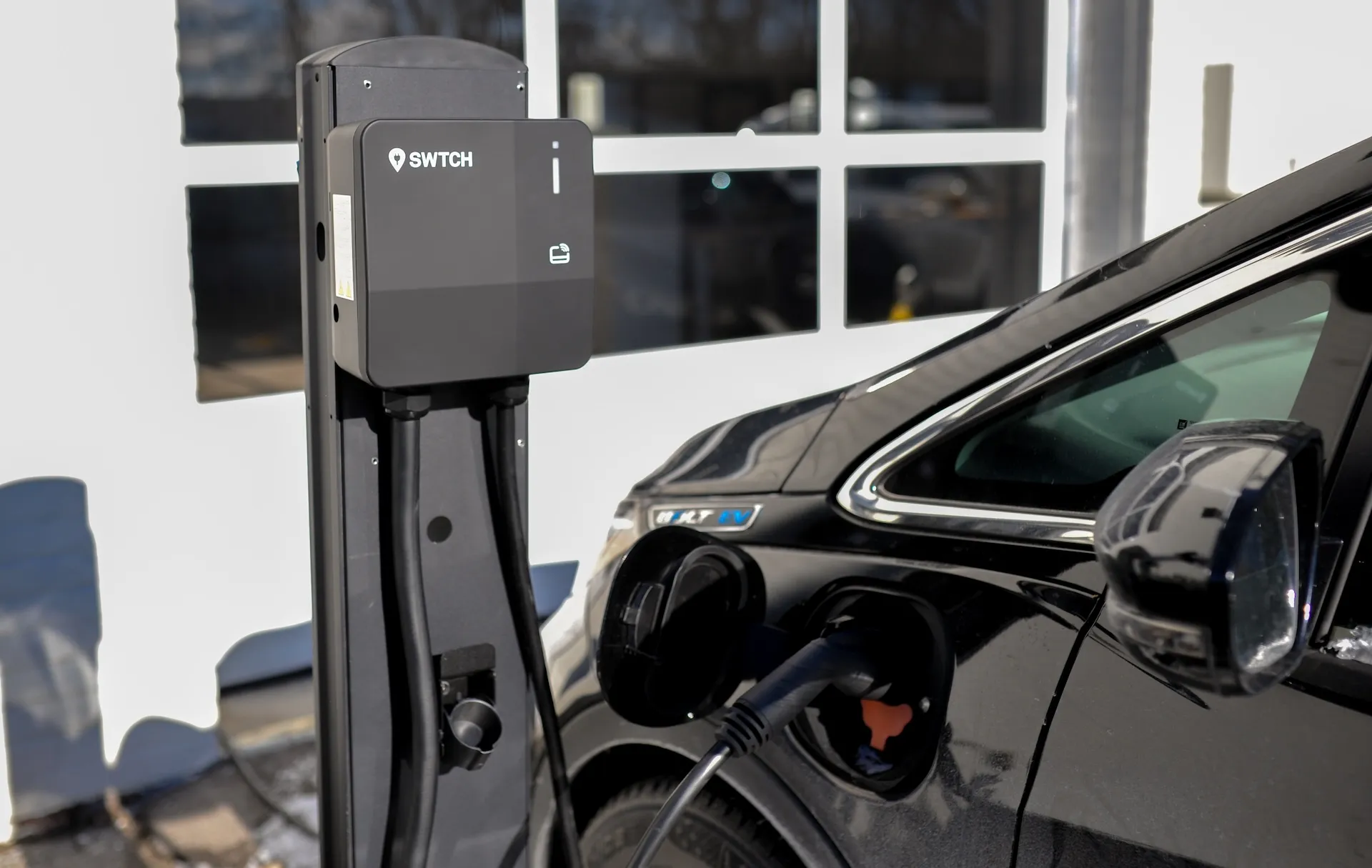
SWTCH Energy has expanded into Canada’s single-family residential market with a new home charging program that monetizes electric vehicle (EV) charging through federal carbon credits. The Toronto-based company will offer qualified homeowners a Level 2 charger at no upfront cost and share revenue generated from Clean Fuels Regulation (CFR) credits linked to residential charging activity.
The program centres on SWTCH’s ability to aggregate carbon credits created by home charging sessions and sell them to obligated parties such as fuel suppliers. Homeowners receive a payment of C$0.03 per kWh, which the company estimates could amount to between C$100 and C$150 per year for an average Canadian driver.
See also: SWTCH Energy to Manage Major EV Charging Deployment Across Greystar Properties in Washington State
Payments are issued via direct deposit once earnings reach C$100. “SWTCH is doing our part to make the switch to electric easier and more rewarding for Canadians,” CEO Carter Li said. “By building the infrastructure and business model to turn home charging into carbon credits, we’re giving homeowners a way to earn money while helping accelerate EV adoption nationwide.”
Participants receive a smart Level 2 charger capable of delivering up to 48 amps (11.5 kW when hardwired or 40 amps using a NEMA 14-50 plug). Installation costs are the responsibility of the homeowner, and the system must remain connected to Wi-Fi and paired with the SWTCH app to verify charging data and calculate credits. The service is compatible with existing provincial incentives in British Columbia and Quebec, which can further offset installation expenses.
See also: FirstService Residential and SWTCH Energy Deploy 1,000 EV Chargers Across North American Communities
The initiative marks SWTCH’s expansion beyond multi-family and commercial properties into decentralized residential charging infrastructure. It is being launched in partnership with Plug’n Drive, an EV education non-profit, and is designed to create a scalable model that recovers hardware costs through carbon credit revenue rather than direct consumer purchase.