
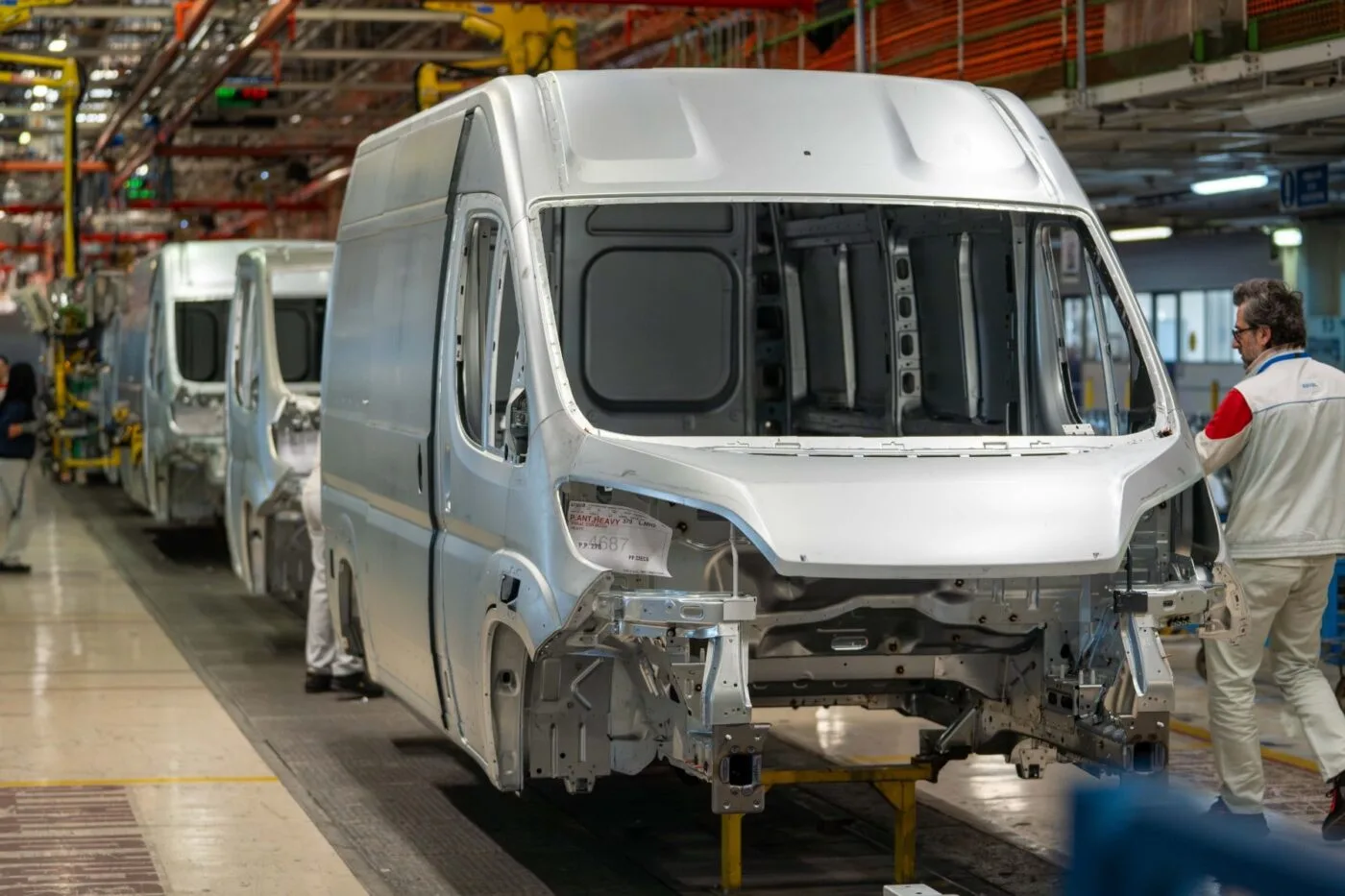
Stellantis Pro One has begun production of new battery-electric versions of its large ‘Cargo Box’ van and recreational vehicles at its Atessa facility in Italy, marking a key step in the company’s electrification strategy for commercial vehicles. The Atessa plant, the largest in Europe dedicated to large vans, will now support zero-emission production for both cargo and leisure transport markets.
The Cargo Box, described by Stellantis as “the most capable BEV light commercial vehicle,” is built on the company’s Battery Electric Chassis Cab platform. It features a 110 kWh battery paired with a 200 kW electric drivetrain, delivering up to 410 Nm of torque. The model offers a WLTP range of 323 km and a maximum cargo volume of 20.5 m³.
“The launch of the Cargo Box BEV confirms the path of excellence of this plant dedicated to proactively and quickly meeting the needs of our professional customers,” said Anne Abboud, Head of Stellantis Pro One.
Standard equipment includes a 22 kW AC onboard charger, which reduces charging time to six hours—half that of previous 11 kW models—allowing for overnight recharging. The production line will also handle battery-electric recreational vehicles based on the Fiat E-Ducato platform, which Stellantis says will help extend its leadership in the European RV segment. The company claims more than half of RVs in Europe use a Ducato base.
“Fit for mission, our motto, could not better summarize what we do, as demonstrated by the BEV version,” said Arnaud Leclerc, Global Head of Stellantis CustomFit. “We are ready to launch a BEV line-up to meet the demands of our most attentive and discerning customers.”
First introduced at the IAA in 2024, the electric Cargo Box retains its original specifications. The Atessa plant, located in Abruzzo, spans over 1.2 million square meters and features 15 kilometers of assembly lines. With more than 7.5 million vehicles produced since 1981, the site is a cornerstone of Stellantis’ commercial vehicle operations in Europe.