


Germany’s STADT:up research initiative has concluded after bringing together 20 automotive companies, technology suppliers, universities, and research institutions to develop artificial intelligence technologies for automated driving in urban environments.
Supported by €62.2 million in funding, the project culminated with a two-day demonstration event at the Aldenhoven Testing Centre, where participants showcased the automated driving technologies and research outcomes developed during the programme.
AI Developed for Complex Urban Traffic
The STADT:up project—short for Solutions and Technologies for Automated Driving in Town—was established to address one of the most difficult challenges facing autonomous vehicles: navigating busy city streets.
While automated driving functions have already been introduced on German motorways, project partners said urban environments require significantly more advanced decision-making because of dense traffic, complex intersections, pedestrians, cyclists, temporary road obstacles, and constantly changing traffic conditions.
To address these challenges, the consortium developed an AI-driven urban driving automation system covering the full autonomous driving workflow, including environmental perception, sensor data fusion, behaviour prediction, and vehicle manoeuvre planning.
The objective was to enable vehicles to safely manage complex city traffic while reducing the driver’s workload, even under rapidly changing conditions.
Test Vehicle Predicts Pedestrian Behaviour
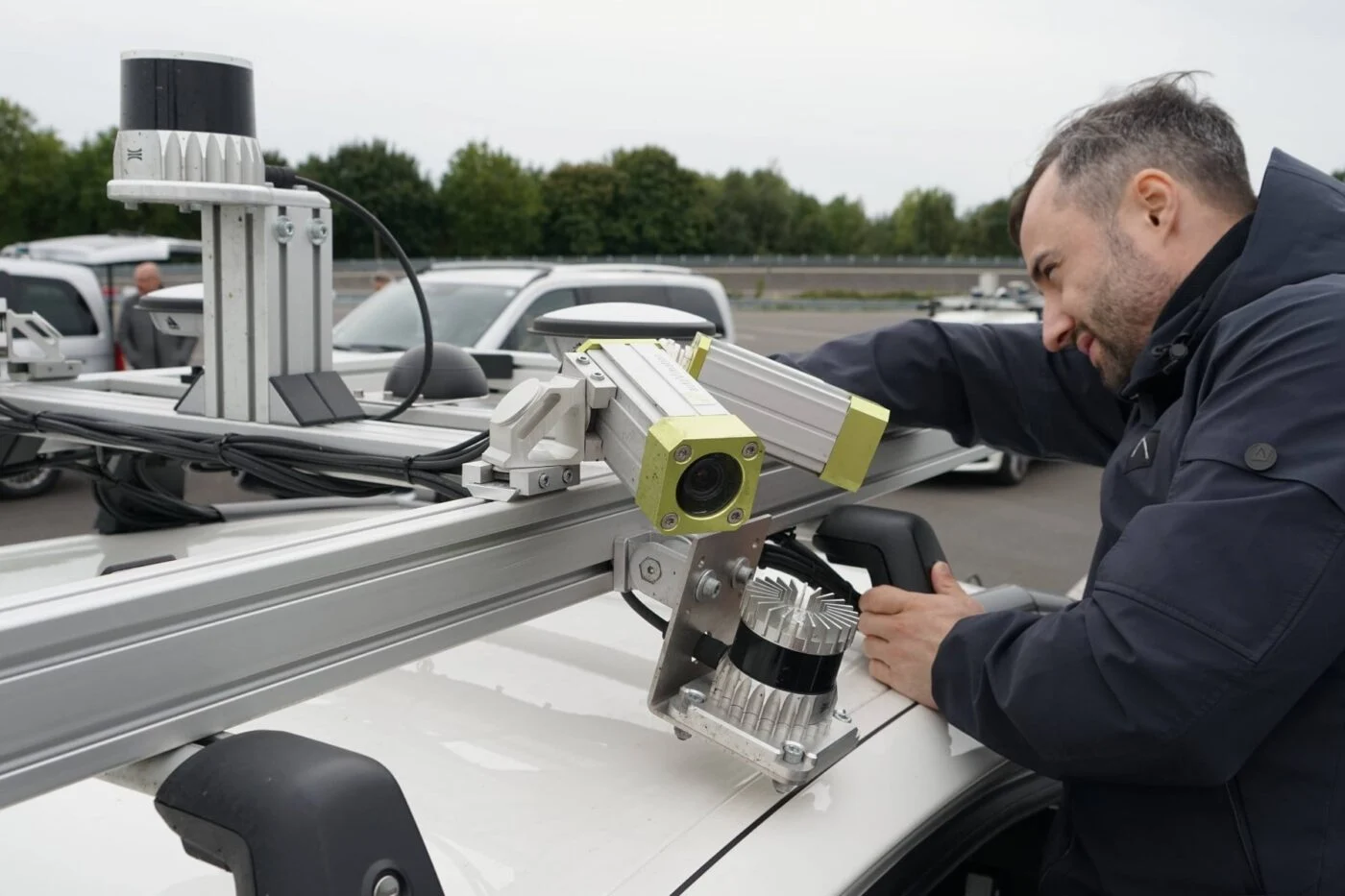
Among the project’s developments is AVA, a research vehicle created by Hochschule München.
Equipped with cameras, LiDAR sensors, and high-performance computing hardware, the vehicle not only detects pedestrians but also predicts where they are likely to move next, allowing the automated driving system to respond proactively before potentially hazardous situations develop.
Fabian Flohr, Professor of Machine Learning and Autonomous Systems at Hochschule München, highlighted the role of artificial intelligence in improving urban autonomy.
“Urban traffic is the toughest challenge you can pose to an autonomous vehicle. STADT:up has demonstrated that AI-based systems are already capable of handling this complexity—provided you have the right data and ask the right questions.”
He added:
“At Hochschule München, we teach AI to interpret urban chaos through the eyes of pedestrians and cyclists. This enables autonomous vehicles to think ahead and make the unpredictable predictable.”
Broad Industry Collaboration
The STADT:up consortium brought together major automotive manufacturers including Mercedes-Benz, Opel, and Cariad, Volkswagen Group’s software subsidiary.
Technology suppliers and engineering partners included Bosch, ZF Friedrichshafen, Valeo, AVL, Aptiv Services, AUMOVIO, DeepScenario, Ergosign, gestigon, and Hella.
Research institutions participating in the programme included the Federal Highway Research Institute (BASt), the German Aerospace Center (DLR), Hochschule München, TU Chemnitz, TU Darmstadt, and TU Munich.
The project received funding through Germany’s New Vehicle and System Technologies programme administered by the Federal Ministry for Economic Affairs and Energy.
Project partners said the technologies demonstrated through STADT:up provide a foundation for future automated mobility solutions capable of safely navigating increasingly complex urban environments.