





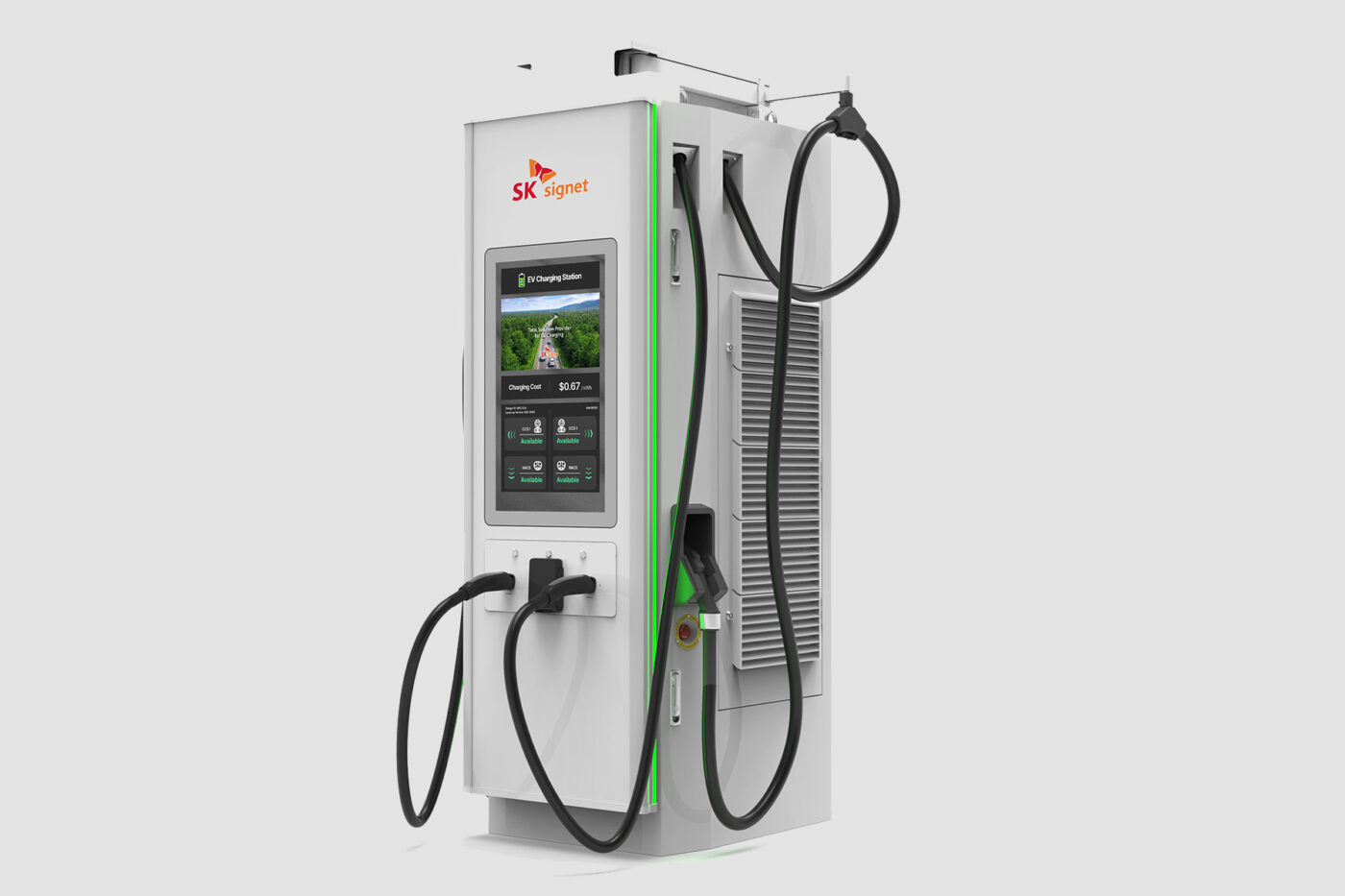
SK Signet, part of SK Group, has introduced a new 400 kW all-in-one DC fast charger designed to improve installation efficiency and support the company’s global expansion strategy.
The SK Signet 400 kW All-in-One DC Charger integrates power modules directly into the charging unit, eliminating the need for a separate switchgear cabinet. This design simplifies deployment and reduces construction costs compared to traditional decentralised systems.
SK Signet said the new model delivers a 54% reduction in footprint compared to its previous generation of chargers with similar capacity, while achieving energy efficiency of up to 96.5%. The improvements are enabled by high-density silicon carbide (SiC)-based power modules and an optimised power architecture.
The system is designed to meet rising demand for high-power charging, particularly from 800-volt electric vehicles capable of utilising ultra-fast charging speeds. According to the company, the charger can deliver a full 400 kW output to a single vehicle or distribute between 150 kW and 250 kW across multiple vehicles simultaneously. Configurations range from a single-cable setup to versions with up to four charging cables.
The all-in-one concept, already popular in Europe through solutions such as Alpitronic’s Hypercharger, is gaining traction among operators seeking to maximise power output while minimising space requirements and installation complexity.
“The new 400kW All-In-One model is a breakthrough that simultaneously innovates power efficiency, density, and reliability,” said Hyungki Cho, Chief Executive Officer of SK Signet. “As high-power demand accelerates across the US, SK Signet will spearhead the evolution of ultra-fast charging networks by utilising our unrivalled leadership in technology.”
The company said it plans to expand its presence in the United States across multiple sectors, including EV charging, hydrogen energy, batteries and semiconductors, although the pace of EV market growth remains uncertain amid shifting policy conditions.
In addition to the North American version—supporting CCS1 and NACS standards—the charger is expected to launch in Europe by the end of the year, with longer-term plans to supply global markets.


