




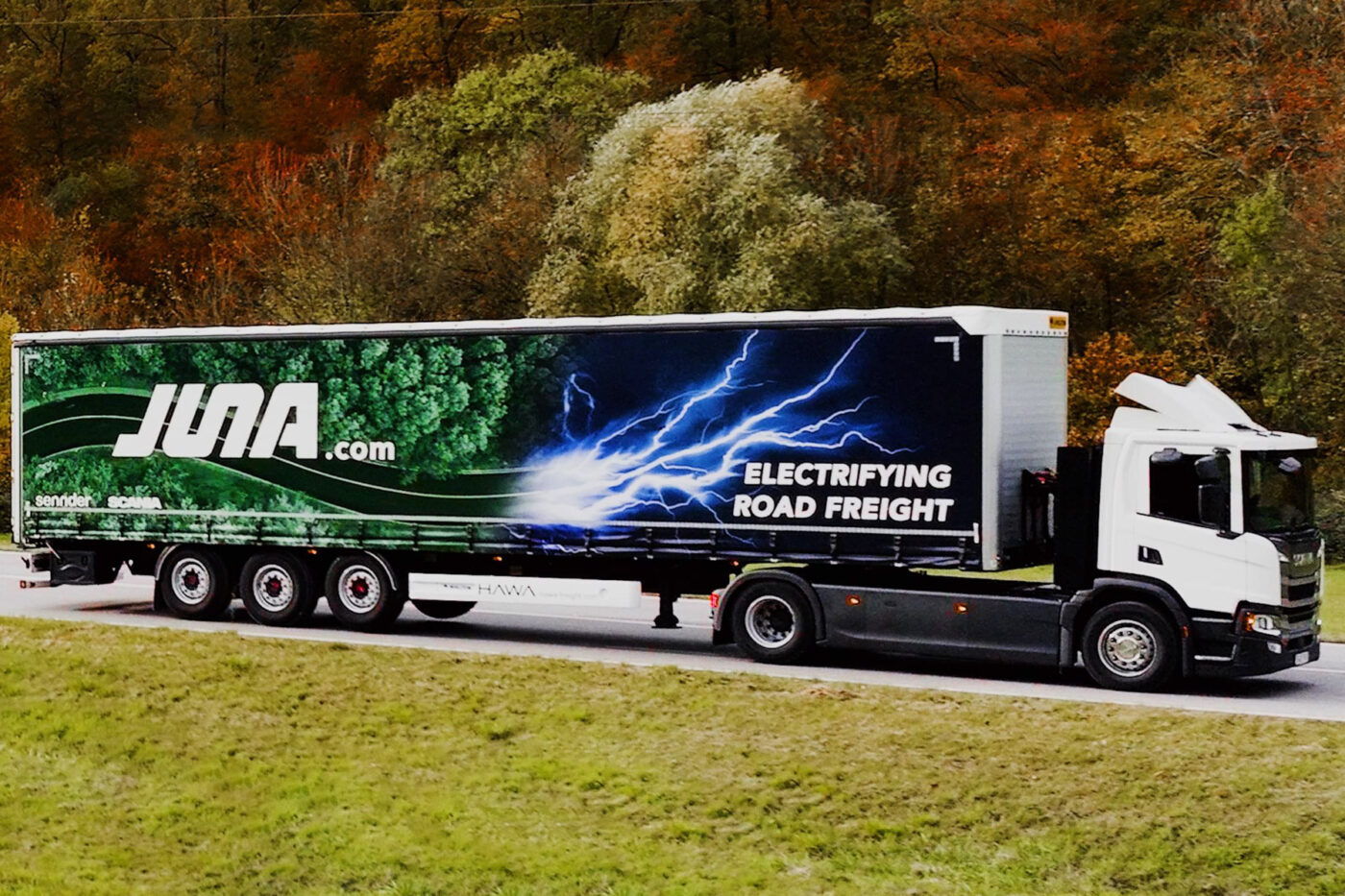
Berlin-based electric truck rental start-up Juna said it plans to significantly expand its fleet after two years of operations, targeting about 200 battery-electric trucks by the end of 2026 from just over 50 currently in service.
Founded in 2023 as a joint venture between Scania and logistics platform Sennder, Juna offers electric trucks under a pay-per-use model designed to reduce upfront investment and financial risks for transport companies. The company assumes ownership of the vehicles, while customers pay based on usage and receive bundled services including maintenance, insurance and digital support.
See also: Petit Forestier Obtains €150 Million Loan to Electrify Refrigerated Vehicle Fleet
Electric trucks from the programme are now deployed across five major European markets — Germany, Italy, the Netherlands, Belgium and Poland — primarily on routes where utilisation and charging infrastructure can be planned in advance. Juna said its vehicles have covered more than 1.6 million kilometres since early 2024, when operations began on initial routes in Germany.
The company currently works with around 20 customers. It focuses on high-utilisation corridors to ensure predictable operations, supported by route simulations and data analysis to assess the suitability of electrification for specific logistics needs.
See also: Dutch Fleet Drivers Demand at Least 400 km Range for Next Electric Company Car, BMW Study Finds
Juna’s business model resembles other pay-per-use offerings in the sector, which aim to offset the high purchase cost of zero-emission trucks. The company said its packages include vehicles, repairs, maintenance, insurance and electrical services, along with guaranteed utilisation levels.
Chief Executive Matteo Oberto said the company is moving beyond pilot projects toward broader deployment. “From the outset, our goal was not to replace every diesel route overnight but to create a robust and scalable foundation for electric freight transport,” he said. “After two years, electric heavy-duty transport has moved far beyond individual pilot projects. We have established structured, repeatable processes.”
See also: Brantner Deploys 13 Electric Mercedes-Benz Trucks in Austria’s Waste Sector
Juna did not mention its earlier long-term target of operating 5,000 trucks by 2030 in its latest update. To support near-term expansion, the company said it has strengthened its workforce, particularly in operations, technology and commercial functions.


