

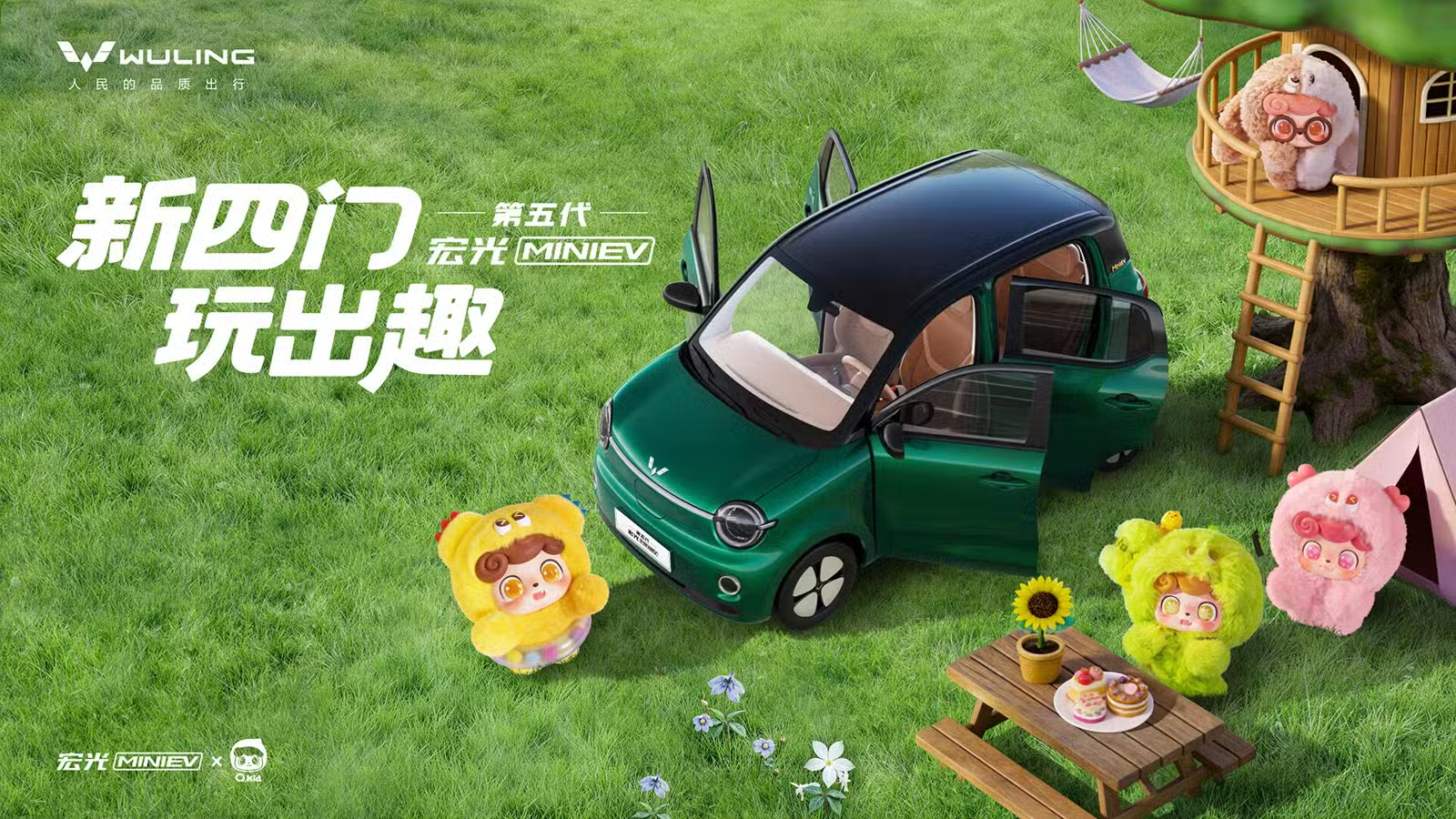
SAIC-GM-Wuling has unveiled the fifth-generation Hongguang Mini EV, updating the world’s best-selling micro electric vehicle as competition intensifies in China’s entry-level EV segment.
The new version adopts a unified design language for both two-door and four-door variants, featuring retro-style circular headlights and taillights along with a contrasting black floating roof. Three new exterior colours — green, white and grey — have been introduced, according to information released by the company on social media.
The model has already appeared in a regulatory catalogue from China’s Ministry of Industry and Information Technology, indicating preparations for market launch. Dimensions have been slightly revised while maintaining the compact proportions intended for urban driving.
The four-door variant measures 3,268 mm in length, 1,520 mm in width and 1,575 mm in height, with a wheelbase of 2,190 mm. The two-door version measures 3,043 mm long, 1,520 mm wide and 1,590 mm high, with a 1,965 mm wheelbase. These figures represent modest changes from the current model.
Pricing for the existing generation starts at 32,800 yuan for the two-door version and 44,800 yuan for the four-door model, positioning the vehicle among the most affordable electric cars in China.
Since its launch in July 2020, the Hongguang Mini EV has played a significant role in expanding electric vehicle adoption, particularly in smaller cities and rural markets. The model family sold 435,598 units in 2025, bringing cumulative sales to more than 1.85 million vehicles.
SAIC-GM-Wuling said the car has remained China’s best-selling A00-class new energy vehicle for 65 consecutive months. The joint venture, headquartered in Liuzhou, is owned by SAIC Motor, General Motors and Liuzhou Wuling Automobile and produces several small electric models based on its Global Small Electric Vehicle platform.