




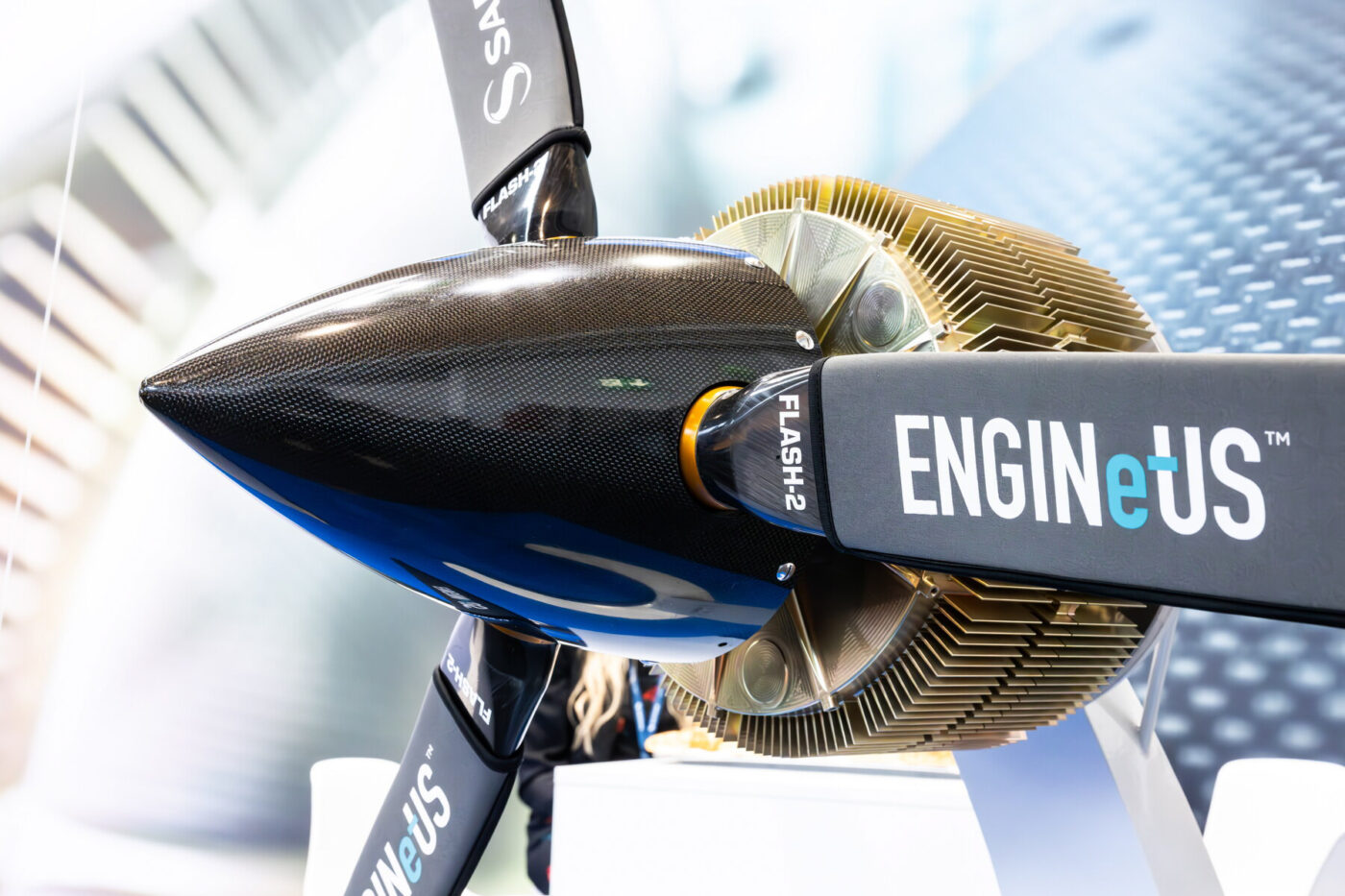
Safran Electrical & Power has achieved a significant milestone, receiving certification from the European Union Aviation Safety Agency (EASA) for its ENGINeUS 100 electric motor. This certification marks the culmination of four years of collaboration between Safran and EASA to define airworthiness rules and develop assessment methods for the electric drive.
Over the course of the certification process, Safran conducted 1,500 hours of testing and more than 100 flight hours. The ENGINeUS 100, designed to integrate seamlessly into all drive architectures, delivers 125 kW of power with a power-to-weight ratio of 5 kW/kg.
See also: Swiss Startup H55, UK’s AeroVolt Partner to Expand Electric Aviation Infrastructure and Training
The motor is suitable for electric propulsion in small aircraft, such as two- to four-passenger planes, or for hybrid aircraft with up to 19 passengers. Safran also has plans to develop future generations of the motor that could support hybrid commercial aircraft with up to 150 passengers.
Safran is preparing for the mass production of the ENGINeUS range, with plans to establish four semi-automatic production lines in Niort, France, and Pitstone, UK, by 2026. These lines will allow for the production of over 1,000 electric motors per year, with the capacity for future increases. Safran’s customer base includes Bye Aerospace and VoltAero.
See also: Sarla Aviation Secures $10 Million in Series A1 Funding to Develop Electric Air Taxis for India
Safran CEO Bruno Bellanger described the certification as a “key moment in the history of aviation,” calling it a world-first achievement for the company. EASA Certification Director Rachel Daeschler noted the significance of the project, stating, “EASA is fully committed to support the development and certification of propulsion technologies aimed at decarbonizing aviation.”


