
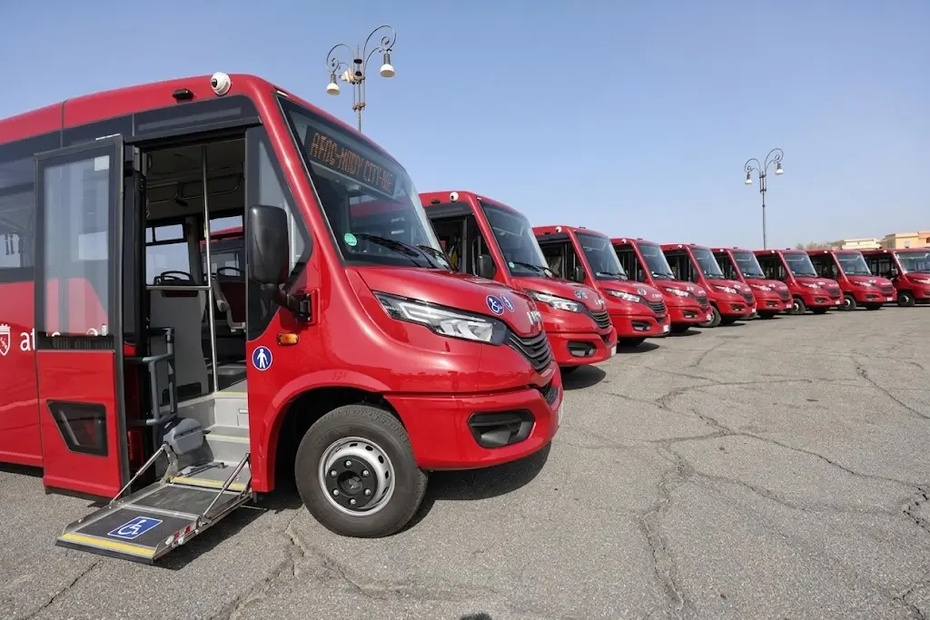
Rome is investing around €116.7 million to decarbonise its public transport system, with most of the funding allocated to new battery-electric and hydrogen buses for public transport operator ATAC. The programme will also support upgrades to operating facilities and the development of a green hydrogen production and refuelling hub at ATAC’s Acilia site.
Rome Expands Zero-Emission Bus Fleet
The funding comes from Italy’s Ministry of Infrastructure and Transport and will be provided through the city of Rome. An agreement between Rome and ATAC has cleared the way for the programme to move forward.
Rome To Introduce €1,000 Annual ZTL Fee for Electric Vehicles
Media reports indicate that €83.6 million will be allocated to hydrogen buses, while another €27.1 million will fund battery-electric buses. The available information does not specify the number of buses to be purchased or the manufacturers that will supply them.
The new vehicles are expected to include accessibility features and equipment such as air conditioning, USB ports, video surveillance and passenger counting systems.
The investment will also cover modernisation of the facilities required to operate the new zero-emission fleet.
Green Hydrogen Hub Planned for Acilia
A further €6 million in European funding will support the construction of a hydrogen hub at ATAC’s Acilia site in southern Rome.
The facility is planned to produce green hydrogen through electrolysis and provide refuelling infrastructure for the new hydrogen fuel-cell buses. The project therefore combines vehicle procurement with the infrastructure needed to support hydrogen-powered public transport.
Rome to Receive 60 Mercedes-Benz eCitaro Electric Buses for Outer Suburbs by January 2025
“We do not limit ourselves to buying new-generation zero-emission buses, but we build the infrastructure needed to make them work,” said Eugenio Patanè, Rome’s Mobility Councillor.
Rome is also considering making the future hydrogen refuelling station available to private customers. If implemented, that would extend the facility’s use beyond ATAC’s public transport fleet.
Dual Electrification Strategy
The programme gives Rome two different zero-emission bus technologies for public transport: battery-electric vehicles and hydrogen fuel-cell buses.
Battery-electric buses are being supported alongside the hydrogen fleet, while the city develops dedicated infrastructure for both technologies. The approach is part of a broader effort to reduce emissions from public transport in the Italian capital.
Rome is simultaneously implementing measures intended to reduce private vehicle traffic in the historic centre. Since July 2026, electric vehicles have also been required to pay to enter the city’s traffic-restricted zone, or ZTL.
Enjoy Introduces 100 Electric Cars to Car-Sharing Fleet in Rome
According to the city, around 50,000 cars enter the zone each day, compared with an intended capacity of approximately 20,000 vehicles. The public transport investment and traffic restrictions form part of a wider strategy to reduce emissions and congestion in central Rome.
Source: goodtenders.com, fuelcellsworks.com