
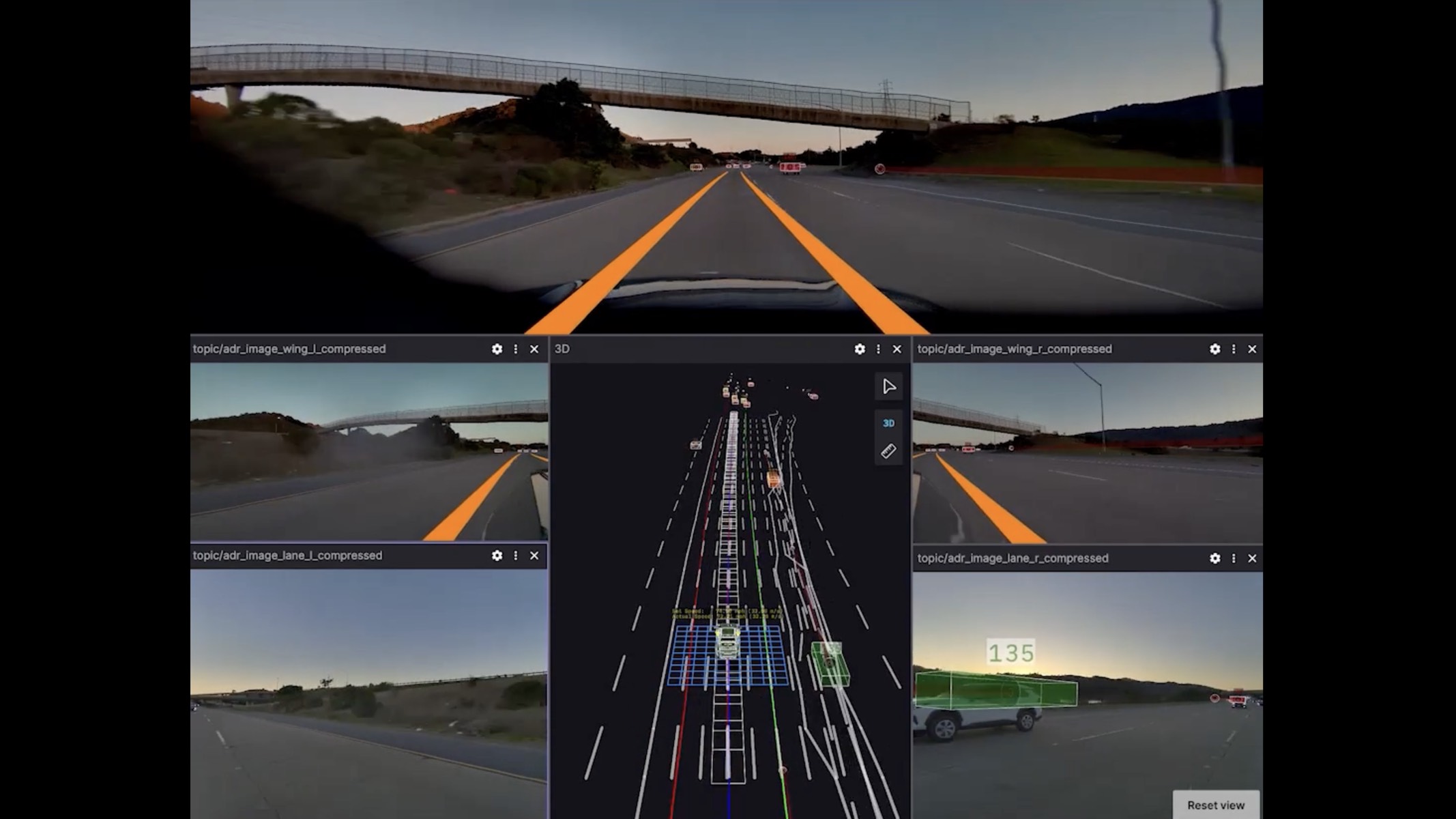
Rivian has quietly rolled out a new feature through recent software updates that allows its Gen 2 vehicles to calibrate cameras dynamically while driving, eliminating the need for service center visits for minor alignment adjustments.
The feature enables the system to continuously refine camera positioning as the vehicle moves through various environments, ensuring optimal performance for the company’s advanced driver assistance system (ADAS).
See also: Rivian Delays Release of Kick Turn and RAD Tuner Features for R1T and R1S Quad Models
The system now performs two types of calibration — static and dynamic. Static calibration occurs when the vehicle is stationary, such as at a red light, allowing the cameras to align using visual references. Dynamic calibration operates between 5 and 70 mph, adjusting the cameras’ orientation in real time relative to the vehicle’s direction of travel. These background algorithms continuously compensate for small shifts caused by temperature changes or vibrations, maintaining precision and consistency in sensor data.
New Gen 2 Rivians typically complete their initial calibration within the first hour of mixed driving after delivery. During the process, drivers may see a brief message prompting them to continue driving until calibration is complete. Most ADAS and safety features remain active during this period, and the system notifies users once calibration finishes successfully.
See also: Rivian Adds “Spooky Swamp” Halloween Theme and Plug & Charge Feature in Latest Software Update
By allowing vehicles to self-calibrate, Rivian aims to reduce service center visits and improve the long-term reliability of its driver assistance and safety systems.
The update arrives as Rivian prepares for its first-ever Autonomy Day in December, where the company is expected to detail its roadmap for hands-free and autonomous driving technologies. The continuous calibration system serves as a foundational step toward Rivian’s broader autonomy ambitions.