
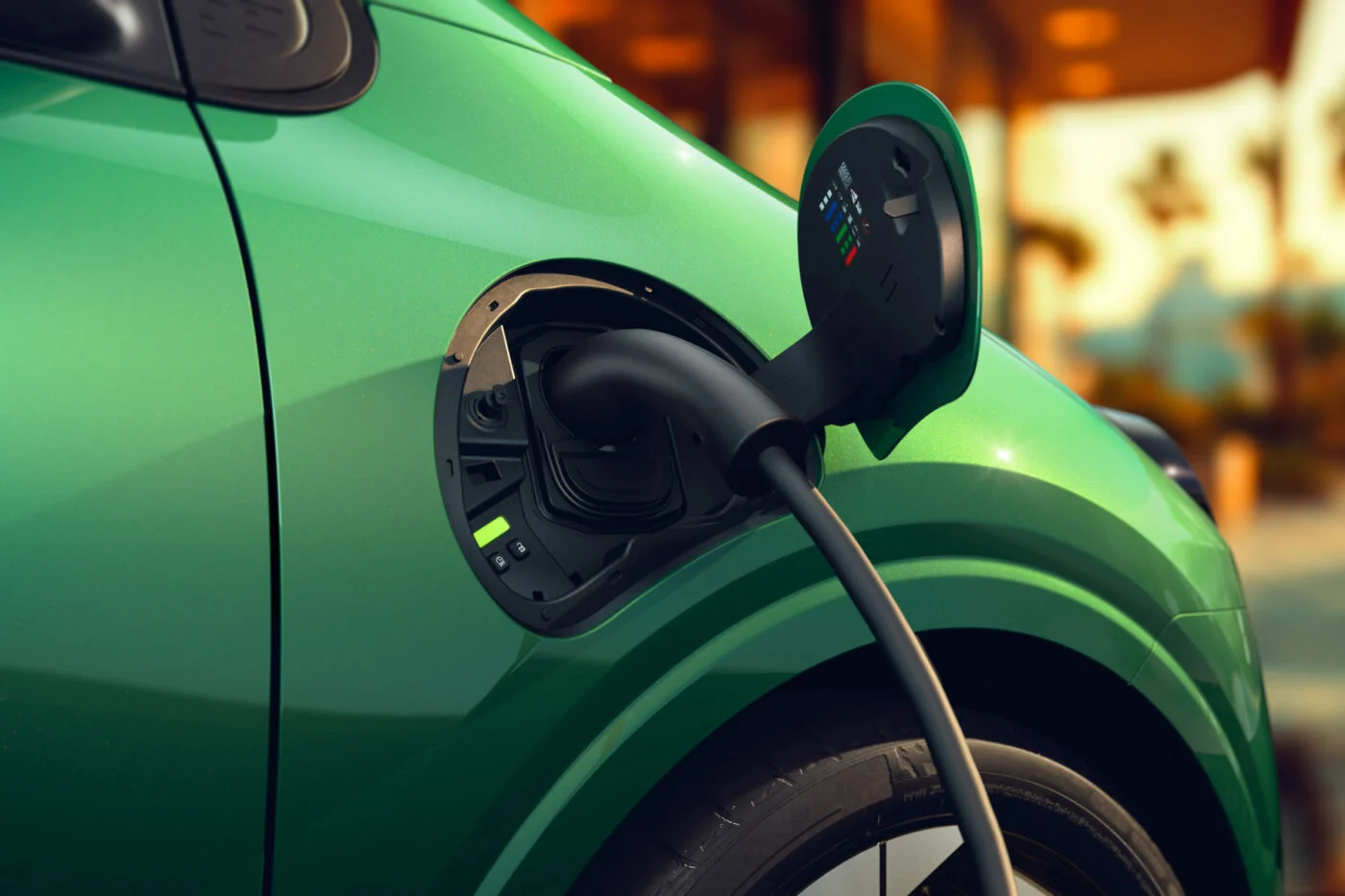
Renault Group and French energy company EDF plan to launch a bidirectional electric vehicle charging service for private customers in France in summer 2027. The offering will combine an electric vehicle, a home charging station and intelligent charging management, allowing compatible EVs from Renault, Alpine and Dacia to supply stored electricity back to the power grid.
The initiative will involve EDF subsidiaries IZI by EDF and Dreev. The partners intend to distribute the package through Renault Group’s dealer network, with IZI by EDF and EDF handling the installation of home charging equipment.
Three Components of the Charging Service
The planned offering will cover three main areas: the distribution and installation of home charging equipment, services to simplify and optimise charging, and solutions that allow electricity stored in an EV battery to be used for household applications or exported to the grid when required.
Bidirectional charging enables electricity to flow in both directions between a vehicle and an external energy system. Depending on the technology and configuration, this can include vehicle-to-grid (V2G) applications, which return electricity to the power network, and vehicle-to-home (V2H) applications, which supply power to a household.
The partners will continue developing the service ahead of its planned launch. Specific vehicle compatibility, pricing, charging hardware specifications and customer eligibility requirements have not yet been detailed.
Renault and EDF Target Charging Cost Management
The collaboration is intended to help EV owners manage charging costs by coordinating vehicle charging with energy requirements and grid conditions. Bidirectional technology could also allow customers to use stored electricity for selected household needs or return it to the grid when appropriate.
Jérôme Faton, Renault Group’s vice president of customer experience and energy, said the partnership aims to address consumer concerns about the cost of electric mobility and the energy transition.
“Beyond technological innovation, this partnership provides a concrete response to two major concerns for French consumers: purchasing power and the energy transition,”
He added that the companies intend to make EV ownership more attractive by helping customers manage charging expenses and access potential value from stored energy.
The financial benefits for individual customers will depend on the final service terms, electricity tariffs, equipment costs and the conditions under which power can be exported or reused.
EDF Brings Smart-Charging Experience
EDF will contribute energy-management expertise through its subsidiaries. According to Christelle Vives, president of EDF Business Services, the partnership combines vehicle technology with energy services designed for private customers.
“This alliance demonstrates how two leading French companies can join forces to advance competitive, sovereign and low-carbon mobility. EDF Group has extensive expertise in smart charging solutions, already deployed by our subsidiary Dreev to more than 100,000 customers across France and Europe. By combining innovative energy technologies and services tailored to consumers’ needs, Renault Group and EDF Group are helping strengthen a national industrial ecosystem that creates value, jobs and innovation.”
Dreev’s existing smart-charging operations provide a foundation for the planned service, although the partners have yet to disclose how its existing technology will be integrated with Renault Group vehicles and home charging systems.
Market Launch Planned for Summer 2027
The initial rollout will target private customers in France, with the package distributed through Renault Group’s dealer network. The companies have not yet confirmed a detailed launch date or provided a complete list of compatible models.
The initiative reflects growing interest in integrating electric vehicles into home energy management and electricity networks. Its practical impact will depend on vehicle and charger compatibility, installation requirements, energy tariffs and the commercial arrangements offered to customers.