




QCraft said its QPilot intelligent driving system has now been installed in more than one million passenger vehicles, as the company unveiled its next-generation QPilot 2.0 platform at QCraft Day 2026 in Beijing.
The company said QPilot 2.0 delivers more than 500 trillion operations per second (TOPS) of computing power and introduces a Vision-Language-Action architecture combined with a World Model framework. The unified architecture is designed to support both Level 2 advanced driver assistance systems and Level 4 autonomous driving applications.
See also: QCraft, Chery Commercial Vehicles Partner on Mass-Production L4 Autonomous Logistics Fleet
QCraft also confirmed that its single-chip Urban Navigation on Autopilot (NOA) solution has entered large-scale production. The system is based on a single Horizon Robotics Journey 6M chip and began mass production and deliveries in January 2026, the company said.
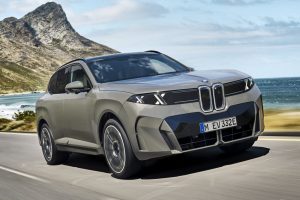
The QPilot system is currently deployed across 23 vehicle models from nearly 10 automakers, including partnerships with Li Auto, GAC Group and Chery. QCraft said it expects more than 50 additional vehicle models to adopt the system during 2026.
See also: QCraft Partners With TÜV Rheinland to Support Global Autonomous Driving Standards
Among the first models to receive the one-chip Urban NOA system are several Li Auto vehicles, including the 2025 L6 Pro, L7 Pro, L8 Pro and L9 Pro variants, according to the company.
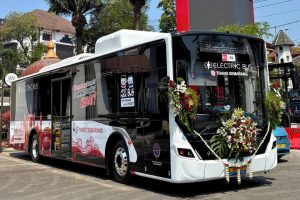
Beyond passenger vehicles, QCraft said it is expanding into unmanned logistics through a strategic partnership with Chery Commercial Vehicle. At the event, the company introduced its Robo-X platform, an autonomous ecosystem supporting applications such as Robobus, RoboVan and Robotaxi services, built on a shared technical foundation and operational toolchain.
See also: QCraft Expands into Europe, Partners with Qualcomm for Autonomous Driving
QCraft said it plans to accelerate international expansion, targeting Europe, Asia and the Middle East through new regional offices. The company currently operates in cities including Beijing, Shanghai, Hong Kong, Silicon Valley and Munich.
The firm added that its cross-platform architecture supports chips from NVIDIA, Qualcomm and Horizon Robotics, and that it has secured multiple international certifications to support deployment outside China.


