


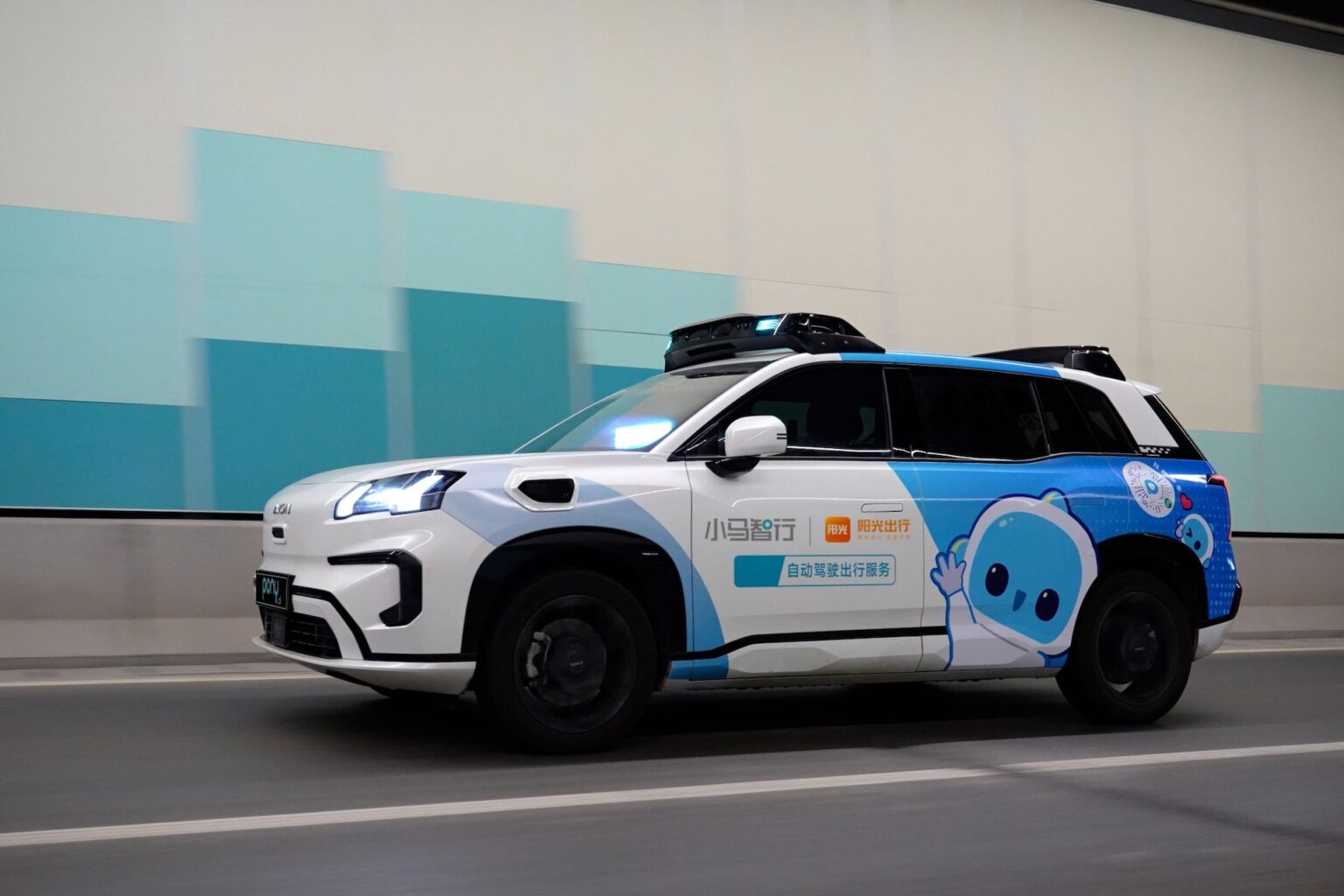
Pony.ai said on the final day of 2025 that its robotaxi fleet had grown to 1,159 vehicles, surpassing its full-year target of 1,000 units as the company accelerated deployment in the second half of the year.
The fleet expansion gathered pace after the third quarter. As of Sept. 30, Pony.ai operated 961 robotaxis, of which 667 were seventh-generation models, the company said. The latest figures underscore rapid scaling as the autonomous driving firm pushes toward broader commercial adoption.
Commercial operations advanced in the fourth quarter, when Pony.ai’s seventh-generation robotaxis began fully driverless service in Beijing, Guangzhou and Shenzhen. In November, the company said its robotaxi operations in Guangzhou achieved positive city-level unit economics, a milestone widely viewed as critical for the long-term viability of Level 4 autonomous ride-hailing.
Operational metrics in Guangzhou showed rising demand and efficiency. Over a recent two-week period, each robotaxi in the city averaged 23 daily orders, reflecting improving utilization rates as fully driverless services expanded.
The operational gains have been supported by revenue growth. Pony.ai reported third-quarter 2025 revenue of 181 million yuan ($25 million), up 72% from a year earlier and marking its third consecutive quarter of growth. Robotaxi revenue rose 89.5% year on year to 47.7 million yuan, with passenger fare income more than tripling compared with the same period in 2024.
The company strengthened its balance sheet in November by listing in Hong Kong, becoming the largest autonomous driving initial public offering globally in 2025. Pony.ai ended the year with more than 4 billion yuan in cash and cash equivalents and said it had secured a further 6 billion yuan in financing to support expansion.
Building on that momentum, Pony.ai said it plans to expand its robotaxi fleet to more than 3,000 vehicles by the end of 2026. The company said it will continue to rely on an asset-light, partnership-based model and expects the bill-of-materials cost of its seventh-generation autonomous driving system to fall by about 20% in 2026.
Beyond robotaxis, Pony.ai said its robotruck and technology licensing businesses continue to grow, with its fourth-generation robotruck scheduled for mass production next year.