


GAC Aion has unveiled the Ray 7, a five-seat battery-electric sedan that launches the company’s new Ray series and introduces its refreshed brand logo. The rear-wheel-drive model has a claimed CLTC range of 700 km and uses a Huawei-supplied electric drive system with peak power of 180 kW.
Ray 7 Introduces New Aion Design Direction
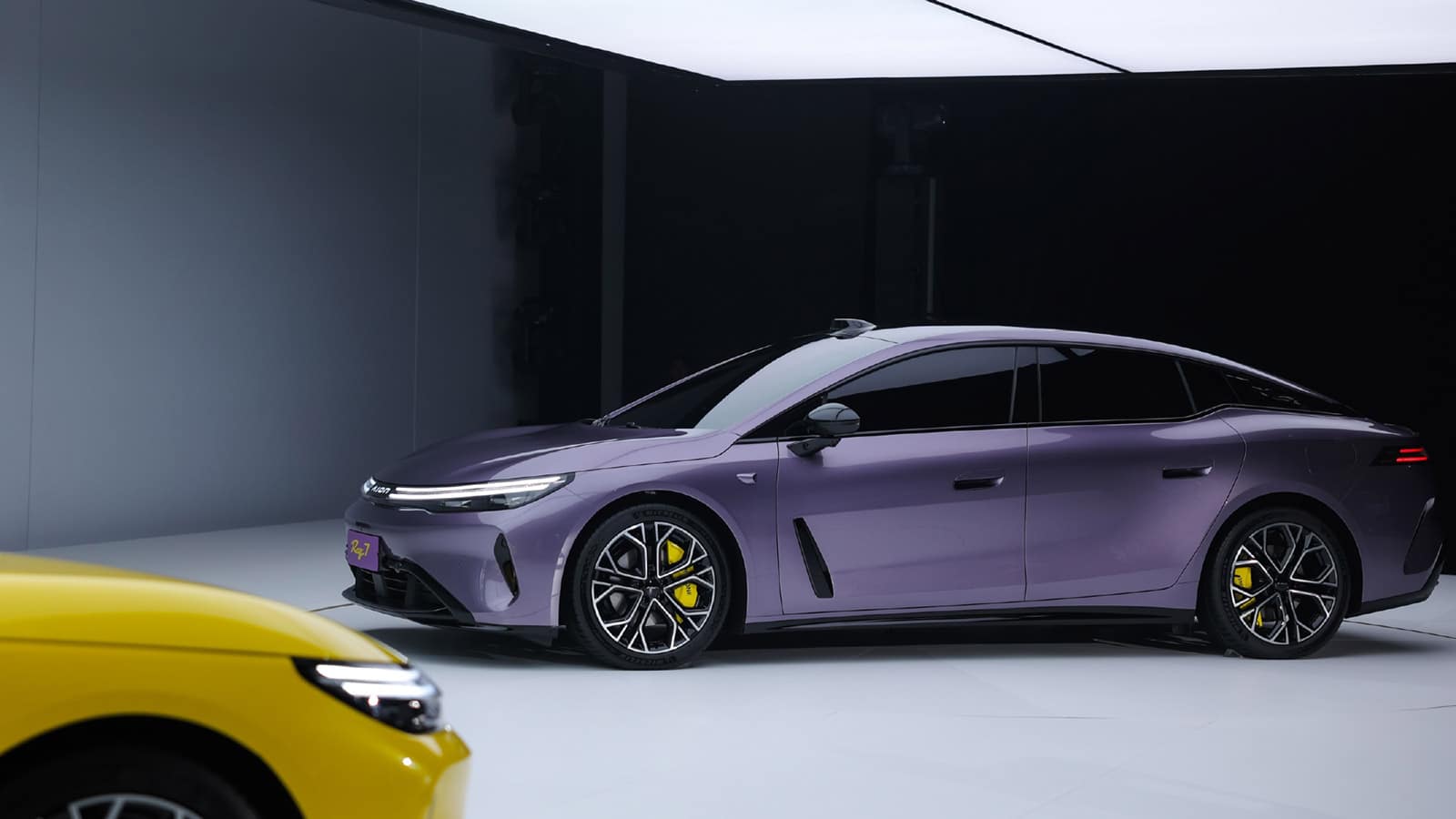
The Ray 7 measures 4,960 mm long, 1,900 mm wide and 1,455 mm high, with a wheelbase of 2,920 mm.
Its exterior uses a low-slung, wide-body design with a fastback roofline. The front features a full-width light bar and illuminated logo, while yellow and purple exterior finishes are available.
GAC Aion said 14 aerodynamic improvements help bring the vehicle’s drag coefficient down to 0.22.
The model is intended to broaden GAC Aion’s appeal among younger consumers and is the first vehicle to carry the company’s updated logo.
Huawei Electric Drive and 700 Km Range
The Ray 7 is built on a battery-electric rear-wheel-drive platform and uses a Huawei motor with peak output of 180 kW, equivalent to 241 hp.
The vehicle also incorporates Huawei’s DriveONE integrated electric drive system. GAC Aion combines the system with its next-generation thermal management technology and a 28-in-1 thermal management module.
According to GAC Aion, the resulting configuration delivers CLTC energy consumption as low as 9.7 kWh per 100 km and a CLTC driving range of up to 700 km.
CATL supplies the battery for the Ray 7, which incorporates GAC Aion’s Magazine Battery 2.0 safety technology. Previous regulatory filings also identified another variant using battery cells supplied by GAC Aion’s Yinpai Battery.
Brake-by-Wire and Integrated Vehicle Control
The Ray 7 is the first GAC Aion model to use the company’s chip-level integrated drive-and-control architecture.
It also features Huawei’s EMB, or Electromechanical Braking, fully brake-by-wire system. GAC Aion claims a braking distance of 33 metres from 100 km/h and says the system can maintain safe stopping capability even if failures occur at all four wheels.
The combination of integrated vehicle control and brake-by-wire technology forms part of the sedan’s broader electronic architecture.
27 Sensors Support Driver Assistance
The Ray 7’s driver-assistance system uses 27 automotive-grade sensors, including a Huawei 192-channel LiDAR and three 4D millimeter-wave radars.
GAC Aion said the system’s algorithms share the same technological foundation as WeRide’s Level 4 robotaxi technology.
Supported functions include automated driving from one parking space to another, searching for nearby parking spaces and automated passage through parking gates.
GAC Aion and Huawei also held a signing ceremony during the vehicle’s launch, confirming plans to deepen their technology collaboration.
Ray 7 Pricing and Launch Still Pending
GAC Aion has not yet announced official pricing or a market launch date for the Ray 7. The model is expected to be positioned in the 200,000 yuan to 250,000 yuan range.
At that price level, the sedan is expected to compete with models including the Xiaomi SU7, Zeekr 007 and Shangjie Z7.
The Ray 7 will be displayed at the 2026 Chengdu Auto Show from August 21 through August 30, where GAC Aion is expected to provide further exposure for its new electric sedan and Ray series.