

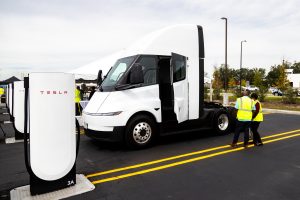


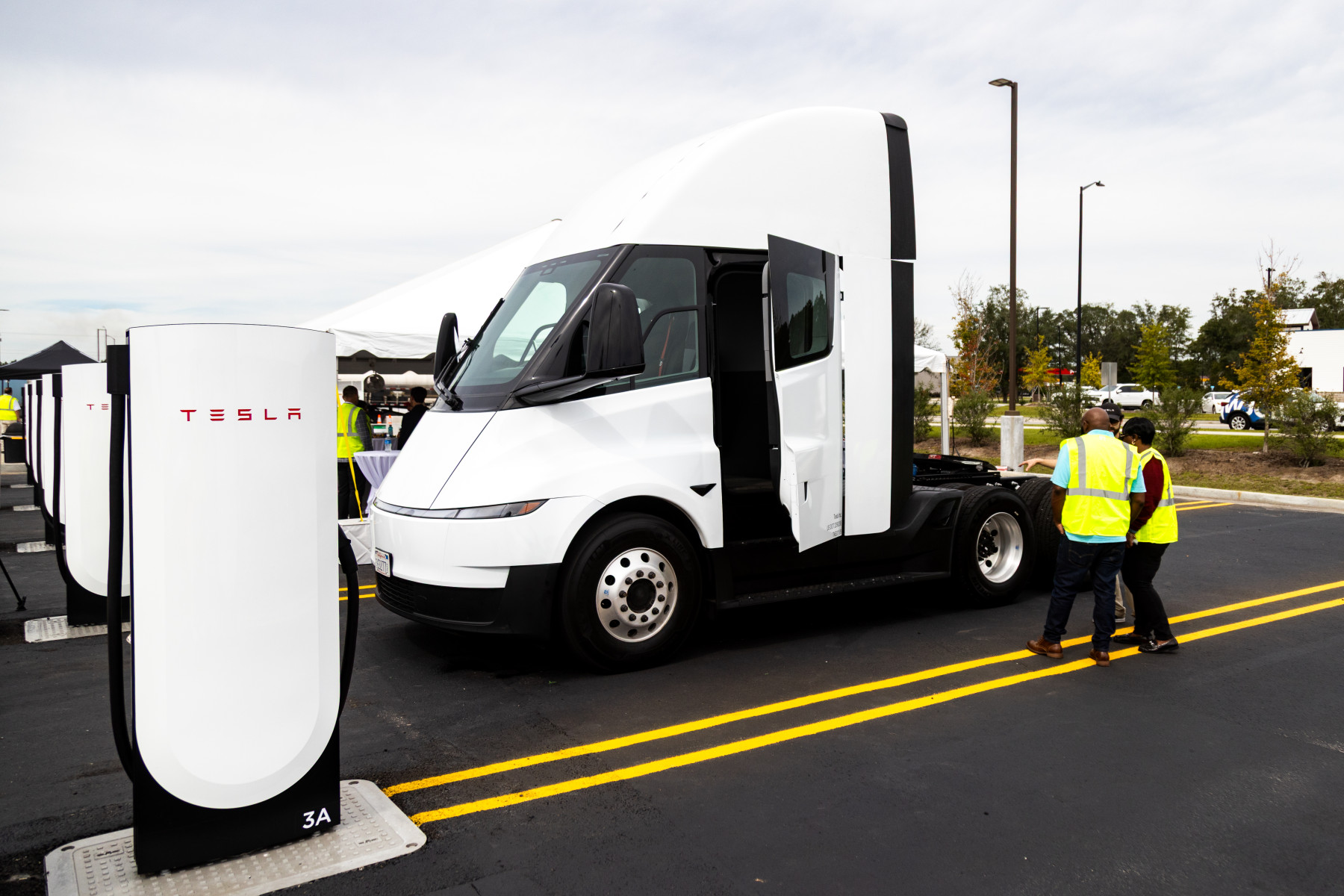
Pilot and Tesla have opened their first Tesla Megacharger site at a Pilot travel center in Ellabell, Georgia, marking the start of a planned heavy-duty electric truck charging network at selected locations across the United States.
The site is equipped with six charging stalls designed for heavy-duty electric trucks. The companies plan to develop additional locations along major freight corridors to support the use of battery-electric trucks in long-haul transportation.
First Megacharger Site Opens in Georgia
The new facility is located at Pilot travel center No. 1390, at 130 Interstate Exchange Way in Ellabell, Georgia.
Pilot and Tesla are developing 12 additional heavy-duty charging locations, with three nearing completion. These include Flying J No. 1071 in Tulare, California, which was scheduled to open on October 9, 2026, as well as Flying J No. 553 in Fort Stockton, Texas, and Pilot No. 341 in North Las Vegas, Nevada.
Each planned location will feature between four and eight high-power charging stalls using Tesla’s V4 cabinet technology.
Megachargers Target High-Power Truck Charging
According to Tesla, each Megacharger stall can deliver up to 1.2 megawatts of power. The company says the system can recharge a Tesla Semi from a low state of charge to approximately 60% in 30 minutes.
The high charging capacity is intended to support the operating requirements of heavy-duty electric trucks, for which charging time and vehicle availability are important factors in freight operations.
Actual charging performance will depend on factors including battery state of charge, temperature and charging conditions.
Network to Cover Major US Freight Corridors
Pilot and Tesla announced their collaboration in January 2026, with plans to install Megachargers at selected Pilot travel centers along Interstate 5, Interstate 10 and other major freight routes.
The planned network covers locations in California, Georgia, Indiana, Nevada and Texas.
Pilot said the facilities will combine heavy-duty charging infrastructure with the amenities and services available at its travel centers.
“Pilot is proud to bring heavy-duty charging directly to key trucking routes and pair it with the services and amenities drivers rely on,” said Shannon Sturgil, senior vice president of alternative fuels at Pilot. “With these initial locations, we’re making fleet electrification a more accessible option for long-haul transportation and are excited to continue working with Tesla to move at the pace and preference of our customers.”
Pilot Continues to Expand Transportation Energy Options
The Megacharger rollout forms part of Pilot’s broader investment in transportation energy infrastructure.
The company operates a network of travel centers across North America and has also invested in passenger electric vehicle charging and lower-carbon fuel options, including renewable diesel and biodiesel.
The new heavy-duty charging sites add another component to these efforts, with the initial focus on supporting electric trucks operating along major US freight corridors.


